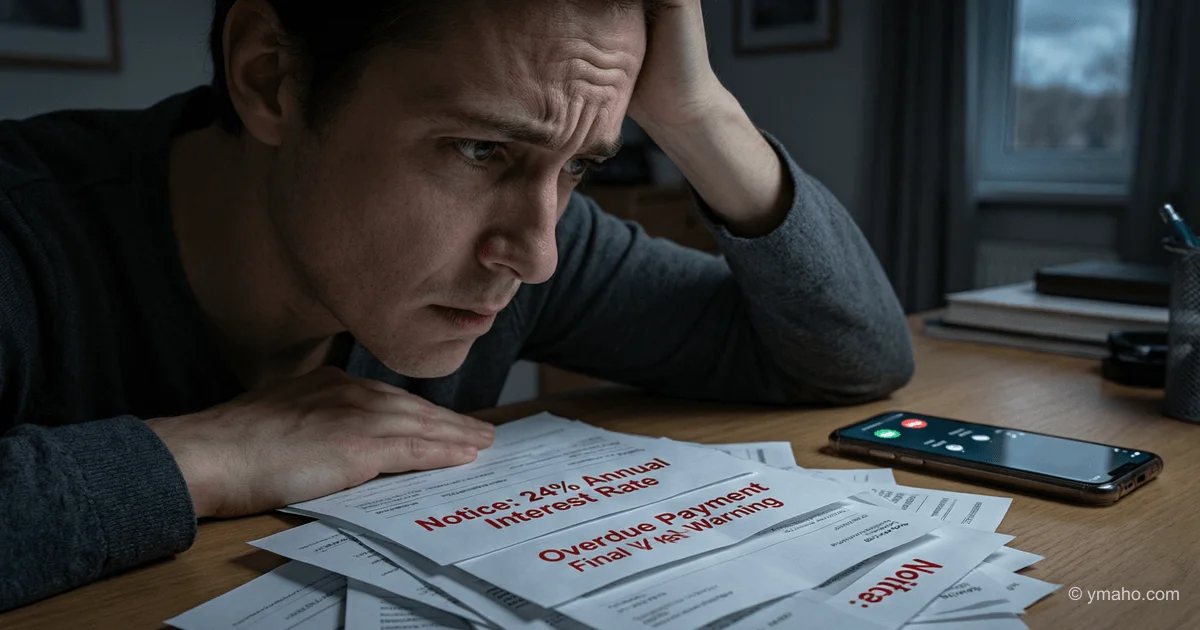
How Not to Pay a Microloan and What the Consequences Are
Niche: Finance & Earning Money Content Type: Topic Explanation Why It Matters: Queries about the consequences of non-payment have a high financial cost of error — a quality answer reduces risks for the reader and builds trust.
How Not to Pay a Microloan and What the Consequences Will Be: Full Breakdown 2026
The situation where you can't pay a microloan is familiar to millions of Russians. High interest rates, aggressive collectors, and a snowballing debt — it's stress that seems to have no way out. But there is one. In this article, I'll break down exactly what awaits a debtor, what laws are in effect in 2026, and how to get out of the debt pit with minimal losses.
The Gist: What You Need to Know First
The main fear of a debtor is prison. You don't go to jail for not paying a microloan. The criminal article on fraud (Article 159 of the Criminal Code of the Russian Federation) applies only in exceptional cases: if you initially took money using forged documents or with deliberate lies about your income. An ordinary borrower who finds themselves in a difficult life situation does not fall under this definition.
However, this doesn't mean there are no consequences. They are real and tangible, but they can either be minimized or legally written off.
Key Facts for 2026:
- Overpayment is limited by law: from April 1, 2026, you cannot pay an MFO more than 100% of the loan amount. Borrowed $1,100 (100,000 rubles) — maximum repayment $2,200. No more "10 thousand turned into 50 thousand."
- Collectors are strictly limited: calling more than once a day is illegal. Threatening is even more so.
- Debts can be written off: through judicial or out-of-court bankruptcy. This is legal and often the only way out in a severe financial situation.
Step-by-Step Solution: What Happens When You Stop Paying
Step 1. Immediately After Default — Calls and Debt Growth
From the first day of default, the MFO starts accruing penalties and fines. The debt grows quickly, but not indefinitely. Federal Law No. 9-FZ, effective April 1, 2026, set a strict limit: the total amount of all payments (interest, fines, penalties) cannot exceed the loan amount by more than 100%.
Example:
- You borrowed: $550 (50,000 rubles)
- After a year, the MFO demands: $1,100
- But by law, you are not obligated to pay more than $1,100, even if the contract accrued $1,500.
Important: this rule applies to loans taken out after April 1, 2026. For old contracts, the limit is 130% (i.e., from $550 you will repay a maximum of $715).
Step 2. Damaged Credit History
The MFO is obliged to transmit data about your default to the credit bureaus. Information about unfulfilled obligations is stored for 7 years from the date of the last change to the data. This means that for the next few years, you are unlikely to get a loan from a bank or a new loan from another MFO.
Step 3. Collection: Collectors or Court
MFOs rarely go to court immediately — it's expensive and time-consuming. First, collectors are brought in.
What Collectors Can Legally Do:
| Action | Permitted Frequency |
|--------|---------------------|
| Calls | No more than 1 per day, 2 per week, 8 per month |
| Call times | Weekdays 8:00 AM to 10:00 PM, weekends 9:00 AM to 8:00 PM |
| Messages (SMS/messengers) | No more than 2 per day, 4 per week, 16 per month |
| In-person meetings | No more than once a week |
What Collectors Are Prohibited From:
- Threatening you or your loved ones.
- Calling neighbors, colleagues, relatives without your consent.
- Psychological pressure and intimidation.
- Using physical force or damaging property.
If collectors violate these rules — record them (screenshots, call recordings) and complain to the Federal Bailiff Service (FSSP) via Gosuslugi.
How to Completely Stop Collector Calls
You have the right to send the collector a written refusal of interaction — through a notary or by registered mail. After receiving this refusal, the collector must cease all contact with you (except notifications about court).
Step 4. The MFO Goes to Court
If negotiations fail and you don't pay for a long time, the MFO files a lawsuit. Here are the pros:
- The debt amount is fixed — the court will set that maximum amount (100% overpayment) and stop further interest accrual.
- The court may grant an installment plan — you will pay $50–100 per month instead of all at once.
- If you have no official income or property — bailiffs may close the case due to impossibility of collection.
What does "no property" mean? It means you have only one home (it won't be taken), no car, expensive appliances, or large savings. In such a case, bailiffs issue a ruling to end enforcement proceedings, and the MFO gets nothing.
Step 5. Bankruptcy — Legal Debt Write-Off
If you have many debts (not just microloans, but also loans, utilities) and can't pay — the only reliable solution is bankruptcy.
In 2026, two paths are available:
A) Out-of-Court Bankruptcy via MFC — Free
Conditions:
- Total debt from $280 (25,000 rubles) to $11,000 (1 million rubles)
- You have no property that can be sold
- You have no official income
- Enforcement proceedings have been closed due to "impossible to collect"
File an application at any MFC — after 6 months, debts are written off. Free.
B) Judicial Bankruptcy — Paid but Reliable
Suitable if you have property or income, but debts exceed what you can pay. Cost — from $580 (mandatory expenses) to $1,700–$2,800 with lawyers.
What is not written off even in bankruptcy:
- Alimony
- Debts for compensation of harm to life and health
- Current utility payments
Important: if you took out microloans 1–3 months before bankruptcy without income and spent the money on non-essential needs, the court may not write off these debts — deeming you an unscrupulous borrower.
Practical Tips and Important Nuances
What to Do Right Now If You Can't Pay
The most common mistake is hiding and ignoring calls. This won't solve the problem; it will only speed up the transfer of debt to collectors.
Correct Algorithm:
- Contact the MFO in writing (via personal account or registered mail). Explain the situation: job loss, illness, temporary difficulties. Ask for a deferment or extension. MFOs often agree — they also don't want to lose money through court.
- Record all agreements in writing — so there's no "we didn't promise anything" later.
- Don't take out a new loan to pay off the old one. From October 1, 2026, a restriction comes into effect: you can have no more than two active high-rate loans, and from April 2027 — only one. But even without the law, this is a path to a debt spiral.
Violation Statistics: What to Complain About
According to FSSP data, in 2025–2026, the share of justified complaints against MFOs reached 45% — an absolute anti-record. The most common violations:
- Exceeding contact frequency (calling more than once a day) — 42%
- Interaction with third parties (relatives, neighbors) without consent — 28%
If you encounter this — complain. A complaint can be filed online via Gosuslugi to the FSSP. Review period — 30 days.
New Rules from September 2026
From September 1, 2026, a law comes into effect requiring MFOs and banks to report to the FSSP on their debt collection activities. This will strengthen control and make the work of collectors and MFOs more transparent. For debtors — additional protection.
Typical Mistakes and How to Avoid Them
| Mistake | Consequence | Solution |
|---------|-------------|----------|
| Ignoring calls and hiding | Debt grows, MFO goes to court sooner | Answer, explain the situation, ask for a deferment |
| Believing collector threats about prison | Stress, panic, rash actions | Know: you don't go to jail for loan debt |
| Taking a new loan to pay off the old one | Debt spiral, new interest | Apply for restructuring or bankruptcy |
| Paying "lawyers" for debt write-off | Loss of money — debt won't be written off | File for bankruptcy via MFC for free |
| Not going to court and not participating | Court rules without you — with maximum amount | Attend hearings, ask for an installment plan |
| Acknowledging debt in writing after 3 years of default | Resets statute of limitations | Don't sign anything if your goal is to "wait it out" |
Summary: Brief Conclusion and Next Step
Not paying a microloan is not a criminal offense, but there are consequences: a damaged credit history for 7 years, collector calls, risk of court. However, the law in 2026 is on the side of the honest debtor.
Key Numbers to Remember:
- 100% — maximum overpayment on new loans (from April 2026)
- 7 years — storage period for bad credit history
- $0 — cost of out-of-court bankruptcy via MFC
Your Next Step Right Now:
- If you took out a loan after April 1, 2026 — open the contract and calculate how much you've already paid. If the MFO demands more than 100% on top — it's illegal.
- If collectors call more than once a day — take a screenshot of the calls and file a complaint with the FSSP via Gosuslugi.
- If you have accumulated many debts (from $280) and have no property — go to the nearest MFC and file for out-of-court bankruptcy. It's free.
- In any case — stop hiding. Call the MFO yourself, explain the situation. Honesty and openness often lead to a deferment or partial debt write-off.
And remember: MFOs are businesses, not punitive bodies. They prefer to get $1,100 from you in a year with a deferment rather than $0 through a court case that could last six months. You can almost always negotiate. And if not — there's bankruptcy. You are not alone, and there is a way out.
— Editorial Team