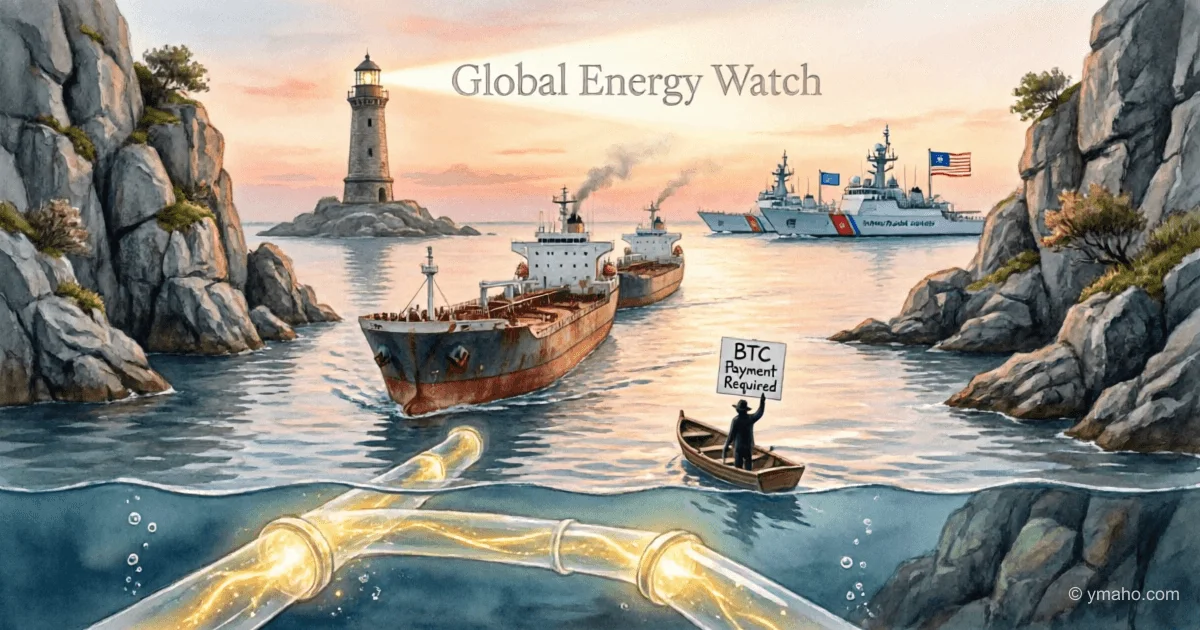
Fake Bitcoin Ransom for Hormuz Passage: How Scammers Are Extorting Global Oil Supplies
Imagine all your grocery delivery trucks stuck at a narrow mountain pass because of a bogus demand to pay in digital currency. That’s exactly what’s unfolding in the Strait of Hormuz—the primary artery for global oil shipments. Scammers are sending fake messages to ships demanding payment in Bitcoin or Tether for “safe passage,” and this could directly spike gas prices in your city.
Why the Strait Matters More Than You Think
The Strait of Hormuz is a narrow waterway between Iran and Oman, measuring just 33 kilometers wide. Roughly 20% of the world’s oil consumption flows through it. Picture global oil being transported along a single two-lane highway: any traffic jam there would send fuel prices soaring overnight. That’s why every rumor of trouble in these waters triggers immediate market anxiety.
Greek maritime risk tracking firm MARISKS recently warned that shipowners are receiving emails allegedly from “Iranian authorities” demanding cryptocurrency transfers for transit clearance. It’s a scam—real governments don’t operate this way. Here, cryptocurrency acts as a digital equivalent to cash: hard to trace, much like bills passed in an envelope, which is why scammers prefer it.
How Digital Extortion Works
The scheme is straightforward but dangerous:
- Fraudsters forge official documents using government logos and account details
- They demand payment in Bitcoin or stablecoins (Tether, a dollar-pegged cryptocurrency)
- They threaten to “detain the vessel” if payment isn’t made
Why crypto? Because transactions are anonymous, similar to handing over a cash-filled envelope in a dark alley. Unlike bank transfers, they can’t be reversed or traced back to the sender. It’s a perfect tool for criminals, but legitimate states don’t work this way—they use official banking channels in major currencies.
The Real Geopolitical Chess Game
Behind the scams lies actual geopolitical maneuvering. The U.S. maintains sanctions on Iranian ports, while Iran periodically threatens to close the strait—a psychological standoff that has dragged on for years. Recently:
- Iran announced a blockade resumption after the U.S. refused to lift sanctions
- U.S. military forces intercepted an Iranian vessel attempting to break through
- President Trump dispatched envoys to Pakistan to facilitate talks with Tehran
But legitimate authorities NEVER demand cryptocurrency. All official tolls and transit fees for strategic chokepoints go through established banking systems. These fake emails are simply opportunists trying to profit from existing tensions.
Key Takeaways
- The Strait of Hormuz handles one out of every five barrels of oil worldwide
- Scammers exploit crypto due to its untraceable nature
- Legitimate state fees are always paid in USD or EUR
- Even false rumors can trigger oil price spikes
- Verify sources: official notices come through maritime agencies, not random email inboxes
What does this mean for everyday consumers? If actual oil shipments are disrupted, you’ll feel it within a week: gasoline prices will rise, increased freight costs will drive up food and retail prices. However, in this specific case, the scam is just a smokescreen. The key is to rely on official news outlets rather than panic over hoaxes. Global markets are currently resilient enough to absorb such incidents, but each new escalation adds unnecessary risk to your wallet.
— Editorial Team









