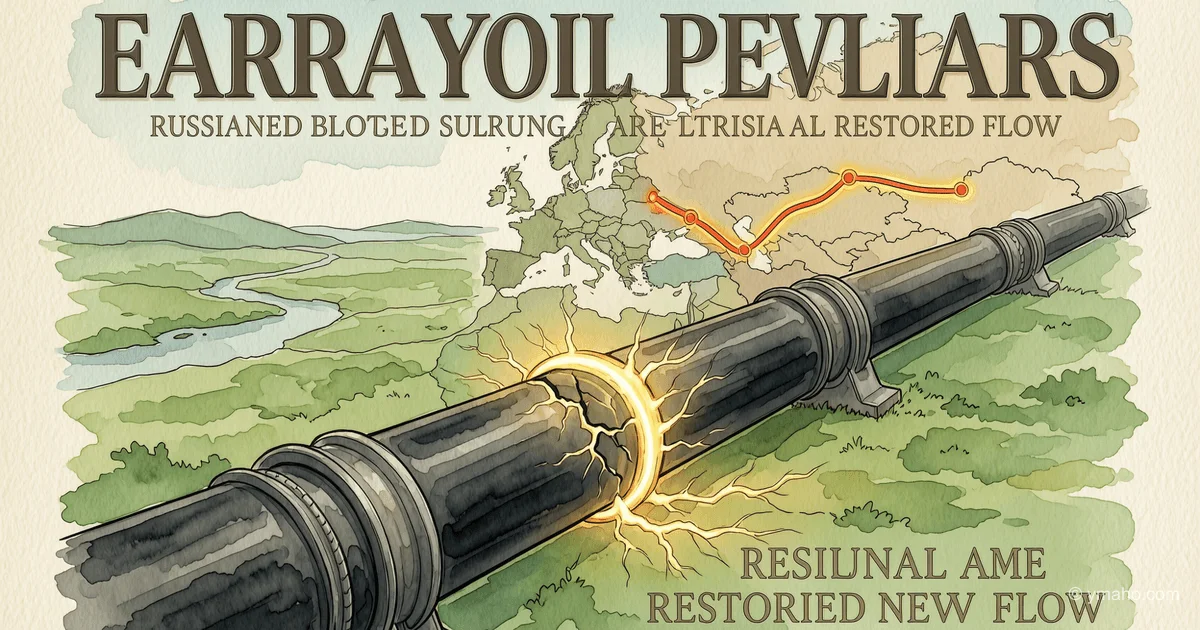
Oil Transit via Druzhba to Slovakia to Resume on April 23: What It Means for Europe
After an attack on the Druzhba pipeline in January 2026, Ukraine completed repairs and began filling the pipe. Supplies to Slovakia are expected to resume on April 23. This is an important signal for the European energy market, which still depends on Russian hydrocarbons.
Why Druzhba Matters for All of Europe
The Druzhba pipeline is one of the largest in the world. It connects Russia with several Central and Eastern European countries. For Slovakia, Hungary, and the Czech Republic, it is the main source of crude oil, which is processed by local refineries. Without it, they would have to seek alternatives on the global market, which is more expensive and logistically complex.
The attack on the pipeline in January raised serious concerns. If repairs had dragged on, European countries could have faced fuel shortages and price increases. The restoration of supplies reduces these risks, but the problem remains: the infrastructure is vulnerable to new strikes.
How the Repair Is Linked to the EU Loan
Significantly, Ukraine tied the resumption of transit to the unblocking of a €90 billion EU loan. Hungarian Prime Minister Viktor Orbán directly stated that Kyiv is ready to start the pipeline if Budapest lifts its veto on financial aid. This underscores that energy has become a tool of political bargaining.
For ordinary Europeans, this means that gasoline and heating prices may remain stable in the short term. But the long-term dependence on Russian energy remains a vulnerability that the EU is trying to reduce through diversification.
What Happens Next
The main risk is repeated attacks. President Zelensky warned that Russia could strike Druzhba again. If that happens, the transit halt would be longer, and the consequences for the market more severe. The EU would have to actively seek alternatives, which could accelerate the transition to other energy sources.
For now, the oil market is reacting calmly: Brent is stable around $75 per barrel. But any new incident could trigger a price spike.
Key Points
- Oil supplies to Slovakia will resume on April 23, 2026.
- Ukraine tied transit to the unblocking of a €90 billion EU loan.
- The risk of repeated attacks persists, keeping the market on edge.
- Europe remains dependent on Russian oil despite diversification plans.
- The restoration of Druzhba temporarily reduces the likelihood of fuel shortages in the region.
— Editorial Team









