Euro and Dollar Hit Record Highs Against the Hryvnia: What It Means for You
Imagine that your salary now buys 30% fewer groceries. That’s exactly how Ukrainians feel as the euro and dollar hit new historical peaks against the hryvnia. This isn’t just a local issue—a weak hryvnia directly impacts the price of bread at your local store and the cost of gas at the pump.
On Monday, April 20, the National Bank of Ukraine set the official exchange rate: 1 euro = 51.76 UAH (a new record), 1 dollar = 43.89 UAH. Over the past week, the euro has climbed nearly 70 kopecks, while the dollar has risen by 50. To put that in perspective: a year ago, the euro traded at 40 UAH and the dollar at 36 UAH. These sharp swings are like suddenly finding your car consuming 50% more fuel on the exact same route.
Why Is the Hryvnia Losing Ground?
The war has fundamentally reshaped Ukraine’s economy. Here are three key drivers behind the hryvnia’s decline:
- Industrial disruption: Factories and farmland in frontline areas are offline, meaning Ukraine exports fewer goods and earns less foreign currency
- Heavy reliance on imports: Fuel, medicines, and equipment are almost entirely brought in from abroad, draining dollars and euros from the country
- Foreign aid in external currencies: A large portion of international assistance arrives in dollars, but when it’s converted into hryvnias for domestic payments, it puts downward pressure on the exchange rate
It’s like an aquarium with a leak: until the hole is patched (infrastructure is rebuilt), the water (currency) will keep draining away. Interestingly, the NBU artificially propped up the rate through market interventions—much like trying to plug a leak with a rag.
Global Ripple Effects
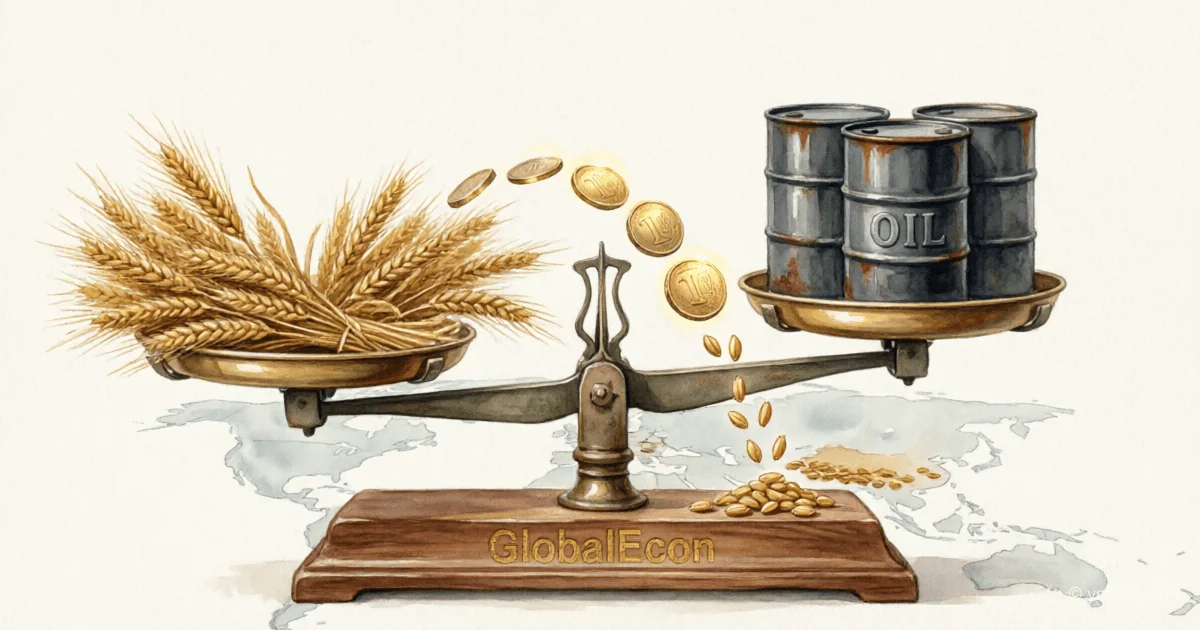
A weakening hryvnia isn’t just Ukraine’s problem. Ukraine ranks among the top five global exporters of wheat and corn. When the hryvnia depreciates, Ukrainian farmers earn more hryvnias for the same amount of dollars earned from grain sales. This extra margin allows them to lower prices for buyers in Europe, Africa, and Asia. Take a simple example: if a sack of wheat used to sell for $200, and now the farmer still gets $200 but converts it to 8,700 UAH instead of 7,200 UAH (as it was a year ago), they can afford to drop the shelf price slightly without losing profit.
But there’s a flip side. Ukraine imports 90% of its fuel. A weaker hryvnia makes gasoline and natural gas more expensive for Ukrainian farms, which could eventually offset the benefits of cheap exports. Imagine selling apples at a discount, but your delivery truck’s fuel costs double—in the end, your net revenue might actually drop.
Key Takeaways
- Record exchange rates are a symptom, not the root cause: the real issue lies in a war-torn economy, not the actions of the NBU
- Impact on global markets: Cheap Ukrainian agricultural output is temporarily helping to ease global food inflation
- Risks ahead: If the hryvnia continues to slide, Ukraine may struggle to pay for critical imports like life-saving medicines
- Energy link: A weaker currency makes Ukrainian energy commodities (such as grain used for biofuels) more attractive to European buyers
So what does this mean for the average person? If you live outside Ukraine, you might notice slightly lower prices for bread and sunflower oil in supermarkets—thanks to affordable Ukrainian exports. At the same time, regional instability keeps energy prices elevated, given Ukraine’s role as a crucial transit corridor for gas. For Ukrainians, however, every kopeck lost in the exchange rate means medicine and fuel become harder to afford, while salaries lose their purchasing power.
— Editorial Team









