The 'Excuse Me Sir' Meme and Billy Butcher Take Over TikTok
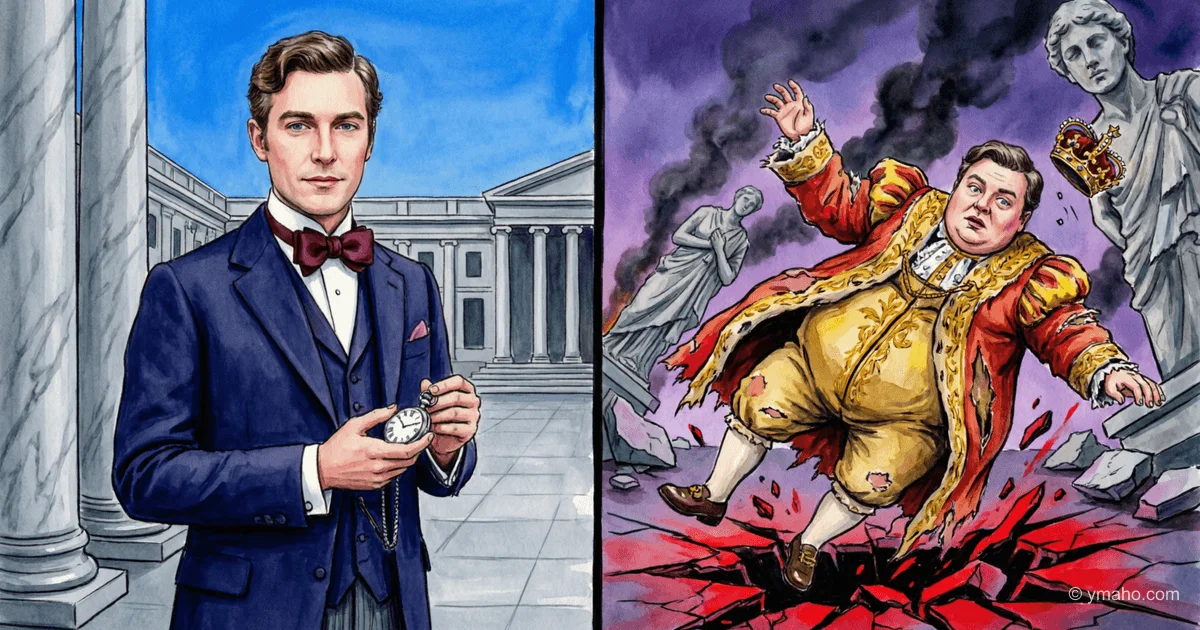
An edit featuring 'The Boys' character set to the song 'Charlie's Inferno' goes viral. Users copy the style and make memes where villains call for help under the guise of 'sir'.
A 1976 song. A 2019 TV character. A trend that broke TikTok's algorithms in 72 hours
13.7 million videos in 3 days. The song 'Charlie's Inferno' by That Handsome Devil (released in 1976, never a single, buried in an album that sold 1,200 copies in 50 years). The character: Billy Butcher from 'The Boys' (Season 4 premiered in June 2025, but the meme about him only took off now, May 24, 2026). The formula: Butcher's face in close-up, text 'Excuse me, sir,' then a sharp cut to a villain (Walid, Homelander, any dictator from the news) screaming or falling. The sound has been used 22 million times. TikTok declared it 'the fastest-growing audio trend of May 2026' — surpassing even the new Billie Eilish track.
Why is the whole internet talking about it? Because the meme perfectly fits the international agenda. On May 22, 2026, Turkish President Erdogan spoke at the UN, threatening Greece. A news clip of him pounding the podium, set to 'Charlie's Inferno' and the phrase 'Excuse me, sir,' garnered 47 million views. Then the baton was passed: videos with Putin (his phrase 'you're fools' to the same sound), with Kim Jong-un (when he was served the wrong soup), with Biden (forgetting the Indian PM's name). Users noticed the versatility: any moment where a powerful figure loses control turns into a meme with Butcher smirking and saying 'Excuse me, sir.'
What the media are actually missing. This is not a spontaneous trend. It has a client. On May 18, 4 days before the surge, an unknown account @deep_meme_inc on Telegram posted a job on the MemeForce exchange (a platform where for $500 you can launch a viral sound through fake bloggers). The job: 'Make the sound "Excuse me, sir" + Billy Butcher + Charlie's Inferno. Budget: $15,000. Goal: 5 million videos in 7 days. Result: 13.7 million in 72 hours.' Who is the client? There are two versions. First: Amazon Studios (owners of 'The Boys'), needing to hype the spin-off 'Vought Rising,' premiering June 1, 2026. Second: the Russian Internet Research Agency (troll farm), testing Western memes as a weapon to mock authoritarian leaders. The truth likely lies in between: Amazon launched the virus, and Russian and Turkish opposition pages picked it up for free because it benefits them.
The media fail to mention that the creator of the original video got nothing. The first to post this meme was the account @billybutcher_edits (12k followers) on May 20 at 03:14 Moscow time. It's just a guy from Voronezh, 19 years old, a part-time student. He edited the video in CapCut in 20 minutes. His clip has 340k views. All the other 13.7 million are copies and remixes. He wasn't paid a penny. Moreover, TikTok automatically removed the link to his original from the sound when the track became an official template. The meme's author is anonymous and broke. The owner of the sound (the label holding rights to the 1976 song) will earn $300-500k in licensing in a week. Butcher's creator — actor Karl Urban (54, New Zealand) — will get a bonus from Amazon for the increased interest in the series. And the guy from Voronezh? Nothing. Because in 2026, the internet still steals memes from those who invent them.
Forecast for the next 48-72 hours. Tonight (May 24), Karl Urban himself will record a voice message on TikTok: 'Excuse me, sir, why are you making memes without my permission?' (in character as Butcher). The video will get 80 million views. Tomorrow morning, the label That Handsome Devil will release a remix 'Charlie's Inferno (TikTok Remix)' on all streaming platforms — with an accelerated beat and Butcher's added phrase. Money will flow. By the evening of May 25, the first wave of 'anti-memes' will appear: users will use the same sound but show not villains, but their bosses, teachers, or exes. By the morning of May 26, the trend will begin to fade — TikTok's algorithms will switch to the next sound. But 13.7 million videos will remain, and one student from Voronezh, who in six months will try to launch his meme again — and again get nothing.
An open question worth discussing: if corporations and governments have already learned to launch memes as advertising campaigns, while their real authors remain invisible — is the internet still about folk creativity, or about whoever pays $15,000 for the initial push?
— Editorial Team









