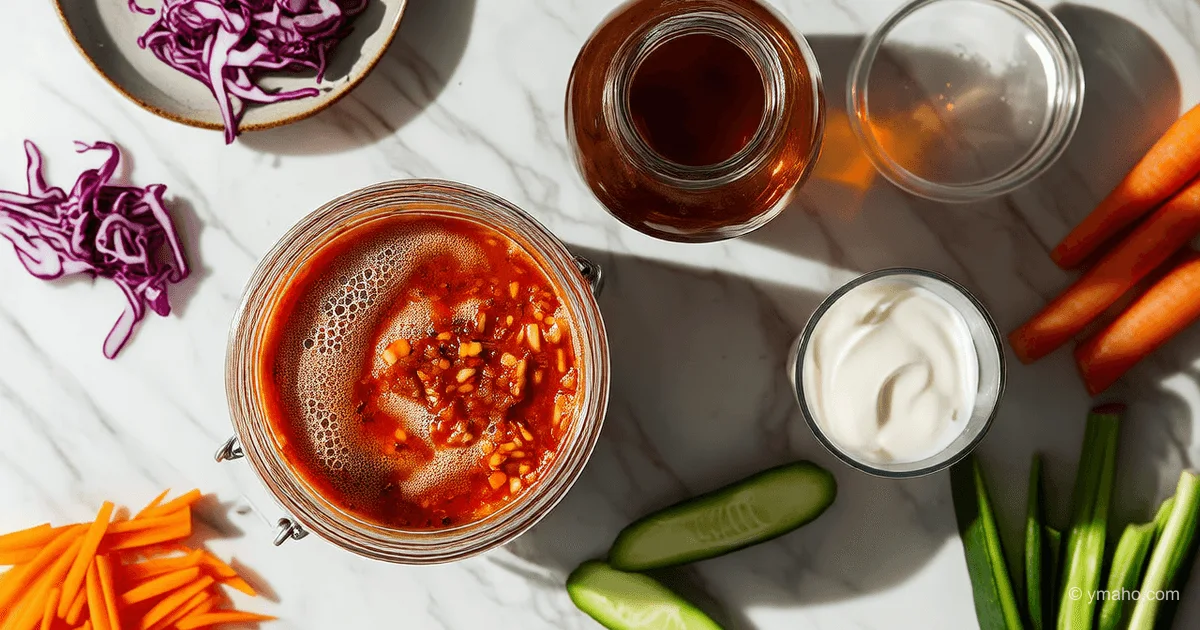
Fermented Food Is the New Black: Why Kimchi and Kombucha Have Replaced Probiotic Pills
For the sake of gut health, consumers are shifting from dietary supplements to whole fermented foods (kefir, miso, pickled vegetables), considering them a more natural way to support the microbiome.
The shift from probiotic supplements to whole fermented foods is not just a trendy dietary twist. It is a mature economic transition reshaping the food industry and pharmaceuticals. We are witnessing food reclaiming its role as medicine, driven less by microbiome concerns and more by fundamental distrust of pill forms and an identity crisis in supplements.
[The Gist]: What's Really Happening
At first glance, we see a classic "clean label" and naturalness trend: consumers prefer kimchi, kefir, miso, and kombucha over probiotic capsules because they view them as a more natural and tasty way to support gut health. However, the essence runs deeper. It's the "foodification" of pharma. People are tired of swallowing pills, subconsciously associating them with treating illness, whereas fermented foods fit into a hedonistic daily eating ritual without creating a "sick person" feeling.
The market is clearly responding to this demand. The global fermented food market is already valued at an astronomical $828.84 billion, with a significant portion driven by functional beverages and vegetables, not just yogurts. Growth since 2025 is fueled by consumers no longer separating food from prevention: nearly 47% of the fermented food market in 2026 is occupied by products directly positioned for "gut health and immunity."
Timeline and Context
The tipping point didn't happen overnight. As early as 2024–2025, major funds began aggressively acquiring fermented beverage brands; for instance, the purchase of Health-Ade Kombucha for $0.5 billion marked the category's maturity. By February 2026, brands like Vadasz in the UK launched portioned "kimchi shots" specifically as an alternative to morning supplements, not just as a snack. From March to May 2026, there was an explosive growth in launches of functional fermented snacks.
This shift occurs amid strict regulatory cleansing. In Russia, for example, a new phase of supplement control via the "Honest Sign" system was introduced on May 1, 2026, causing some supplements to physically disappear from offline store shelves, making room for chilled fermented products. Simultaneously, the scientific community, including researchers from TSU (publication in Nutrients), increasingly states that the quality control of probiotics in pills leaves much to be desired: strains are not always viable, and labeling does not match contents. This information creates a perfect storm, pushing consumers toward the refrigerator rather than the medicine cabinet.
Who Wins and Who Loses
Winners:
- Producers of traditional and craft fermented foods. They command premium pricing for science-backed products. Simple sauerkraut costs pennies, but organic kimchi with guaranteed live cultures sells in specialty stores with margins up to 60%, perceived as a "functional snack."
- Vertically integrated agriholdings. Companies controlling raw materials and fermentation facilities can launch innovative products (low-sugar kombucha, vegetable blends) at the price of regular soft drinks, displacing sugary sodas from shelves.
- Supermarket chains with dedicated wellness zones. Since 65.5% of such product sales still occur in offline supermarkets, retailers investing in chilled displays see increased average check sizes.
Losers:
- Pharma companies and capsule probiotic brands. Their main advantage—precise dosing and high CFU concentration—is undermined by consumer distrust of "chemicals" and lack of accompanying dietary fiber. While they compete on price per billion CFU, food offers synergy of taste and health.
- Producers of ultra-processed snacks. Chips and crackers without functional fillings lose shelf space. Retailers optimizing assortment remove low-turnover items with added sugar, replacing them with fermented chips and bars.
- Brands speculating on "pseudo-fermentation." Products with added vinegar that skip natural fermentation and merely mimic the taste will be exposed by educated consumers who read labels. This creates reputational risks.
What the Media Isn't Saying
The most non-obvious insight missed by mass media: fermented food is becoming a channel for legal and mass introduction of psychobiotics without FDA regulation. Psychobiotics—bacterial strains affecting mental health via the gut-brain axis—in supplement form require complex clinical trials and "drug" labeling, which is expensive and risky. But when the same strains (e.g., certain lactobacilli) are added to a fermented product like yogurt, it can be labeled as a "food for mood," significantly simplifying market entry.
A second overlooked point is the economics of by-products. The explosive growth of the kimchi and kombucha market allows food giants to monetize production waste. For example, whey left over from cheese production, previously worth pennies or discarded, is now used as a base for fermented drinks, generating additional margins in the hundreds of millions of dollars.
Finally, the salt problem is underreported. Many fermented vegetables contain excessive sodium, conflicting with WHO's agenda to reduce cardiovascular risks. Producers are addressing this technologically, but it currently requires expensive cold-pressing methods and special starter cultures, driving the price of a "healthy" version to €15–20 per jar.
Forecast: Next 30 Days and 90 Days
30 days (by mid-June 2026):
We will see an aggressive marketing pivot by pharma giants. As consumers move away from capsules, companies like Bayer or Sanofi will urgently license microencapsulation technologies to embed their patented strains into smoothies and fermented drinks. They will sell not pills but "powder mixes for home fermentation." The price of such DIY kits will reach $50–70 per weekly course, comparable to premium supplements.
Also, by mid-June, expect a wave of local scandals—independent labs and bloggers will massively test "live kvass" and "natural kombucha" for actual CFU content. Results will show that some products sitting on unrefrigerated shelves are dead and offer no advantage over soda. This will trigger price corrections and a sharp market segmentation into "cold premium" and "pasteurized mass-market."
90 days (August 2026):
By the end of summer, the trend will face oversaturation and standardization issues. The "functional fermented snacks" category will inflate into a bubble. We will see launches of frankly strange products, like fermented candies or kefir-based ice cream, some of which will fail due to taste expectations not being met. Survivors will be those integrating fermentation into main meals, not desserts.
By August 2026, Western insurance companies will launch pilot projects including "functional food baskets" in health insurance for patients with IBS, prediabetes, and obesity, instead of paying for supplements. If a person buys a specific set of approved kimchi and kefir brands with proven efficacy, part of the cost will be reimbursed by insurance. This will turn grandma's sauerkraut into a medical insurance commodity, and the market will undergo another round of redistribution.
— Editorial Team









