First Approved mRNA-Based Therapy Against Lung Cancer (BioNTech Personalized Vaccine)
In Phase II trials, the mRNA vaccine Autogene cevumeran in combination with pembrolizumab extended recurrence-free survival in melanoma and is preparing for registration in NSCLC.
Introduction
In January 2026, at the J.P. Morgan Healthcare Conference, BioNTech CEO Uğur Şahin outlined an ambitious plan: by 2030, the company that gave the world the first mRNA vaccine against COVID-19 should become a fully integrated oncology company with several commercialized anticancer drugs. This strategic shift is backed by real clinical successes that mRNA technology has achieved in treating melanoma, pancreatic cancer, and — most importantly — non-small cell lung cancer (NSCLC).
The story mentioned in the news about BioNTech's personalized lung cancer vaccine is part of a broader wave of breakthroughs. The main success to date has been in melanoma: the personalized mRNA vaccine combined with pembrolizumab (Keytruda) nearly halved the risk of recurrence. And it is this success that paves the way for the technology's application in NSCLC — one of the most common and deadly cancers worldwide.
Event Details and Timeline
Breakthrough in Melanoma — the Foundation for Everything. At AACR 2026 (American Association for Cancer Research), three-year follow-up data were presented for patients with high-risk stage III/IV melanoma receiving the mRNA-4157 vaccine in combination with pembrolizumab. The results were impressive: a 49% reduction in the risk of recurrence or death compared to immunotherapy alone.
Even longer-term data were published by Moderna and Merck in January 2026. Five-year follow-up of 157 patients showed that combination therapy reduced the risk of recurrence by 49% at the five-year mark. At two years, recurrence or death occurred in 22% of patients in the combination therapy group versus 40% in the immunotherapy-only group.
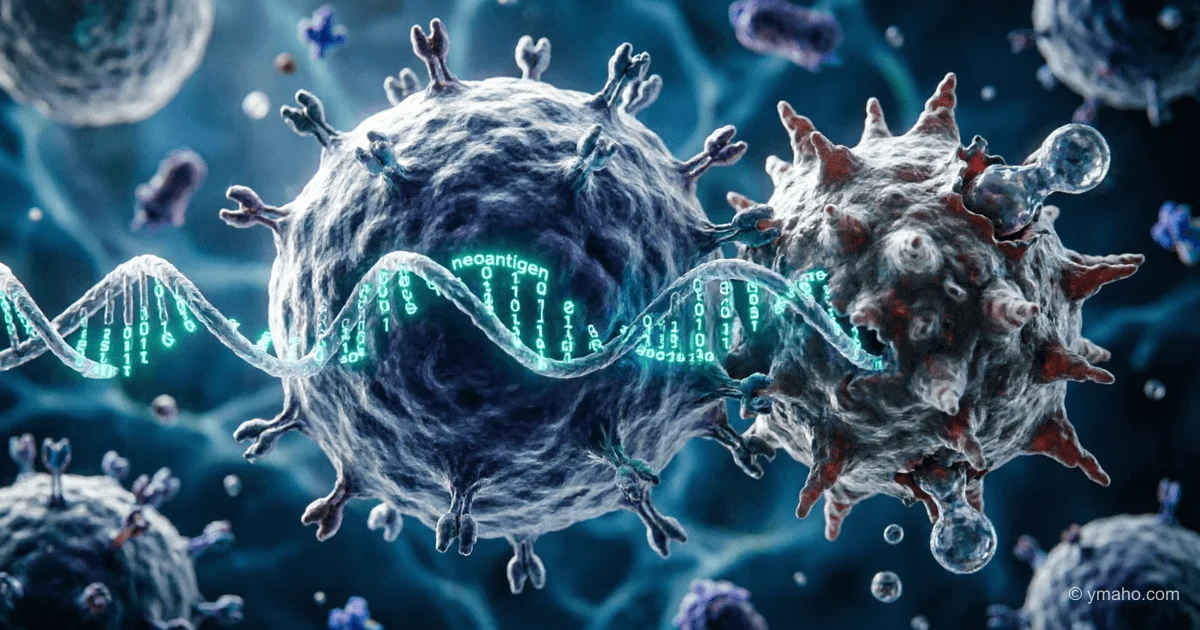
The key element of the technology is personalization. Scientists sequence the patient's tumor genome, identify up to 34 unique neoantigens (mutations specific to that tumor), and "embed" them into the vaccine. The body receives mRNA instructions that teach the immune system to recognize and destroy cells with these markers.
Pancreatic Breakthrough by BioNTech. At AACR 2026, researchers from Memorial Sloan Kettering Cancer Center presented long-awaited results of 4-6 year follow-up for the autogene cevumeran (RO7198457) vaccine in pancreatic cancer — one of the "coldest" and most immune-resistant tumors.
The study involved 16 patients after surgical tumor removal. In 8 of them, the vaccine successfully activated an antitumor immune response. The result was dramatic: among these 8 patients, 7 (87.5%) were alive 4-6 years after treatment. Among the 8 patients who did not respond to the vaccine, only two (25%) survived, with a median survival of 3.4 years.
Path to Lung Cancer. The success in melanoma and encouraging data in pancreatic cancer laid the groundwork for expanding the technology to NSCLC. In parallel with Moderna (vaccine mRNA-4359), BioNTech has already initiated clinical trials of autogene cevumeran in non-small cell lung cancer. BioNTech's portfolio today includes over 25 oncology programs, including personalized mRNA vaccines.
Russia is not standing still either: at the Gamaleya National Research Center for Epidemiology and Microbiology, under the leadership of Alexander Gintsburg, trials have begun of the first domestic mRNA vaccine against melanoma. The drug is created individually based on genetic analysis of the patient's tumor.
Impact and Significance
For the World of Oncology. The success of mRNA vaccines confirms a fundamental concept: training the immune system to recognize individual tumor mutations can provide long-term disease control. This is especially significant for pancreatic cancer, which has traditionally been considered "invisible" to immunotherapy due to its immunosuppressive microenvironment.
Professor Vinod Balachandran from Memorial Sloan Kettering, who chaired the AACR session on cancer vaccines, called these data "confirmation that a personalized immunological approach can work even in the most challenging tumors."
For the Pharmaceutical Industry. The results presented at AACR 2026 sent a signal to the entire market. mRNA-4157 in combination with pembrolizumab could become the first standard of care using a personalized neoantigen vaccine in adjuvant therapy for melanoma.
The FDA has already granted Moderna priority review status for the combination of mRNA-4359 with pembrolizumab. Analysts expect approval of the first mRNA vaccine against cancer within the next 1-2 years. BioNTech, in turn, plans to conduct five late-stage studies in 2026.
For Society. For millions of cancer patients, mRNA vaccines represent a fundamentally new approach: instead of "one pill for all," treatment created specifically for the genetic profile of their tumor. The side effects of the vaccines are considered manageable — fatigue, injection site pain, chills, with no serious safety differences from standard immunotherapy.
However, serious logistical and economic barriers remain. Each vaccine requires tumor sequencing, individual synthesis, and a strict cold chain. This limits the technology's accessibility for low-income countries and even for some patients in developed countries.
Reactions of Key Players
BioNTech and Moderna — Two Platforms, One Goal. BioNTech is betting on a full transformation into an oncology company. In addition to autogene cevumeran, pumitamig (a bispecific antibody targeting PD-L1/VEGF) and gotistobart (an antibody against CTLA-4), which has already shown success in Phase III for lung cancer, are in development.
Moderna, in turn, is focusing on the mRNA-4359 vaccine, which encodes not only neoantigens but also PD-L1 and IDO1 proteins that form the immunosuppressive tumor microenvironment. In Phase I/II in melanoma patients, the combination shrank tumors in 83% of participants, and in 17% the tumor disappeared completely. Importantly, the effect was observed regardless of PD-L1 status — in 88% of PD-L1-positive and 67% of PD-L1-negative patients.
Scientific Community. AACR 2026 was a turning point: Cancer Vaccines were recognized as "the next frontier of immunotherapy." Immunological correlates (expansion of neoantigen-specific CD8+ T cells) are now being considered as potential predictive biomarkers of response to therapy.
Forecast and Conclusions
Where We Stand as of May 2026. Personalized mRNA vaccines have proven efficacy in melanoma (49% reduction in recurrence risk at 5-year follow-up) and have shown encouraging results in pancreatic cancer (87.5% survival in vaccine responders at 4-6 years). Clinical trials in non-small cell lung cancer have already been initiated.
Main Challenges. The first and most significant is confirmation of long-term efficacy in NSCLC in large randomized trials. The second is scaling up production of personalized vaccines: each dose requires individual synthesis, creating logistical and cost barriers. The third is the development of standardized immunological tests to select patients most likely to respond to therapy.
Conclusion. The story of mRNA vaccines is a story of how a technology developed to fight a pandemic finds its true calling in oncology. The breakthrough of 2024–2026 has proven that a personalized immunological approach works not only in "immunogenic" tumors like melanoma but also in such challenging cases as pancreatic cancer.
If the trend continues, then by 2030, as Uğur Şahin predicts, personalized mRNA vaccines will become a standard component of therapy for many solid tumors, including lung cancer. We stand on the threshold of an era when cancer will cease to be a death sentence with "one-size-fits-all" treatment and will become a disease that the patient's immune system can overcome — if it is shown the right target in time.
— Editorial Team









