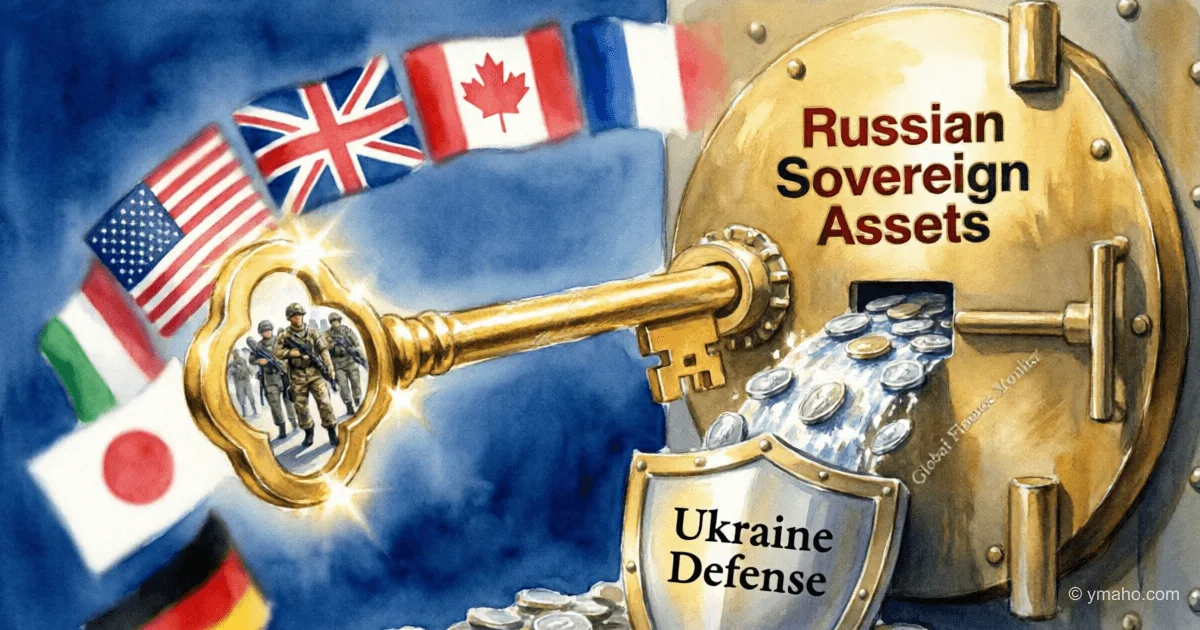
How Frozen Russian Assets Became a Weapon for Ukraine: Global Implications
Ukraine has received £752 million (about $1 billion) from the UK — but these funds aren’t coming from the British budget. They’re drawn from frozen Russian assets through the G7 mechanism. Why this financial maneuver could change the rules for every nation, and why it matters to you, even if you’re far from war.
How Does This 'Gold Reserve' From Foreign Assets Work?
Imagine your neighbor, who stole money from you, has their gold safe confiscated. Now you take out a loan against that safe at a bank to strengthen your defenses, repaying the debt using the interest generated by the gold. That’s exactly how the G7 ERA (Extraordinary Revenue Acceleration for Ukraine) program works.
Instead of gold, we have frozen Russian state assets worth $300 billion. Instead of a bank, we have the G7’s leading global economies. And instead of your home, it’s Ukraine’s defense. The setup is simple: the G7 issues Ukraine a 30-year loan, which will be repaid using future income from those very Russian assets currently inaccessible to Russia.
This isn’t a one-off move. In just 2025 alone, Ukraine received £2.25 billion from the UK, and $1.3 billion from Japan in early 2026. The total program volume stands at $50 billion. To put it in perspective: it’s like taking out a mortgage to buy a house, but paying for it not from your salary, but from rent on an apartment seized from a fraudster.
Why This Shook the Financial Foundations
Previously, freezing assets was purely symbolic. Now they’ve been turned into a functional tool. There’s no precedent in international practice for using another country’s sovereign assets to fund a third party. It’s like if police didn’t just seize a stolen bicycle, but allowed the victim to sell its parts to buy a bulletproof vest.
Key global consequences:
- A completely new financial instrument: Countries can now build "safety cushions" using aggressor nations’ assets
- Risk of system fragmentation: Nations will start splitting their reserves across dozens of "trusted" jurisdictions
- Reevaluation of confiscation rules: Legal experts are already debating whether such actions can be applied in future conflicts
What alarms the financial world most is that this mechanism launched without a single court ruling. The assets haven’t been sold — only the flow of income has been redirected. It’s like shutting off a tap in someone else’s home without breaking down the door.
What Happens to the Russian Money?
Many assume the assets have been sold, but that’s not the case. Russian bonds and reserves remain frozen. Only the direction of income has changed: interest from these assets now flows not to Moscow, but to Kyiv. Picture this: you rerouted a fraudster’s mail to your own home — the letters are still in their possession, but you open the envelopes first.
Meanwhile:
- Russia loses about $3 billion annually in lost interest
- Ukraine receives a steady stream of funding without taking on new debt
- The G7 minimizes risk: if the assets are ever unfrozen, the debt will be settled
The least obvious point? The mechanism acts as inflation insurance for Ukraine. The more income generated from Russian assets, the less the national currency needs to be printed. It’s like receiving a scholarship funded by the thief’s own stipend — resolving conflict without accumulating new debt.
Important notes:
- This is the first instance of large-scale redirection of income from sovereign assets
- The program is designed for 30 years — a long-term financial tool
- No asset sales required, preserving them as collateral
- Sets a precedent for future conflicts
- Currently operates only with assets under G7 jurisdiction
Why This Matters to Everyone
Even if you live in Mexico or New Zealand, this precedent will affect your savings. Countries will begin fragmenting their foreign exchange reserves across dozens of jurisdictions — much like how you store passwords in a manager. This will slow down global payments and raise fees for everyone. Imagine banks suddenly requiring three signatures instead of one for wire transfers — that same bureaucratic burden awaits international settlements.
Additionally, investors will become more cautious with government bonds from "risky" nations. If your pension fund invests in Turkish or Argentine bonds, yields might rise — but so do risks. It’s like after a burglary, all your neighbors install double locks: safer, but harder to enter.
What does this mean for ordinary people?
This mechanism makes the world slightly less predictable. Your international transfers may slow down, and credit costs could rise due to new risks. But the key takeaway: today’s decisions show that during crises, money can flow through unexpected channels — and that forces every nation to keep their finances tighter.
— Editorial Team









