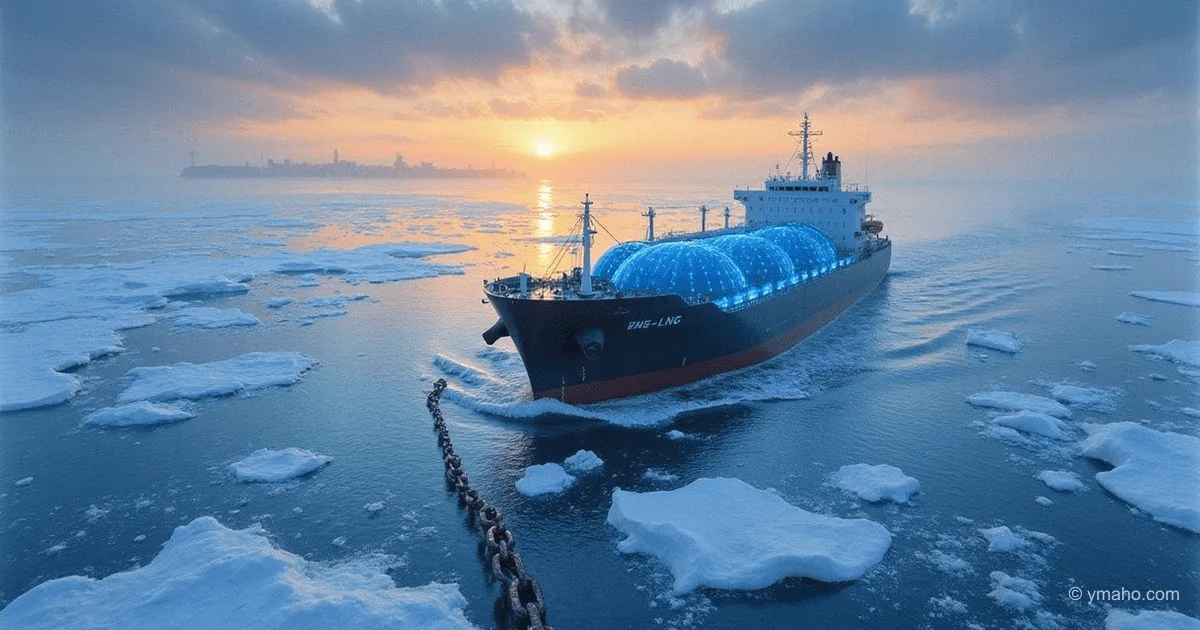
How Gazprom Bypasses Sanctions to Deliver LNG to China
Despite tough U.S. sanctions, Russia’s Gazprom continues shipping liquefied natural gas (LNG) to China — reshaping the rules of the global energy game. For everyday people, this matters: the more revenue Russia earns from energy exports, the longer it can sustain its economy under isolation.
Why This Isn’t Just Another Shipment
In January 2025, the U.S. imposed sanctions on Russia’s ‘Portovaya’ plant — a small but strategically vital facility on the Baltic Sea. With an annual capacity of just 1.5 million tons of LNG (compared to major global plants that produce dozens of times more), the goal was clear: cut off Russia from critical technologies and markets, starving it of gas export income.
Yet by March and April 2025, two tankers, including the vessel Valera, successfully delivered LNG from Portovaya to China’s Beihai port. The message is unmistakable: sanctions aren’t working as intended.
The Backdoor Route Uncovered
Previously, most shipments from Portovaya went to Europe — Turkey, Greece, Spain, and Italy. But after sanctions hit, the route shifted eastward. Now, China has become the key buyer, accepting gas not only from Portovaya but also from another sanctioned project: Arctic LNG-2.
It’s like when a water pipe is shut off in one spot, but water still flows through another tap. Sanctions block some channels, but open others — especially when a buyer is willing to ignore Western pressure.
Here’s how deliveries have changed:
- Before sanctions (winter): ~2 shipments per month, mostly to Europe.
- After sanctions (March 2025 onward): 1 shipment monthly to Kaliningrad + 2 confirmed deliveries to China.
China isn’t just a customer here — it’s a geopolitical partner helping Russia maintain access to the global market.
What Is LNG — and Why Does It Matter?
LNG is natural gas cooled to -162°C, turning it into liquid form. This allows transport via tankers across oceans, not just through pipelines. It makes gas a mobile commodity, much like oil.
For countries without domestic reserves, LNG is a lifeline for energy security. For exporters like Russia, it’s a way to earn hard currency even as European pipeline routes nearly shut down.
What This Means for the Global Economy
Russia is adapting. Losing the European market, it’s deepening ties with Asia. This accelerates the realignment of global energy flows: instead of gas moving west from east (Russia → Europe), it now travels south from north (Arctic → China).
These shifts affect prices, shipping routes, infrastructure investment, and even climate commitments — since transporting LNG requires more energy and generates higher emissions than pipeline gas.
Key Takeaways
- Sanctions haven’t halted exports: Despite restrictions, Gazprom delivered LNG to China at least twice after January 2025.
- China is now a strategic partner: It accepts gas from sanctioned Russian facilities, including Portovaya and Arctic LNG-2.
- Routes have shifted: Gas now flows to Asia instead of Europe, altering the global energy map.
- LNG is a flexible tool: Unlike pipelines, it can go anywhere if a buyer exists.
- Economic survival strategy: LNG revenues help Russia keep its budget afloat under sanctions.
What This Means for Ordinary People
If Russia keeps profiting from energy exports, it extends its economic resilience — possibly prolonging conflicts tied to its foreign policy. Moreover, shifting gas flows could impact energy prices in Asia and even in Europe, where the absence of Russian gas is still felt. Ultimately, these deals show a world with fewer universal rules — nations pick and choose which sanctions to follow, and which to ignore.
— Editorial Team









