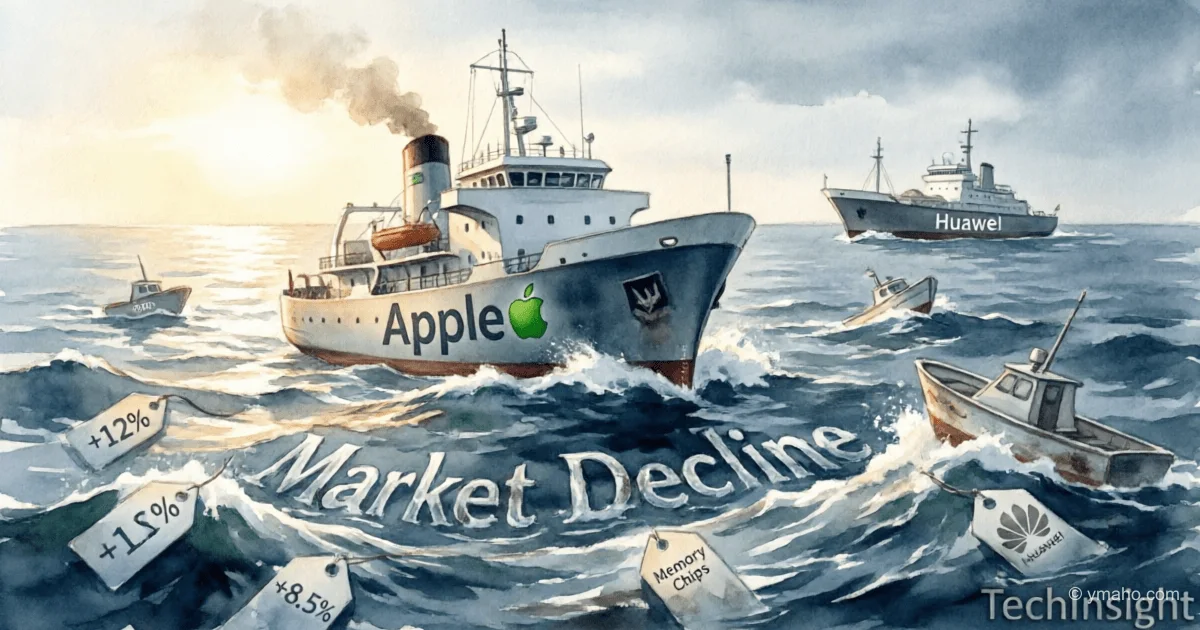
How Apple Grew in China While the Smartphone Market Plummeted: What It Means for You
iPhone shipments in China jumped 20% in the first quarter of 2024, even as the broader smartphone market contracted. This isn’t just relevant for tech enthusiasts: China is the world’s largest consumer electronics market, and its shifts directly impact the pricing and quality of your next device purchase.
Why Did the Smartphone Market Sink While Apple Swam Against the Current?
Imagine you’re a baker, and flour prices suddenly spike by 30%. You either raise the price of your loaves or cut back on your product line. Smartphone manufacturers faced a similar squeeze: driven by soaring demand from AI and data centers, memory chip costs skyrocketed, causing China’s smartphone market to shrink by 4%. Most brands responded by hiking prices on their budget models to protect margins. Apple took a different route.
Instead of raising prices, Apple doubled down on longevity. As Counterpoint Research analyst Ivan Lam points out, “Chinese consumers know an iPhone easily lasts three years.” It’s the equivalent of choosing high-quality leather boots over cheap sandals: higher upfront cost, but better value over time. Meanwhile, Huawei solidified its grip by dominating both the premium tier (the Mate series) and the budget segment (the Enjoy 90), capturing 20% of the market.
The Ripple Effect: Why This Matters Globally
China isn’t just a regional market; it’s the epicenter of global electronics manufacturing, where seven out of every ten smartphones are assembled. When demand for memory chips surges there, prices ripple worldwide. For instance, the AI boom pushed memory makers to prioritize server-grade chips, leaving fewer supplies for consumer devices and driving up the cost of budget phones. Think of it like farmers switching from growing potatoes for fries to something else—suddenly, french fries get pricier in every grocery store.
The rivalry between Apple and Huawei is also a clash of economic models. U.S. export restrictions blocked advanced chips from reaching Huawei, but the Chinese giant adapted by developing its own processors. Today, Huawei ships devices across Africa and Europe, while Apple continues to strengthen its foothold in China. This goes far beyond handsets: these dynamics are shaping how global supply chains will operate five years from now.
Why Did Only These Brands Survive the Downturn?
- Apple: Prioritized device longevity over rock-bottom pricing
- Huawei: Pursued a dual-tier strategy covering both premium and budget lines
- Both: Leveraged deeply integrated ecosystems (apps, services, hardware)
- Pricing agility: Apple held steady on prices while competitors raised theirs
Key Takeaways
• China’s smartphone market contracted by 4% from January to March 2024, weighed down by expensive chips and supply chain bottlenecks.
• Apple posted record growth among top brands at +20%, securing a 19% market share.
• Huawei retained its top spot (20% share) by successfully competing across two distinct price tiers.
• Soaring memory chip costs forced rival manufacturers to increase prices on entry-level models.
• Apple’s success stems from consumer confidence in device longevity—buyers view iPhones as long-term investments.
So what does this mean for everyday consumers? If you’re in the market for a new phone, expect budget models to carry a higher price tag due to component costs, while premium brands will increasingly market durability and lifespan. Economically, it’s a clear signal: even during downturns, consumers still invest in products that last. And as global tech giants adapt to these shifting conditions, those strategies will inevitably filter down to local markets within the next year or two.
— Editorial Team









