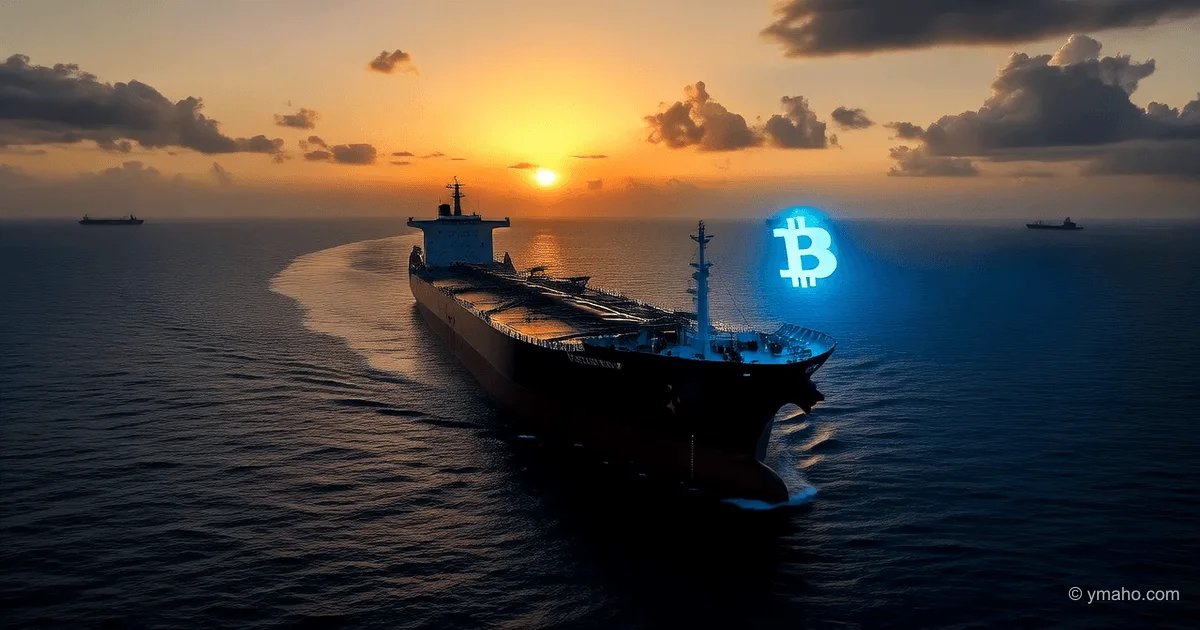
Iran Launches Crypto Insurance for Tankers to Bypass US Sanctions
The Hormuz Safe platform accepts bitcoin for insuring vessels in the Persian Gulf, bypassing SWIFT. Tehran expects $10 billion in annual revenue, but clients will have to forget about calling at Western ports.
Bitcoin Instead of SWIFT: Iran Launches Blockchain-Based Insurance for Tankers
On May 16, 2026, Iran's Ministry of Economy launched Hormuz Safe, a state-run marine insurance platform that accepts bitcoin and other cryptocurrencies for insuring vessels transiting the Persian Gulf and the Strait of Hormuz. Pay with crypto, get instant confirmation on the blockchain, receive a digital receipt — and the vessel is covered. No banks, no SWIFT, no dollar clearing.
The project launched amid a catastrophic collapse of shipping in the region. According to Kpler, monthly traffic through the strait plummeted from the usual 3,000 vessels to 191 in April — a 95% drop. War risk premiums soared from 0.25% to 10% of the vessel's value. Iran offers an alternative to international insurers that have either left the region or priced transit out of economic viability.
Ibrahim Azizi, head of the parliamentary national security committee, stated Tehran's position without diplomatic niceties: "As part of state sovereignty and to ensure the security of international trade, Iran has prepared a professional mechanism for managing traffic in the Strait of Hormuz."
Cryptography Instead of Aircraft Carriers
Hormuz Safe is not charity or tech enthusiasm. It is a calculated response to sanctions that have cut Iran off from the global financial system. For decades, Tehran has sought workarounds for international payments, experimenting with digital assets. Now it is scaling that approach to a critical maritime artery through which 20% of the world's oil and liquefied gas supplies pass.
The scheme works like this: a shipowner or cargo owner pays with bitcoin through the platform. The transaction is confirmed on the blockchain — transparent, irreversible, without intermediaries. The policy activates instantly, and the cargo receives a cryptographically signed receipt. Iranian state entities act as risk underwriters, and the system itself functions as a sovereign financial instrument.
Initially, coverage extends to risks of inspection, detention, and confiscation. Damage from weapons strikes is excluded — at least for now.
The platform is currently a landing page with a "Coming Soon" promise. No details on insurance limits, claims procedures, or the capital backing the obligations have been disclosed. CoinDesk found no evidence that a single vessel has yet used the service.
$10 Billion a Year and the Price of Isolation
Iranian state media, including Fars News Agency, estimate the platform's potential annual revenue at over $10 billion. The calculation methodology is not disclosed, but the logic is clear: the Strait of Hormuz is a chokepoint for global energy. If even a fraction of traffic goes through Iranian insurance, the sums will be astronomical.
The problem is that traffic is currently near zero. The conflict that began in late February with US and Israeli strikes that killed Supreme Leader Ali Khamenei triggered an Iranian blockade of the strait. Tehran says commercial vessels can pass — except those linked to "enemies." But Lloyd's insurers do not share that optimism.
Here, Hormuz Safe offers a deal: pay with bitcoin, get a document that Tehran recognizes as valid. The problem is that no one else recognizes it. International ports, regulators, and counterparties in London, Singapore, and Rotterdam are not obliged to accept an Iranian crypto certificate as legitimate coverage.
OFAC Warns, Market Freezes
The US Treasury responded two weeks before the platform's launch. On May 1, OFAC issued a warning: any party paying Iran a "transit fee" for safe passage risks secondary sanctions. The US also proposed creating its own $400 billion reinsurance fund to cover Hormuz risks without Iranian involvement. The American state is ready to act as the insurer of last resort — just to ensure Hormuz Safe gets not a cent.
On May 16, US Central Command stated bluntly: "Vessels entering and leaving Iranian ports are also subject to CENTCOM's fair maritime restrictions." The signal is unambiguous: a ship that buys Iranian insurance may lose access to Western ports altogether.
The Polymarket market assesses the probability of normalizing shipping in the Strait in the short term as grim, though traders price in a resolution of the conflict by year-end. Treasury Secretary Scott Bessent claims that China — the largest importer of Iranian oil — is working behind the scenes to open the strait. The crisis hurts Beijing no less than Tehran.
Who Wins, Who Loses
Iran wins if the platform works even partially. Even a symbolic flow of bitcoins for insurance creates a channel for hard currency bypassing the sanctions perimeter. This is a precedent that other sanctioned regimes will watch.
Bitcoin wins as an infrastructure asset. The idea that BTC can serve a multi-billion dollar marine insurance market in a geopolitically charged zone is a powerful narrative. The crypto community sees signs of de-dollarization and bitcoin's transformation from a speculative tool into a layer of real trade infrastructure.
International shipowners lose, caught between a rock and a hard place. Don't insure — can't pass the strait. Insure with Iran — face sanctions and lose access to Western ports. A choice with no good options.
Traditional insurers and reinsurers lose, especially the London market. If Hormuz Safe captures even a fraction of traffic, it will create an alternative marine insurance jurisdiction beyond Western regulators' control.
Finally, the entire crypto sector is at risk. Any blockchain or token found servicing the Iranian platform risks direct OFAC sanctions. This is not a hypothetical risk — US regulators have a long track record of pursuing entities that interact with Iranian state bodies.
What Happens Next
Hormuz Safe is a bet on a protracted conflict. If the blockade drags on for months, desperate shipowners from countries already operating in the sanctions gray zone will start testing the platform. The first clients will not be Maersk or COSCO, but small operators from jurisdictions with limited access to Western insurance markets.
The key trigger is June. If traffic through the strait does not recover and war risk premiums remain in double digits, Hormuz Safe will begin receiving real transactions. By the end of 2026, the platform will either become a functioning sanctions evasion mechanism with hundreds of millions of dollars in turnover, or remain a propaganda project with a placeholder landing page.
The second option is more likely — but the first is no longer science fiction. Tehran has put blockchain at the service of geopolitics, and that changes the rules of the game regardless of Hormuz Safe's commercial success. Cryptocurrency has officially become an instrument of state sovereignty in the hottest spot of global logistics.
— Editorial Team









