Japan’s Private Spacecraft to Inspect Dead Satellites—Why It Matters for Everyone
In 2027, a Japanese company will send a spacecraft to closely examine two dead satellites orbiting Earth—a world-first mission that could shape how we manage space junk. If you’ve ever worried about satellites crashing into each other or blocking future missions, this is a big step toward keeping space safe and usable.
Why inspect dead satellites?
Imagine your car breaks down on a highway and just sits there, rusting. Now imagine dozens—then thousands—of broken cars piling up on every lane, moving at 17,000 miles per hour. That’s roughly what’s happening in orbit: over 5,000 defunct satellites and rocket parts are circling Earth at extreme speeds, posing collision risks to working satellites that power GPS, weather forecasts, and even your phone’s map app.
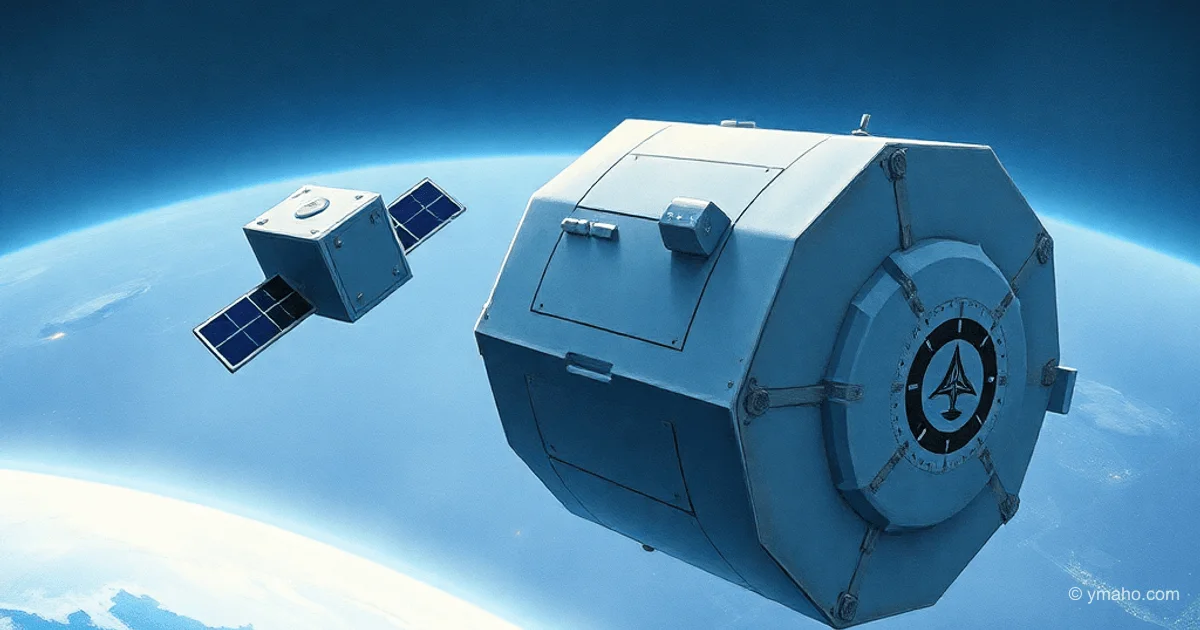
Astroscale, a private Japanese firm, plans to launch its ISSA-J1 spacecraft in 2027 to get up close with two retired Earth-observing satellites: ALOS (launched in 2006) and ADEOS-II (2002). Both failed years ago but remain in orbit like silent, drifting hulks.
How the inspection works
The ISSA-J1 craft weighs about as much as a small car (1,430 lbs) and carries high-resolution cameras and sensors. It won’t touch the dead satellites—instead, it will slowly approach each one, circle it carefully, and take detailed images from multiple angles.
This “rendezvous and proximity operation” is like sending a drone to hover around a stranded ship at sea, checking for damage without boarding it. The goal? To understand why these satellites failed and whether they can be safely moved or removed later.
Key steps in the mission:
- Launch in 2027 into a lower orbit near ALOS (429 miles up)
- Gradually approach ALOS, starting observations from a safe distance
- Move closer for detailed imaging over several days
- Fire thrusters to climb to ADEOS-II’s higher orbit (500 miles up)
- Repeat the inspection process with the second satellite
Why this isn’t just about old metal
Space may seem far away, but it directly affects daily life. Your weather app, emergency alerts, and even financial transactions rely on satellites. If debris causes a chain reaction of collisions—called the Kessler Syndrome—it could knock out entire satellite networks for decades.
By inspecting dead satellites, Astroscale is testing technologies needed for future “space tow trucks” that could nudge junk into safer orbits or deorbit it entirely. Japan’s government is backing this effort as part of a broader push to lead in space sustainability.
What does this mean for regular people?
Safer skies above mean more reliable services below—from accurate storm warnings to stable internet in remote areas. This mission also shows that cleaning up space isn’t just a government job; private companies can play a key role. And if successful, it could set global standards for how nations handle orbital clutter before it becomes an unfixable problem.
Key takeaways
- Astroscale’s ISSA-J1 will be the first mission to inspect multiple dead satellites in different orbits.
- The two targets—ALOS and ADEOS-II—are bus-sized, nonfunctional satellites still circling Earth.
- Close-up data will help engineers design better removal systems and prevent future space traffic jams.
- Japan is positioning itself as a leader in space sustainability through public-private partnerships.
- Success could pave the way for routine satellite servicing and debris cleanup by the 2030s.
— Editorial Team









