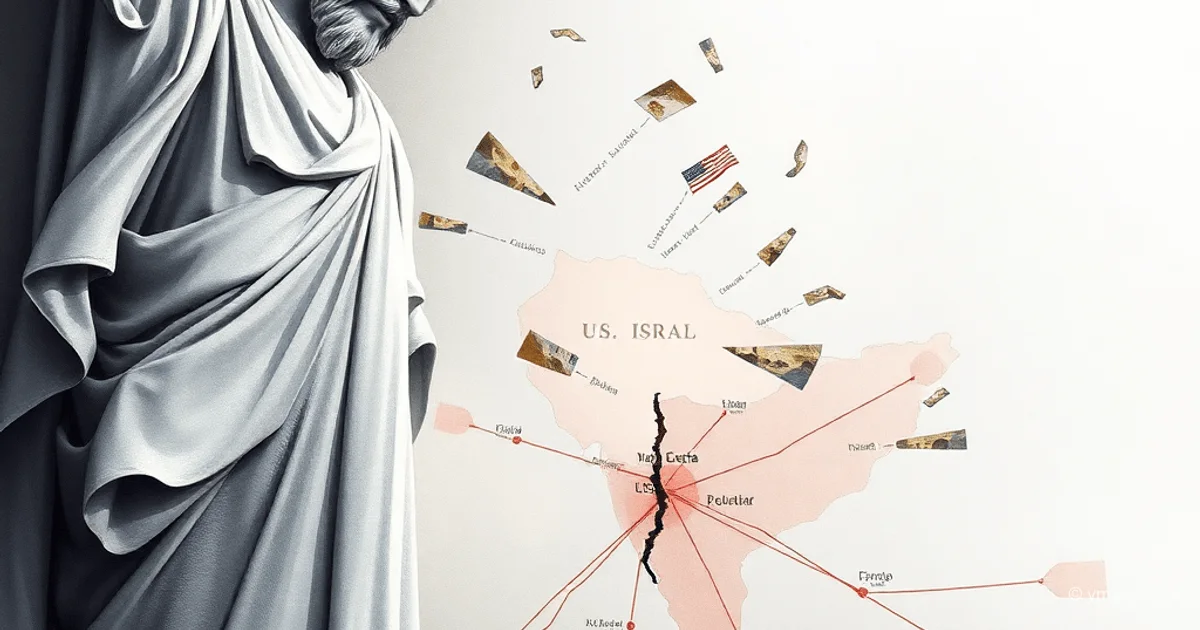
A Statue's Destruction Sparks a Political Shift in U.S. Support for Israel
A photo of an Israeli soldier destroying a statue of Jesus in Lebanon has ignited a surprising wave of criticism within the United States, even among some of Israel's traditional supporters. This single act is becoming a symbol that could reshape long-standing political alliances and the flow of American aid, affecting everything from foreign policy to global energy prices.
For decades, U.S. support for Israel was a given, especially among conservative and Christian groups. The image of a soldier using a sledgehammer on a religious symbol has challenged that unity. Think of it like a trusted neighbor doing something that shocks the entire community, making people question their friendship. This incident is adding to existing frustrations over prolonged Middle East conflicts and their costs.
The Mechanism of Political Pressure
Key figures who once strongly backed Israel are now speaking out. This includes influential commentators and former politicians aligned with the "Make America Great Again" movement. Their criticism focuses on two main points:
- The annual billions of dollars in U.S. military aid sent to Israel.
- A pattern of actions against religious sites, not just this one statue.
Israeli Prime Minister Benjamin Netanyahu condemned the act and promised an investigation. However, critics point to other documented incidents where Israeli forces damaged churches and mosques in Lebanon and Gaza, suggesting this is part of a broader pattern rather than a lone soldier's mistake.
The Wider Economic and Social Impact
Political shifts can have concrete, real-world consequences. When alliances change, it can influence:
- Government Spending: Debate over continued military aid could affect how U.S. taxpayer money is allocated.
- Global Markets: The article mentions that a related U.S.-Israel conflict with Iran previously caused oil prices to soar. Oil prices affect the cost of gasoline, heating, and countless products worldwide.
- Local Communities: Attacks on religious sites deepen tensions for Christian and Muslim communities living in conflict zones, impacting their safety and heritage.
Key Takeaways
Here are the core facts and implications from this event:
- Symbolic Trigger: The destruction of a religious statue acted as a powerful catalyst, galvanizing criticism across political lines.
- Financial Scrutiny: The debate now directly links Israel's actions to the substantial U.S. financial support it receives.
- Pattern of Behavior: Historical context shows this incident is not isolated; other attacks on churches and mosques have been reported.
- Political Recalculation: Support for Israel in the U.S. is at a historic low, causing a reevaluation within its traditional political base.
- Market Sensitivity: Geopolitical tensions in the region have a proven history of impacting global commodity prices, like oil.
What does this mean for regular people?
Changes in international alliances can trickle down to everyday life. A serious reduction in U.S. support could alter regional stability, potentially affecting energy costs. For communities in conflict areas, it underscores the ongoing threat to cultural and religious sites. Ultimately, it shows how a single image can accelerate larger political and economic conversations.
— Editorial Team









