Korean bankers create 'stable won' for instant transfers
KB Financial Group tested a blockchain system where coffee is paid for via QR code without a digital wallet. Transfers to Vietnam now take 3 minutes instead of three days and cost 87% less
Three minutes to Vietnam: How KB Financial reinvented money transfers and beat SWIFT
KB Financial Group just completed a cross-border transfer to a Vietnamese recipient that cost 87% less than usual and took three minutes. No correspondent banks, no SWIFT messages, no three-day delays. Just a stablecoin pegged to the won, a couple of smart contracts, and a dash of blockchain magic from Kaia.
On May 17, 2026, Korea's largest financial group announced the completion of a technical pilot covering the full stablecoin lifecycle: issuance, offline payments, merchant settlements, and international transfers. Partners included electronic payment operator KGINICIS, L1 blockchain Kaia, and digital asset solutions provider OpenAsset.
Coffee bought by smart contract
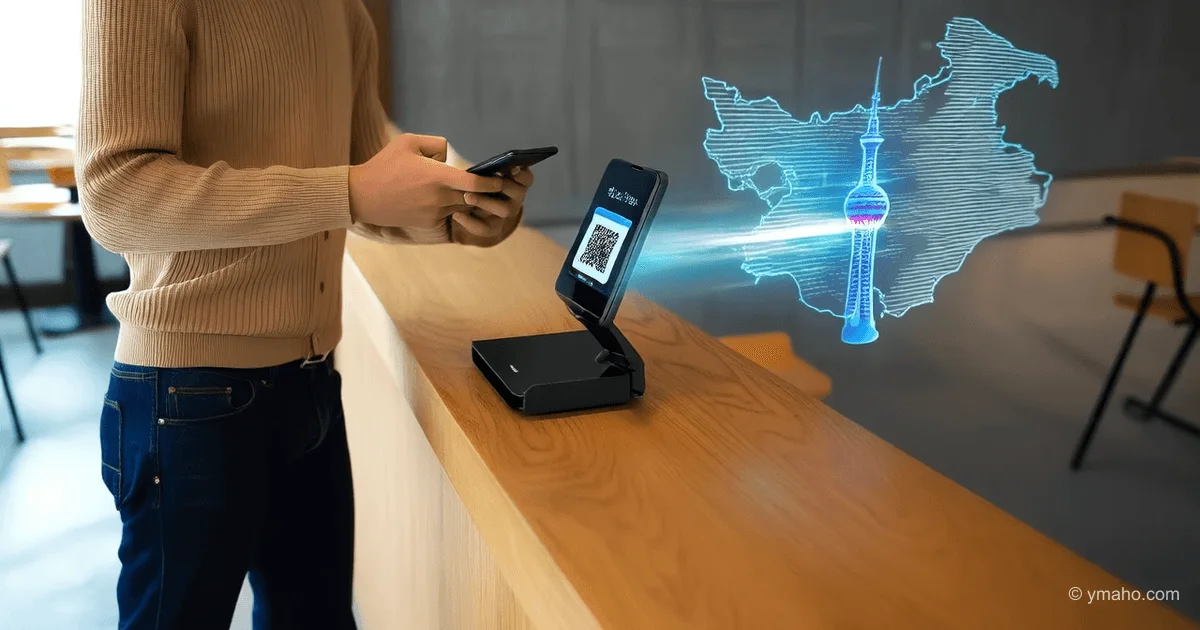
The offline test took place at HOLLYS coffee shop chain. Customers scanned a QR code on the self-service terminal — and that was it. No digital wallet. No app to install. No crypto exchange registration.
Under the hood, however, the real purpose was unfolding: the smart contract automatically triggered merchant settlement, reconciliation, and clearing. The user experience remained unchanged — that was a deliberate design choice. KB Financial took a hard-nosed pragmatic approach: if blockchain requires new habits from users, it won't take off. If it simply makes the backend faster and cheaper, people will adopt it without even noticing.
The group's internal settlement infrastructure migrated from traditional banking rails to blockchain. Not a pilot in an isolated sandbox, but full integration with production systems.
87% savings and three minutes that change the region
The most impressive result came in international transfers. The scheme worked like this: the won stablecoin was converted into a dollar stablecoin via Kaia's on-chain liquidity, and then a local Vietnamese partner credited fiat to the recipient's real bank account.
Three minutes — and the money was in Vietnam. For comparison, a SWIFT transfer along this corridor takes anywhere from several hours to several days. Fees dropped by roughly 87%.
This is not a lab experiment with test tokens. It's a live transaction that went through a real bank account in Vietnam. KB Financial effectively demonstrated a working prototype of a SWIFT alternative for one of Asia's busiest remittance corridors. Vietnam is the third-largest recipient of remittances from Korea, and Korean workers sending money home lose millions of dollars annually in fees and conversion margins.
Legislative bottleneck that could spoil everything
KB Financial's pilot is not just a tech demo. It's a race against parliament. Korea's Digital Asset Basic Act, the second phase of virtual asset regulation, is stalled in the National Assembly.
The reason is mundane: a dispute over who can issue won stablecoins. The Bank of Korea is adamant: only banks have the right to issue such tokens. Lawmakers are wavering. The timeline has slipped — first to end of 2026, and now, by some estimates, to early 2027.
Finance Minister Choo Kyung-ho publicly acknowledged the need for timely regulation. The Financial Services Commission proposed a licensing regime for stablecoin issuers modeled on banking standards. But while lawmakers argue, dollar stablecoins have already surpassed $300 billion in market capitalization. Singapore, Hong Kong, and the UAE have moved from banning stablecoins to actively integrating them institutionally.
Korea risks missing the market where it had a chance to become a regional leader.
Competitive landscape: Who else is building blockchain payments
KB Financial is not alone in its interest in blockchain settlements. Kbank is testing international transfers based on Ripple for corridors to Thailand and the UAE. Hana Financial Group launched a pilot with Circle and Crypto.com, promoting USDC payments for foreign tourists. Danal, a Korean payment operator, deployed a blockchain service in partnership with Binance Pay.
Meanwhile, the Bank of Korea is running Project Hangang — a pilot with deposit tokens involving Hana Bank and the CU retail chain (18,800 stores nationwide). There, consumers pay with tokenized deposits via a banking app — also via QR code, also without additional equipment for stores.
KB Financial's edge lies in integration. The project covered four layers at once: issuance, retail payment, merchant settlement, and international transfers. No competitor has shown a full cycle within a single pilot.
Who wins, who loses
Winners: migrant workers and small businesses dealing with international suppliers. An 87% fee reduction on the Korea-Vietnam corridor means hundreds of dollars saved on each large transfer. If KB Financial scales the system to other ASEAN countries, the impact on regional trade will be in the billions.
Winner: KB Financial Group as an institutional pioneer. When the Digital Asset Basic Act finally takes effect, the group will already have a battle-tested system ready to launch commercial service immediately. Competitors that waited for regulatory clarity will be left at the starting line.
Loser: SWIFT — not financially yet, but strategically. A three-minute transfer for pennies is exactly what blockchain skeptics have long declared impossible for the real banking sector. KB Financial showed it's possible, it works, and it's ready to scale. SWIFT won't disappear tomorrow, but each such pilot chips away at its monopoly on cross-border settlements.
Also losing: intermediary banks in the correspondent banking chain. Each stablecoin transfer via an on-chain liquidity pool removes two to three links from the chain — and their fees along with them.
What happens when the law finally passes
KB Financial stated outright: "We will be ready to launch a real service the moment the Digital Asset Basic Act takes effect." This is not a figure of speech. The pilot confirmed technical readiness, partners (KGINICIS, Kaia, OpenAsset) are fine-tuned, and integration with the group's internal systems is complete.
Two scenarios for the next 18 months. First: the law passes by end of 2026, KB Financial launches commercial service in Q1 2027 — and Korea becomes the first Asian market with a bank-issued stablecoin in national currency. Second: the law stalls until mid-2027, competitors from Singapore and Hong Kong capture the Asian stablecoin transfer market, and Korean banks are left with excellent pilots and zero market share.
The first scenario looks more likely — too many institutional players have staked their reputations and budgets. The Bank of Korea, KB Financial, Hana Bank, BGF Retail, and politicians from the Democratic Party have all invested in blockchain payments. The law will pass. The question is only when.
And when it does, three minutes to Vietnam will cease to be news and become everyday reality. And that, perhaps, is the best compliment any financial technology can receive.
— Editorial Team









