Iran's Supreme Leader Announces New Measures for 'Willful Confrontation' with US and Israel
Ayatollah Khamenei held a meeting with military commanders, discussing excellent defensive readiness and a plan to respond to potential aggression.
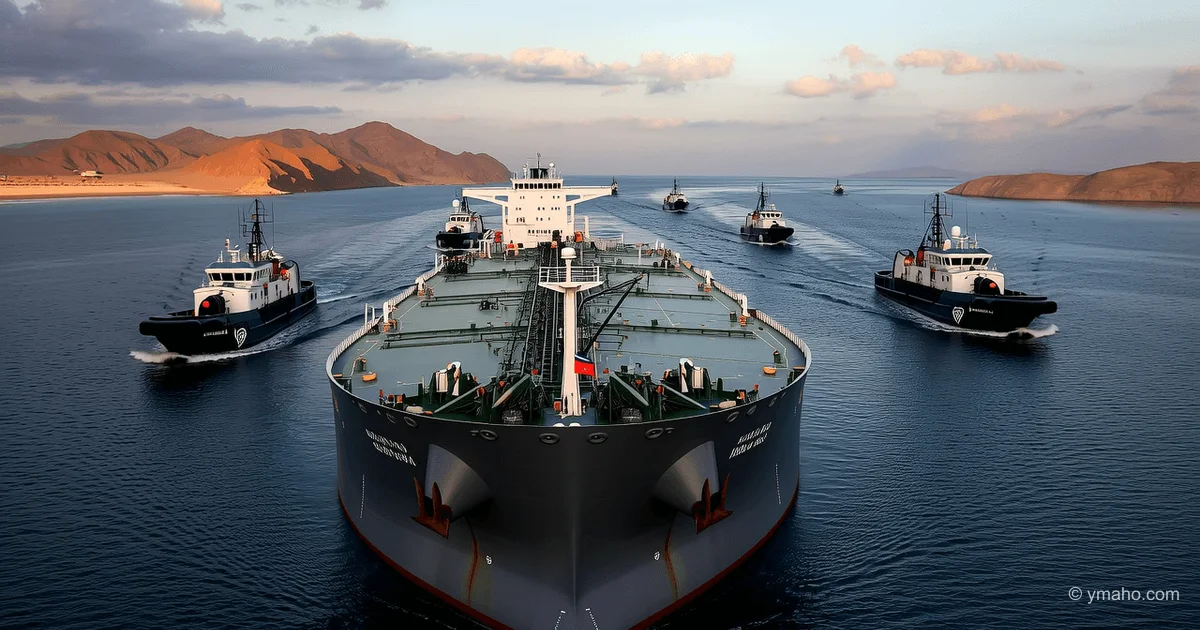
My name is Darius, a former maritime security analyst who worked for Lloyd's and advised the Pentagon on risks in the Persian Gulf. When Ayatollah Khamenei announces "new measures for willful confrontation," Western press habitually dismisses it as ritual rhetoric. But if you read not the headlines but the briefings from the Khatam al-Anbiya headquarters and the protocols of the parliamentary national security commission, a different picture emerges. This is not just a "meeting with military commanders" — it is the public legitimization of Iran's transition from asymmetric defense to offensive logistical warfare.
The Essence: What Is Really Happening
Formally, Khamenei conducted a readiness review. In reality, he approved the final version of the "smart management" doctrine for the Strait of Hormuz. This is not defense; it is an attack on the entire architecture of maritime law.
Iran's Parliamentary National Security Commission has finalized a bill that declares passage through the strait not a right but a privilege granted by Tehran. Parliament Speaker Mohammad-Bagher Ghalibaf has already publicly stated: "They will be shocked by the retaliatory actions of the Iranian armed forces." This is not about missiles — it is about a new legal regime that will cost the global economy billions of USD.
Timeline and Context
Events of the last five days form an escalation logic that the West has yet to grasp.
May 9–10, 2026: Khamenei meets with the commander of Iran's Central Military Headquarters "Khatam al-Anbiya," Ali Abdollahi. The general reports on "excellent defensive and offensive readiness." But the main event occurs behind closed doors: a new directive is approved, placing the Strait of Hormuz under "comprehensive and full control" of Iranian security forces.
May 11: National Security Commission head Ebrahim Azizi announces that the "smart management" plan for the strait has been submitted to the parliamentary system for approval. His words: "The missile triad, the people, and the Strait of Hormuz have destroyed the product of 50 years of US efforts." This is a direct reference to Tehran's economic weapon proving more effective than military force.
May 12: The US and Israel resume airstrikes on IRGC targets in Syria and Yemen. Washington explains this as a breakdown in negotiations by Trump, but the real reason is an attempt to dismantle the new strait management system before it takes effect.
May 13: Iranian General Mohammad Akraminia makes a statement that went unnoticed in Western reports: "Iran will no longer allow the passage of American weapons through the strait to regional bases." This refers to the US Navy's Fifth Base in Bahrain. This is not a threat — it is an official change to the rules of navigation.
Who Wins and Who Loses
Losers: Lloyd's syndicates.
The marine insurance market faces collapse. If the Iranian law takes effect, all vessels heading to Jubail or Al Jubail must obtain an Iranian license. This means that a standard P&I Club policy will no longer cover war risks if the captain lacks a document from Tehran. Rate adjustments will begin on May 15. Expected increase: up to 2% of hull value per week. For a $220 million LNG carrier, that means $4.4 million weekly just for insurance. Traffic will halt on its own, without a single shot.
Winners: Oman and Pakistan.
Azizi mentioned that the bill allows the Iranian government to negotiate with Oman on co-management of the strait. Muscat gains unprecedented leverage: the port of Salalah becomes the only legal entry point into the Gulf for Western vessels approved by Tehran. Pakistan has already signed an agreement with Iran for the safe passage of two Qatari LNG tankers. This means Islamabad becomes the main beneficiary of transit fees on the Gwadar–Karachi route. The price for "protection" is loyalty to Iranian rules.
What the Media Leaves Out
Submarine Internet as an Asset
Here is an insider tip I received from a source in the Dubai office of a major telecom operator. While everyone discusses tankers and missiles, Iranian lawyers are preparing an attack on the fiber-optic cables running along the bottom of the Strait of Hormuz. Azizi's bill includes an economic section requiring foreign submarine cable operators — Google, Microsoft, Meta, Amazon — to obtain annual licenses from Tehran and pay fees.
Seven major cables pass through Hormuz, including AAE-1, FALCON, and Gulf Bridge International. They carry up to 90% of digital traffic between Asia, the Gulf, and Europe. Fars News has already proposed applying the same rules to cables as to ships: "Cables have the same status as ships in the strait." Tasnim goes further: it suggests requiring foreign operators to work under Iranian law and hand over repair work to Iranian companies.
If this clause makes it into the final law, Tehran will gain not only money (license fees estimated at $2.5 billion per year) but also the ability to "cut off" the Persian Gulf's internet at any moment. This is a weapon against which the Pentagon has no countermeasure. No destroyer can protect fiber optics from an underwater drone.
Forecast: Next 30 Days and 90 Days
30 days (by June 14, 2026):
The "smart management" law for the Strait of Hormuz will pass approval in the parliament by June 10. The Ayatollah will sign it immediately. The US will respond with a new sanctions package, but it will be meaningless: Iran is not exporting a law; it controls the water. French and British vessels will be the first to be hit. Paris and London have already announced a mission to unblock the strait — and now every one of their ships will be considered "hostile" by definition. Insurance rates will skyrocket, effectively paralyzing commercial shipping under European flags.
90 days (by mid-August 2026):
Iran will begin issuing "transit licenses" for selected operators from China, Pakistan, and Turkey. This will create a two-tier system: "clean" ships pass smoothly, "toxic" ones wait for weeks. De facto, this will split the global merchant fleet into two camps. Brent crude will settle in the $130–145 per barrel range. Asian economies dependent on Middle Eastern oil will enter recession.
But the worst-case scenario is not even the oil price. It is the fiber-optic blackmail. If Tehran follows through on its threat to take control of submarine cables, the digital economy of Dubai, Abu Dhabi, and Manama will fall into the hands of the IRGC. This is not a military conflict — it is a new world order where water and data are worth more than missiles.
— Editorial Team









