Next-Generation CAR-T Cells: Scientists Propose Accounting for 'Tumor Neurobiology' to Treat Brain Cancer
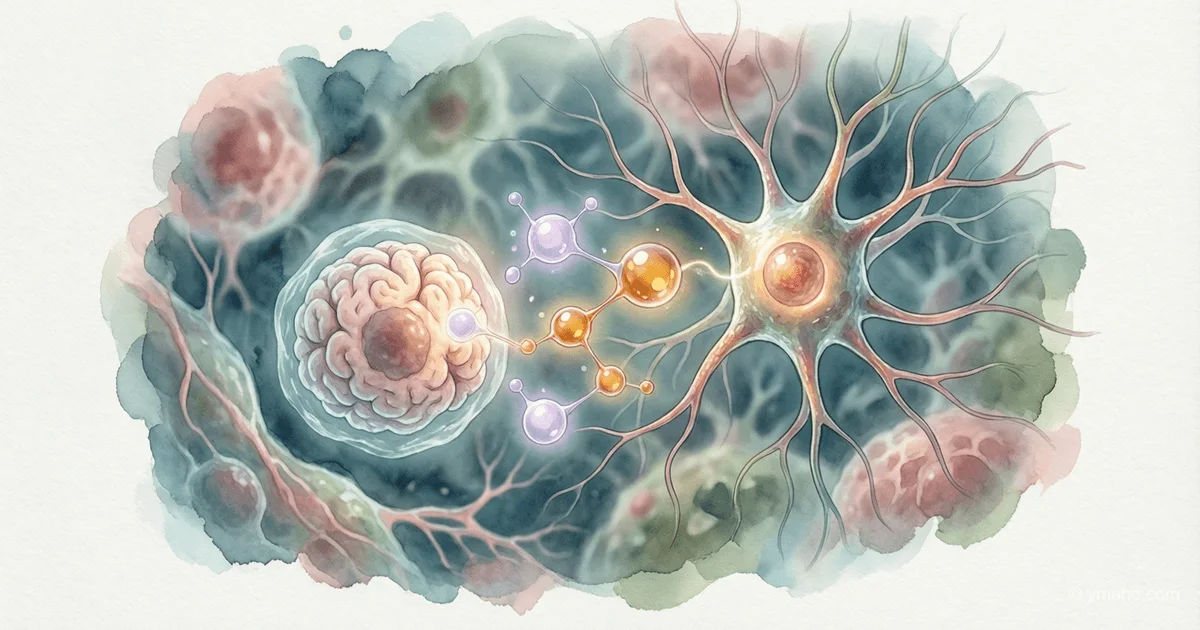
A perspective article in the journal Cytotherapy from researchers at Children's National Hospital (Washington) proposes a new approach to glioblastoma therapy. The authors argue that for CAR-T cells to be effective in the brain, neurotransmitter signals must be considered and the cells reprogrammed to the organ's unique neurochemical environment.
NEURO-IMMUNE GAP: Why CAR-T Doesn't Work in the Brain and What to Do About It
[The Gist]: What's Really Happening
On May 21, 2026, a perspective article by researchers at Children's National Hospital in Washington was published in the journal Cytotherapy, proposing a rethink of CAR-T cell design for brain tumors.
The authors—Mostafa Seblani, Serge Yacoub, Patrick Hanley, and Dalia Haydar—articulate a simple yet revolutionary idea: for decades, we have tested CAR-T cells in peripheral models and then wondered why they don't work in the brain.
What's in the brain? Neurotransmitters. Dopamine, serotonin, norepinephrine, glutamate, GABA. These molecules, which neurons use to communicate with each other, are also powerful modulators of immune cells.
Researchers at Children's National Hospital show that CAR-T cells entering the brain find themselves in an environment saturated with neurotransmitters they have never "encountered" in a culture dish. These molecules bind to receptors on the surface of T cells and alter their behavior—activation, differentiation, migration, checkpoint expression.
We engineer CAR-T against the tumor antigen. But we don't engineer them against the signaling and metabolic environment they enter. It's like sending a climber to the Himalayas without acclimatization.
Timeline and Context
2023: Breakthrough work by Krishna and Taylor in Nature shows that neurons form direct synaptic contacts with glioblastoma cells. Glutamate released by neurons stimulates tumor growth.
2024–2025: A new interdisciplinary field emerges—"neuro-immuno-oncology." Studies show that neurotransmitters modulate T cells in peripheral tumors: serotonin affects antitumor immunity in melanoma, bladder cancer, and colorectal cancer.
March 2026: A publication in BMC Medicine (Zhang et al.) using a human neocortex slice model shows that CAR-T cells in glioblastoma rapidly exhaust due to interactions with myeloid cells in the neuronal environment.
April 2026: At the ISCT (International Society for Cell & Gene Therapy) conference, the same group from Children's National presents data that epigenetic modulation during CAR-T production increases their persistence by 3–5 times.
May 21, 2026: Publication of the perspective article in Cytotherapy. Haydar and colleagues call for integrating "regional neurochemical profiling" into CAR-T cell design for brain tumors.
Key quote from the article: "How neurotransmitters modulate T cells has mainly been studied in peripheral tumors, which likely differs greatly from the local brain environment. It is time to consider neurotransmitters when manufacturing CAR-T for brain tumors."
Who Wins and Who Loses
Winners:
- Children's National Hospital (Washington). This institution is systematically building expertise in CAR-T for pediatric brain tumors. They are already conducting preclinical studies of B7-H3-directed CAR-T and CAR-iNKT cells. Their research platform includes epigenetic modulation (DNA methyltransferase inhibitors that increase CAR-T persistence) and now neurotransmitter-informed design.
- Patients with glioblastoma and pediatric brain tumors. Glioblastoma remains a disease with nearly 100% lethality. Standard therapy (surgery plus chemoradiation) yields a median survival of less than 2 years. CAR-T has shown success in hematologic cancers but has failed in all clinical trials for glioblastoma. If Haydar's approach works, it will open a new era.
- Researchers in neuroimmunology. The Cytotherapy article legitimizes a new direction. Expect NIH (National Institutes of Health) grants for studying neurotransmitter modulation of CAR-T. A typical R01 is $1.5–2.5 million USD over 5 years.
Losers:
- Companies developing CAR-T for solid tumors without considering the microenvironment. Many startups (e.g., Carisma Therapeutics, Lyell Immunopharma) still test CAR-T on standard models. After this article, investors will start asking, "Are you accounting for neurotransmitters?" Without an answer, funding rounds may be in jeopardy.
- Traditional preclinical testing models. Standard xenografts in immunodeficient mice do not replicate the human neuronal microenvironment. Zhang's study (BMC Medicine, March 2026) showed that the human neocortex slice model yields completely different results than mouse models. This means many positive preclinical data may be model artifacts.
- Approaches focusing only on the antigen target. The industry has spent decades searching for the "ideal antigen" for CAR-T in glioblastoma: EGFRvIII, HER2, IL-13Rα2, B7-H3. None have achieved clinical success. Haydar's article suggests the problem is not the target but that CAR-T cells "die" from neurochemical shock, regardless of which antigen they recognize.
What the Media Isn't Saying
Non-obvious Insight #1: 'Smart' CAR-T that sense neurotransmitters already exist—but not for cancer
In the Cytotherapy article, the authors reference studies showing that T cells express neurotransmitter receptors: dopamine receptors (DRD1–DRD5), serotonin receptors (5-HTR), adrenergic receptors (ADRB1–ADRB2).
The idea the authors don't develop but is in the air: engineer CAR-T so that a neurotransmitter enhances their activity rather than suppresses it.
Imagine a CAR-T cell programmed to recognize glioblastoma via the CAR and simultaneously receive a co-stimulatory signal from glutamate (which is abundant in the glioblastoma microenvironment because neurons form synapses with the tumor). Or conversely, a CAR-T that turns off in the presence of dopamine (if dopamine is immunosuppressive).
Such design requires knowing which neurotransmitter acts in which direction. That knowledge is not yet available. Haydar's study is not a solution but a "roadmap" for finding one.
Non-obvious Insight #2: Children's National's real breakthrough is not neurotransmitters but the combination of approaches
On May 21, the neurotransmitter article came out. But a month earlier, on April 30, the same group (Haydar, Van Noy, El-Gorayeb) presented data on epigenetic modulation of CAR-T at the ISCT conference.
What did they do? They added low doses of DNA methyltransferase inhibitors (azacitidine, zebularine, GSK3685032) to the CAR-T manufacturing process. Result: CAR-T cells expanded 3–5 times more, showed reduced exhaustion markers, and maintained function at lower effector-to-target ratios.
These two approaches—neurotransmitter and epigenetic—share a common goal: making CAR-T resistant to the brain's suppressive environment. But the mechanisms differ. Epigenetic modulation "reprograms" the cell at the DNA methylation level. The neurotransmitter approach teaches the cell to "sense" the environment and respond.
The "missing link" no one talks about: neurotransmitters can influence the T cell epigenome. Chronic dopamine exposure, for example, may cause lasting methylation changes. So perhaps these two approaches are not alternatives but pieces of the same puzzle.
Non-obvious Insight #3: The CAR-T problem in glioblastoma has four layers, and neurotransmitters are only one
A 2024 systematic review in Cells identified four main barriers:
- Immunosuppressive microenvironment (myeloid cells, Tregs, cytokines IL-6/IL-1β/TNF-α)
- Antigen heterogeneity and antigen loss
- Toxicity and safety (brain edema, increased intracranial pressure)
- Blood-brain barrier limiting cell delivery
Zhang's study (March 2026) added a fifth layer: myeloid cells in the glioblastoma microenvironment suppress CAR-T through specific ligand-receptor interactions. Transcription factors MAF and BACH2 were identified as regulators of T cell exhaustion.
Neurotransmitters are the sixth layer. Or perhaps they are the integrator of all others, because neurotransmitters affect immune cells, myeloid cells, the barrier itself, and tumor survival.
Forecast: Next 30 Days and 90 Days
30 days (by end of June 2026):
- Discussion in the scientific community. The Cytotherapy article is a perspective, not a research article. That means it aims to provoke discussion. Expect comments in the Journal for ImmunoTherapy of Cancer (JITC) and Neuro-Oncology. Key question: how to measure neurotransmitter effects on CAR-T in the human brain in vivo?
- Experiment plans. Laboratories working on CAR-T for glioblastoma (at University of Pennsylvania, Baylor College of Medicine, Stanford) will begin designing experiments to screen the effects of individual neurotransmitters (glutamate, GABA, dopamine, serotonin) on CAR-T activation and exhaustion.
- Interest from pharmaceutical companies with CAR-T portfolios. Novartis (Kymriah), Gilead (Yescarta, Tecartus), Bristol-Myers Squibb (Breyanzi) will look at these data. But they are mainly focused on hematology. Entering glioblastoma is high risk for them. Smaller biotechs specializing in solid tumors are more likely to show interest.
90 days (by end of August 2026):
- Full research article. Haydar's team is likely preparing a research article with experimental data on neurotransmitter modulation of CAR-T. A logical venue is Nature Biotechnology or Science Translational Medicine. If results confirm the concept, it will be big news.
- Clinical trials will not start—too early. Everything is at the hypothesis stage. Before going to the clinic, we need to:
- Determine which neurotransmitters are critical in the human glioblastoma microenvironment (not mouse)
- Engineer CAR-T with receptors for those neurotransmitters
- Test in primate models (or human brain slices, as Zhang did)
This will take at least 2–3 years.
- New NIH grants. In August, NIH announces results of grant applications (June 2026 cycle). Expect at least 2–3 projects on CAR-T neuroimmunology to receive funding. Typical budget: $500,000–750,000 USD per year for 4–5 years.
Main forecast:
In 3–5 years, we will see second-generation CAR-T cells for glioblastoma that are "smart" not only about the antigen but also about the neurochemical environment. They will be programmed to recognize not just CD276 or HER2 but also to "sense" glutamate or dopamine levels to modulate their activity.
Haydar's article is not a technological breakthrough. It is a paradigm shift in thinking. And sometimes a shift in thinking is more important than a molecule. Because if you think incorrectly, no molecule will help. And if you start thinking correctly, you open up hundreds of new molecules you never suspected.
That is exactly what is happening now in CAR-T for brain tumors. We have stopped thinking of glioblastoma as a "tumor" and started thinking of it as a "neuro-immune disease." And that is a whole different ball game.
— Editorial Team









