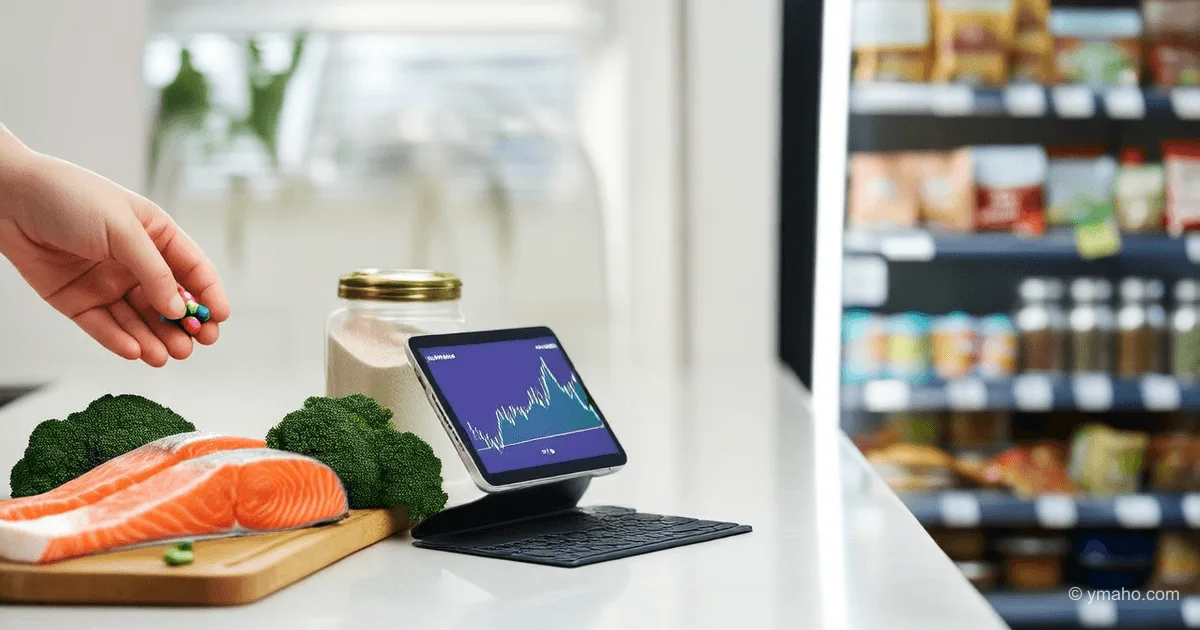
Shifting the Dietary Paradigm: From Strict Diets to Long-Term Body Support
Analysts note a move away from extreme restrictions in favor of supplements and a longevity-focused eating style. Consumers are prioritizing not rapid weight loss but visible health improvements—skin quality, hair, and sustained energy.
We stand on the brink of the most significant overhaul of the consumer plate since the invention of fast food. What mass media presents as a "conscious shift toward longevity" is actually a tectonic shift driven not so much by human enlightenment as by a pharmacological revolution for which the food industry was catastrophically unprepared.
[The Core]: What's Really Happening
We are dealing not with a gradual evolution of preferences but with a forced disruption of eating behavior. GLP-1 agonists (Ozempic, Wegovy, Mounjaro) are changing not just appetite—they are turning off the "food noise," that obsessive craving for food on which the snack and impulse-buy economy has relied for decades. J.P. Morgan predicts that by 2030, 25 million Americans will be on these drugs. Goldman Sachs estimates the potential GDP boost from improved health at over 1%—a colossal figure for such an indicator.
The key here is the difference between pharmacology and choice. When a person on semaglutide picks up fewer calories from the shelf, it's not because they've "switched to a healthy lifestyle," but because their brain has stopped demanding a reward. Researchers at Cornell found that households with a GLP-1 user cut fast-food spending by 8% and total grocery spending by 5.3%. The snack, cookie, and frozen meal market—the core of supermarket "center aisles"—is already losing volume.
Timeline and Context
- October 2023. Walmart reports that customers on Ozempic are buying "slightly fewer calories." Shares of food giants (General Mills, Campbell's, Conagra) plummet 18% in a matter of days.
- 2024–2025. A temporary stabilization occurs: analysts decide fears are overblown. However, a second wave of decline hits the sector in 2025. By early 2026, shares of Kraft Heinz, Conagra, and General Mills are down 17% to 50% from their peaks.
- Late 2025 – Early 2026. The FDA approves oral forms of GLP-1 (Novo Nordisk), and Eli Lilly prepares to launch its drug orforglipron. This is a critical moment: a pill removes the injection barrier, and the adoption rate soars. J.P. Morgan notes the incretin market will grow to $200 billion by 2030.
- May 2026. On Target shelves and in online carts, a new reality takes shape: consumers are reallocating dollars from "center aisles" (ultra-processed food) to the "perimeter"—fresh meat, eggs, yogurt, and functional supplements.
Who Wins and Who Loses
Winners:
- Longevity supplement market. The numbers speak for themselves: growth from $8.75 billion in 2025 to $14.3 billion in 2030 at a CAGR of 10.2%. The trend is fueled not only by GLP-1 (drugs deplete micronutrient stores, requiring replenishment) but also by a deep-seated demand for "healthy aging." Investors view NAD+ boosters, peptides, and nutrigenomics as the new S&P 500 of the wellness sector.
- Healthy perimeter retailers. Whole Foods, Sprouts, and similar outlets benefit from traffic shifts. Demand for protein (71% of Americans are increasing intake) and fresh produce will only grow.
- Unilever and large CPG companies that acquired supplements. The 2026 acquisition of Grüns (superfood complexes) is not an isolated case but a pattern. Corporations are hedging their portfolios by adding wellness assets to dying snack lines.
Losers:
- Ultra-processed food manufacturers. McDonald's, Greggs, and other giants are already revamping menus toward protein and smaller portions. The traditional snack sector (chips, crackers, sweet pastries) will shrink, especially amid MAHA commission policies and new 2025-2030 dietary guidelines restricting grains.
- Average commodity farmers. Declining livestock numbers, falling sugar and grain prices, Mercosur pressure on the European market—profitability drops while logistics and regulatory costs rise.
What the Media Isn't Saying
Insight: The "healthy eating" trend is an optical illusion. GLP-1 teaches us that people don't become healthier by choice—they just have their cravings turned off.
Harvard Economics professor Roland Fryer reveals an uncomfortable truth: the entire consumer shift we're observing is a "Lululemon yoga pants" effect. Early GLP-1 adopters were affluent, health-motivated Americans earning over $100,000 a year. They were buying kale and skipping the chip aisle even before the drug. Attributing their behavior to the medication is a methodological error.
As the drugs move down the income ladder (Medicare and Medicaid expand coverage), we'll see that new users cut calories but don't switch to salads. They'll eat "half a Big Mac" instead of a whole one. The food industry, having invested billions in "GLP-1-friendly" lines (fewer calories, more protein), may find it was chasing a mirage. Calorie reduction is pharmacology. Choosing healthy food is culture. And culture doesn't come in a vial.
Forecast: Next 30 Days and 90 Days
- 30 days (by June 11, 2026). After the annual ADA (American Diabetes Association) meeting in late May, expect a wave of updated forecasts on oral GLP-1 market penetration. Fast-food chain stocks may wobble again. The industry will begin publicly discussing the inevitable—out-of-home food consumption will continue to structurally decline.
- 90 days (by August 10, 2026). Food corporations will sharply accelerate M&A deals in the wellness and functional nutrition segment. We'll see at least 2-3 major acquisitions (on the scale of Unilever-Grüns) each worth over $100 million. Retailers will launch dedicated "Metabolic Health" corners on shelves with products targeting GLP-1 consumers: high-protein, low-volume, with an emphasis on electrolyte replenishment and sarcopenia prevention. Entire categories (sugary sodas, flour-based desserts) will quietly cut ad budgets, reallocating them to fast-growing formats. Diet is no longer a choice—it's a side effect.
— Editorial Team









