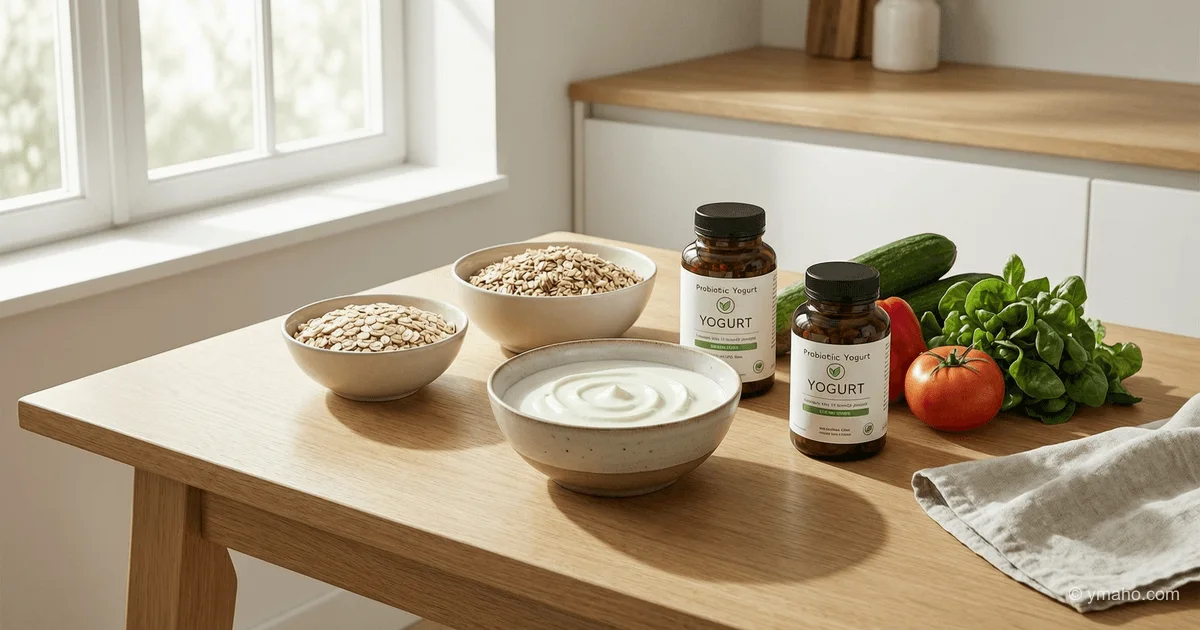
Nutritionist Nuria Dianova Names Food Trends for 2026
The main directions are demand for natural products with "clean" ingredients, concern for gut microbiota, and emotional well-being through food that helps cope with stress.
The Food Industry in 2026: Why "Emotional Well-Being Through Food" Is a Marketing Code, Not Care for You
The Essence: What's Really Happening
Nutritionist Nuria Dianova publicly named three main food trends for 2026: demand for "clean and understandable food," concern for gut microbiota, and emotional well-being through food. The phrasing sounds like a manifesto of conscious consumption. In reality, it's a perfectly crafted marketing message that serves the interests of specific market players.
The three trends are not a random set but a logical pyramid: at the base is Clean Label as a hygiene minimum, above it is functionality (gut), and at the top is the most profitable category of "emotional eating," allowing anything to be sold with a 40-60% markup simply because it "comforts." The industry has learned to monetize not just hunger and health, but anxiety. And that's the main business insight that the media doesn't articulate.
Timeline and Context
What Dianova framed as "trends-2026" has actually been building over the last three years. Clean Label ceased to be a niche feature around 2023-2024, when major retailers like Marks & Spencer launched lines with limited ingredients. The microbiome boom gained financial substance by 2025, when the global probiotics market reached $86 billion, with a forecast of $95.2 billion for 2026 at an annual growth rate of 10.7%. As for "emotional well-being through food," it's a direct descendant of the pandemic trend of comfort food, rebranded from guilt to care.
On May 5, 2026, a publication on "Obshchestvennaya Sluzhba Novostey" and a simultaneous release on "Mir24" cemented this narrative in the Russian-language media space. Important context: Dianova is not just a nutritionist but the executive director of the ANO SIC "Healthy Eating," and she is cited as a neutral expert, although the center exists on industry money. This is a classic case of "expert content," where opinion is presented as independent analysis but creates demand for the products of those who fund research centers.
Who Wins and Who Loses
Winners are predictably: manufacturers of functional foods and probiotics. Danone North America has already declared 2026 the year of "food as medicine" and is promoting Oikos Fusion with whey protein and leucine under the guise of "protein 2.0." Kaneka Probiotics forecasts the probiotics market to grow to $105 billion by 2029 and is actively entering segments of women's health, pediatrics, and psychobiotics. Suppliers of natural ingredients like Unitorg build their business on the fact that manufacturers are forced to replace "E-numbers" with plant extracts, offering warehouse programs with "day-to-day" deliveries.
Snack and candy manufacturers who have added probiotics and fiber to their lines get to sell chips as "microbiota support." Retailers launching "clean lines" raise the average check by 15-25% simply because the packaging says "no artificial additives." Meanwhile, small manufacturers without budgets for Clean Label certification and clinical studies lose out—their product becomes "invisible" on the shelf next to "scientifically proven" ones.
Losing are also low-income consumers. A GlobalData study showed that 83% of respondents consider an affordable price a prerequisite for purchase, and a significant portion switches to cheaper alternatives or forgoes products with a premium markup for "cleanliness." The trend toward functional nutrition objectively widens the gap in food quality between those who can afford a probiotic yogurt for $6 and those who buy a regular one for $1.50.
What the Media Doesn't Say
The first non-obvious insight is the numbers. When publications claim that "people are moving from diets to everyday benefits," behind this is a specific economic shift: the market for GLP-1 weight loss drugs (Ozempic, Wegovy) is growing so fast that food manufacturers are forced to restructure their assortment. Danone directly states that the increased use of GLP-1 is one of the five main trends of 2026, because consumers on these drugs eat less but seek high-protein, satiating products. "Moving from diets" is not about mindfulness, but about pharmacology making diets unnecessary, and the food industry urgently adapting to a person who loses weight without its involvement.
The second insight is about "emotional well-being through food." This is the most dangerous of the three trends from a marketing ethics perspective. It legitimizes emotional eating by wrapping it in scientific terminology. Adaptogens, reishi mushroom, collagen—ingredients with minimal evidence base—are sold as "stress support." But behind this is simple business logic: stress is an inexhaustible resource, unlike physical hunger. A consumer who is full but anxious is an ideal customer. You can sell them a second dinner, a functional drink "for calm," a dessert "for joy." The margins on such products are 40-60% higher than regular counterparts because emotional added value doesn't require expensive ingredients—only the right words on the packaging.
The third insight is about microbiota. The probiotics market is growing at a CAGR of 10.7%, but what the media presents as "gut care" is actually a battle for shelf life. Natural ingredients are less stable than synthetics, their shelf life is shorter, and the main technological challenge for manufacturers is not consumer benefit but product stability during storage, heat treatment, and pH changes. Manufacturers solve their technological problems and sell this to the consumer as "naturalness."
Forecast: Next 30 Days and 90 Days
30 days (by June 7, 2026). Dianova's news hook will be picked up by other publications, which will start producing materials in the format "how to move from diets to conscious eating." Probiotic manufacturers will ramp up advertising campaigns, synchronizing them with this narrative. It is expected that Danone, Activia, and local players will release new SKUs with "emotional" positioning—yogurts "for mood," snacks "against stress." The price of such products will be 20-30% higher than basic lines.
90 days (by August 7, 2026). The wave of "emotional eating" will peak, and the first critical materials will appear: nutritionists not tied to the industry will start issuing warnings that "food against stress" is a path to eating disorders. Clean Label will face reality: some manufacturers who declared "clean ingredients" will find that natural ingredients shorten product shelf life, and consumers are not ready to accept altered taste. Market consolidation will accelerate—small brands that tried to play Clean Label without sufficient technological resources will start to exit or sell to large players. The probiotic segment will continue to grow, but the focus will shift from "gut" to "gut-brain"—psychobiotics will become the main word of the second half of 2026, as industry reports predict.
Final conclusion: we are not looking at three trends, but a unified business strategy of the food industry to transition from satiating physical hunger to managing emotional hunger. The consumer is sold the idea that food will solve their psychological problems—and this is the most profitable product ever created by the food industry. Because hunger can be satisfied, but stress never can.
— Editorial Team









