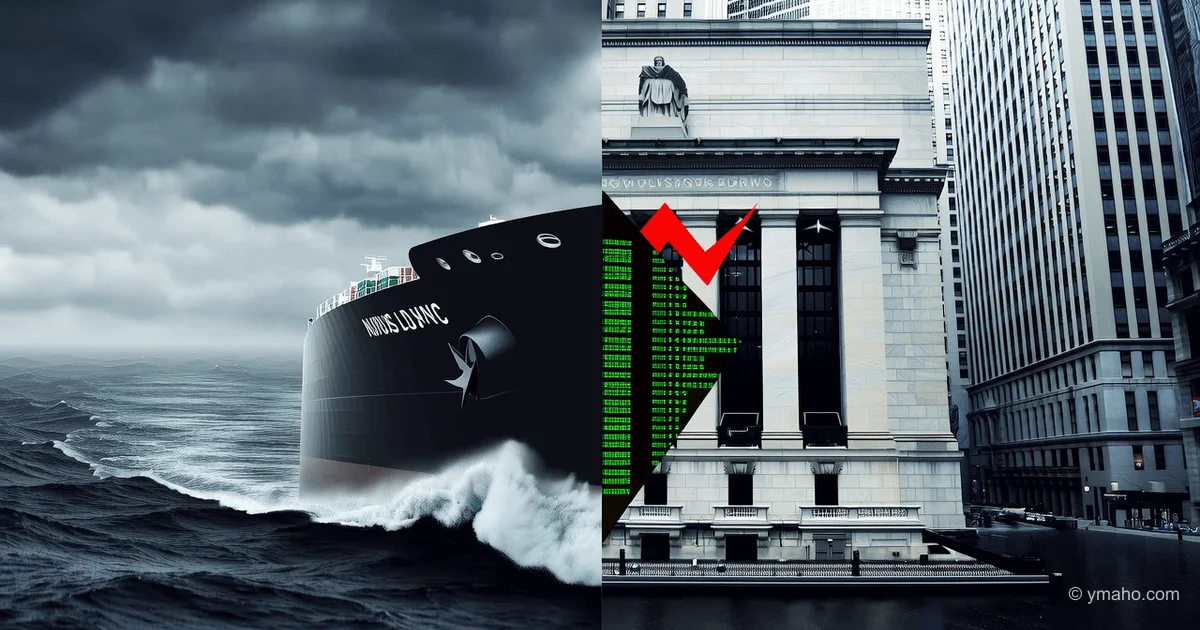
Global Oil Prices Fluctuate Around $106 per Barrel Amid US-Iran Negotiations Stalemate
Oil quotes turned downward amid demand concerns after US inflation data release, but remain supported by the blockade of shipments through the Strait of Hormuz and the halt of negotiations with Tehran.
[The Gist]: What's Really Happening
The Brent oil price, hovering around $106 per barrel, is not a market equilibrium but the result of a titanic struggle between two opposing forces that have temporarily neutralized each other. On one hand, the blockade of the Strait of Hormuz has removed approximately 18 million barrels per day of Middle Eastern oil from the market—nearly a fifth of global consumption—and under normal circumstances, such a supply gap would send quotes to $150 and above. On the other hand, US inflation data—PPI 6.0%, CPI 3.8%—has triggered a "demand destruction" mechanism: when the 10-year Treasury yield breaks 5.8% and the Fed signals readiness to raise rates further, traders begin pricing in a recession that will crush fuel consumption. These two mega-factors—physical shortage and monetary tightening—are currently locking the market in a clinch, and $106 is the price of that clinch, not the objective value of a barrel. The real story, however, is unfolding not on exchange screens but in the quiet of corporate treasuries and government situation centers.
Timeline and Context
The trajectory of oil prices since February 2026 resembles the cardiogram of a patient in intensive care. The first shock—the start of the US-Israel military operation against Iran on February 28—propelled Brent from $78 to $112 in two weeks. Then, in March, when it became clear that Iran's oil infrastructure was severely damaged but not destroyed, and the "shadow fleet" continued to export crude to China, the price corrected to $98. April brought a new twist: mining of approaches to the Strait of Hormuz and Lloyd's refusal to insure ships turned logistical risk into a physical blockade, and Brent rose again, reaching $114 by April 20.
The May stabilization around $106 is linked to three events. First, the release of PPI 6.0% on May 14, which reminded markets that inflation is not gone and the Fed will remain hawkish. Second, the stalemate in US-Iran negotiations under Pakistani mediation: Tehran demands the blockade be lifted first, Washington insists on discussing the nuclear program first, and this chicken game has paralyzed the diplomatic track. Third, a non-public decision by Saudi Arabia and the UAE to tap strategic reserves and redirect some flows through the Red Sea bypassing Hormuz, temporarily easing the physical shortage. But these reserves are not infinite, and the market knows it.
Who Wins and Who Loses
The main beneficiaries of the $106 price are not oil companies, as one might think, but US shale oil producers and private traders. Shale drillers in the Permian Basin—Pioneer Natural Resources, Diamondback Energy, ConocoPhillips—operate with production costs of $35-42 per barrel and at current prices generate free cash flow, which they direct not to drilling but to share buybacks and dividends. This is unprecedented capital discipline: instead of ramping up production and lowering the price, they prefer to shower shareholders with a golden rain. Private traders—Vitol, Trafigura, Mercuria—profit from arbitrage between the physical market, where oil is scarce, and the paper market, dominated by recession fears. The spread between Brent and Dubai Crude, trading at a premium of $17 per barrel due to Asian shortages, allows traders with access to tankers and storage to extract margins running into tens of millions of dollars per cargo.
All oil importers except China lose. Europe pays a double price: Brent at $106 is the nominal quote, but the real cost of a barrel delivered to a refinery in Rotterdam, including freight and insurance, reaches $128. Asian economies—Japan, South Korea, India—suffer even more: Middle Eastern oil has virtually disappeared for them, and alternative supplies from the US or Angola take 18-25 days longer and cost $12-15 more. Indian refineries, traditionally buyers of Iranian and Saudi oil, operate at 70% capacity and are forced to buy Russian oil at a premium, as even Urals has risen amid the overall shortage.
A separate category of losers: airlines and logistics operators. Jet fuel in Europe costs $1,350 per ton—60% more than a year ago. Lufthansa and Air France-KLM have already warned that second-quarter profit will be 40-50% below forecasts, and low-cost carriers like Ryanair and Wizz Air are canceling flights because at these kerosene prices, the budget model stops working.
What the Media Isn't Saying
The first and most important insight: $106 is not a market price but an administratively constructed figure. Since May 1, 2026, the US Department of Energy has tacitly allowed the use of oil from the Strategic Petroleum Reserve to suppress price spikes, not through direct sales but via a "swap" mechanism with major traders. The scheme works as follows: a trader receives 500,000 barrels from the SPR at a fixed price of $95, with an obligation to return 525,000 barrels in six months. This allows traders to short futures without fear of physical delivery, creating an artificial "ceiling" for quotes. Without this mechanism, Brent would already be trading at $130.
The second non-obvious plot is the role of hedge funds, which use oil futures as a hedge against inflation rather than a bet on oil. When PPI shows 6.0%, institutional investors—pension funds, endowments, family offices—flee into commodities as a safe haven, buying not physical oil but paper contracts. This creates additional demand for futures, unrelated to the real supply-demand balance, but pushing prices up. According to the CFTC, net long speculative positions in Brent and WTI have reached 680,000 contracts—an all-time record, exceeding even the 2008 peak.
The third secret is Iran's behavior. Tehran has found a way to export oil bypassing the blockade via a "shadow fleet" with transponders turned off and forged documents, but volumes have dropped from 1.7 million barrels per day to about 600,000. The remaining oil is not being produced: Iranian fields operate at minimum capacity because storage is full. If the blockade drags on for another three months, Iran will have to start well conservation—a process that could irreversibly damage reservoirs and permanently reduce recoverable reserves. This means that even after the blockade is lifted, Iran will not be able to quickly return to the market, and the shortage will persist longer than optimists expect.
Forecast: Next 30 Days and 90 Days
On a 30-day horizon (by June 15, 2026), I expect Brent to remain in the range of $100-115 with an upward bias. The June Fed meeting and the expected 25-basis-point rate hike will temporarily strengthen the dollar and push quotes to the lower end of the range, but this will be a short-term move. The key driver is inventory building ahead of the US summer driving season: refineries need to increase purchases, and physical oil is scarce. This will push prices back toward $115.
On a 90-day horizon (by August 15, 2026), the scenario sharply diverges into two paths. If the diplomatic stalemate persists and the Strait of Hormuz remains blocked, Brent will break $130 and head toward $145, especially if the hurricane season in the Gulf of Mexico disrupts US production. But if Trump and Xi at the May 14-15 summit reach a breakthrough deal in which China pressures Iran in exchange for lifting technology sanctions, we could see a rapid drop to $85-90—a level reflecting the fundamental balance without a geopolitical premium. I estimate the probability of the first scenario at 60%, the second at 40%. The options market, judging by the volatility smile, prices in a similar ratio: calls with a strike of $140 trade at implied volatility of 85%, puts with a strike of $85 at volatility of 65%. This means traders see asymmetric upside risk and are bracing for a storm.
— Editorial Team









