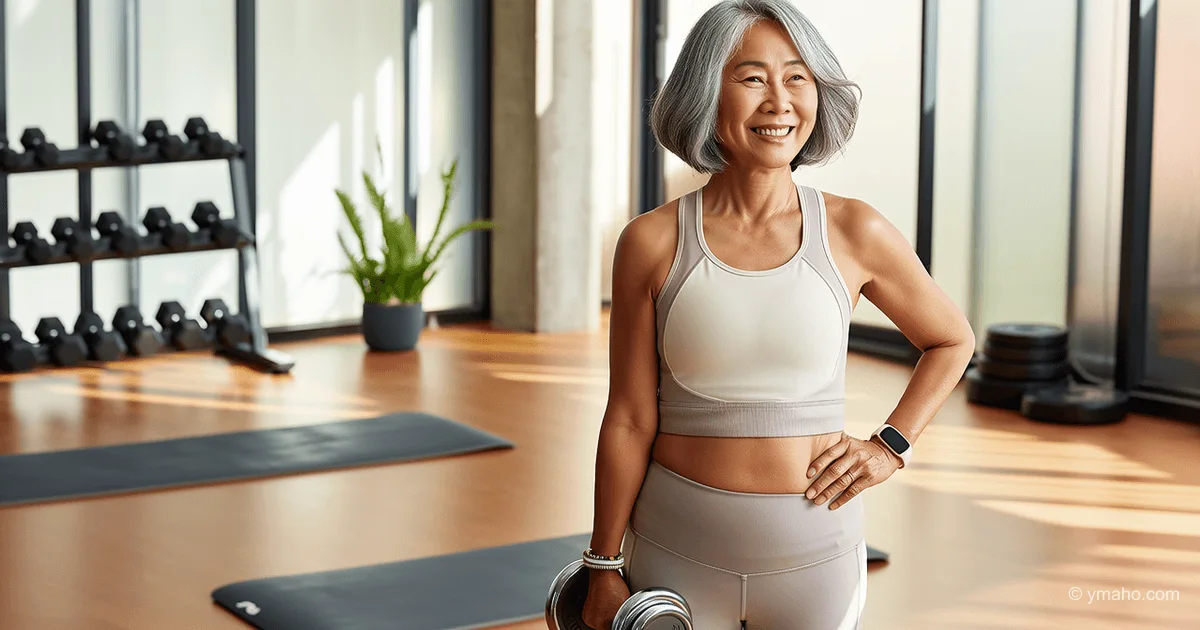
Scientists Prove: Stable Physical Activity in Middle Age Halves Women's Risk of Early Death
A PLOS Medicine study found that women who consistently met the guideline of 150 minutes of exercise per week had nearly 50% lower odds of premature death compared to inactive peers.
What's Really Happening
The study, published March 26, 2026, in PLOS Medicine, is not just another confirmation of the benefits of physical activity. It is the first major study to apply the "target trial emulation" method to data on women's physical activity. In other words, researchers led by Binh Nguyen from the University of Sydney built a model simulating a randomized controlled trial based on observational data—an approach that brings observational epidemiology as close as possible to the gold standard of evidence-based medicine.
The sample: 11,169 women born between 1946 and 1951, tracked every three years from 1996 to 2019 across nine survey waves. The result: women who consistently met the guideline of 150 minutes of moderate or vigorous physical activity per week had half the risk of death from any cause compared to those who remained inactive. In absolute numbers: 5.3% deaths in the active group versus 10.4% in the inactive group.
But the real story is not in the risk reduction numbers. The real story is what the study found and what it kept silent about.
Timeline and Context
This study landed on prepared ground. Right now, the University of Exeter is recruiting 60 women with obesity for the FLEX study—a 20-week progressive resistance training program alongside tirzepatide. The logic is parallel: GLP-1 drugs cause 20-50% of weight loss to come from muscle mass, and discontinuation leads to regaining up to 15% of body weight within a year. A woman after tirzepatide without resistance training risks sarcopenic obesity—less muscle, more fat, worse metabolic profile than before treatment.
Meanwhile, the women's activewear market is valued at $140.62 billion in 2026, with a projected growth to $214.76 billion by 2031 at a CAGR of 8.83%. This is not just clothing—it's the infrastructure of the wellness economy, where "being active" means "buying the right gear."
At the same time, UBS in its sixth annual report "Women and health: Challenges and opportunities" notes a systemic paradox: women live longer than men but spend 25% more time in poor health. The gender health gap is estimated to cost the global economy $1 trillion in lost GDP annually by 2040.
Who Wins and Who Loses
Winners—the fitness industry and adjacent markets. The women's activewear market is growing faster than the overall apparel sector. Supplement manufacturers gain a new narrative: Laila Nutraceuticals already launched a "science-backed women's wellness initiative" at Davos in January 2026, investing about $42 million in expanding production capacity.
Women's fitness technology also wins—from digital workout platforms to wearable devices. When the recommendation of "150 minutes per week" becomes a doctor's prescription, the market for devices tracking those minutes gains legitimacy.
Losers—those without the resources to implement these recommendations. The study sidesteps this issue, but it's central: 150 minutes per week is two and a half hours. Plus travel time to the gym or park, shower, gear. A woman with two jobs and children has a fundamentally different time budget than a woman with a flexible schedule and above-median income.
Also losing in the long term is the pharmaceutical industry. Every woman who moves consistently means fewer sales of drugs for hypertension, type 2 diabetes, osteoporosis. The study strikes at the "treat consequences" model rather than investing in prevention.
What the Media Isn't Saying
Insight: the study found a gap in data on resistance training, and that changes everything.
All headlines shout about 150 minutes of aerobic activity, but there's a critical detail: the study did not collect data on resistance training at all. Participants were asked about walking, moderate, and vigorous activity—but not about weight training.
This is not a technicality. It's a structural blindness in women's health epidemiology. Women begin losing muscle mass starting in perimenopause, and aerobic exercise does not compensate for that loss. The FLEX study currently underway at Exeter closes exactly this gap: it measures muscle mass directly—via ultrasound and D3-creatine isotope dilution—not indirectly through fat-free mass as all previous work did.
This leads to a harsh conclusion: the PLOS Medicine study proved the effectiveness of movement, but its recommendation part was already outdated at the time of publication. Women need not just 150 minutes of cardio per week. They need resistance training, especially given the widespread use of GLP-1 agonists, which accelerate muscle loss.
The second non-obvious point is the economic subtext of the silence on resistance training. Aerobic activity can be monetized through apps, trackers, and gear. Resistance training requires instruction, access to equipment, and—critically—higher instructor qualifications. It's a more complex and less scalable product.
The third aspect: the study showed that starting physical activity at age 55, 60, or 65 yields uncertain and statistically unconvincing results compared to lifelong activity. This means the window of opportunity is closing. You can't "catch up" at 60 for what you didn't do at 45. This is an uncomfortable conclusion that contradicts the liberal narrative of "it's never too late to start."
Forecast
Next 30 days (until mid-June 2026):
Expect a wave of publications from WHO and national health authorities revising physical activity recommendations for women over 40. The emphasis will shift from "150 minutes of movement" to "150 minutes, with at least 2 days of resistance training." Fitness chains will start actively packaging programs "for women in perimenopause"—this will become the fastest-growing segment of group training.
Simultaneously, expect critical articles targeting GLP-1 manufacturers—Eli Lilly and Novo Nordisk—demanding that resistance training programs be included in obesity treatment protocols. The discussion about "muscle mass as the currency of longevity" will move from academic journals to the mass press.
Next 90 days (until mid-August 2026):
By the end of summer, the first interim results of the FLEX study on preserving muscle mass while taking tirzepatide will be published. If the data show a significant effect of resistance training, it will trigger a revision of insurance protocols: physical activity will begin to be considered a reimbursable medical expense, not just a lifestyle choice.
Strategic forecast: the women's wellness market will start segmenting not by age but by muscle mass status. "Longevity clinics" with DEXA scanning in standard check-ups will emerge. The beauty industry will align with the anti-aging medicine industry—and the entry point will be through resistance training as a basic medical recommendation.
The main takeaway: the PLOS Medicine study is not a period but a comma. It closed the question "should we move?" and opened the question "how exactly should we move to not just live longer, but live longer in a functional body?" The answer to that question will come not from epidemiologists but from physiologists—and it will be harsher than we'd like to believe.
— Editorial Team









