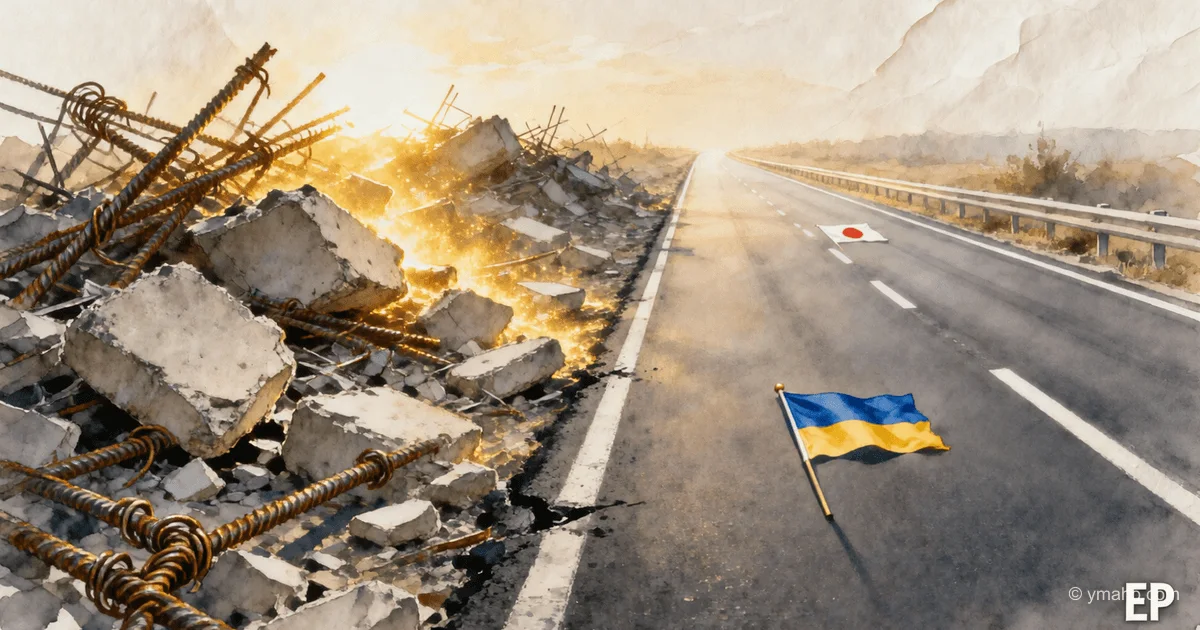
Ukraine Turns War Debris into a Resource: How Construction Waste Becomes Roads
Ukraine has accumulated over 6 million tons of construction waste from destroyed buildings. These piles of rubble are not just an environmental problem but potential raw material for industry. Instead of burying waste in landfills, the country is starting to recycle it into road pavement and other materials. This not only reduces the burden on nature but also creates a new market that could benefit many countries facing large-scale destruction.
How Waste Recycling Becomes a State Priority
The Ministry of Communities and Territories Development of Ukraine has announced plans to scale up the use of waste from destruction. Currently, about 6 million tons of such waste have been accounted for, but the actual volumes are much larger — this is only what has been taken to temporary sites. According to RDNA5, about 14% of the housing stock in the residential sector has been damaged or destroyed, with total losses estimated at $61.1 billion.
A pilot waste management project started in 2024 in the Kyiv region and five cities: Odesa, Dnipro, Kharkiv, Mykolaiv, and Kherson. It showed that recycling is feasible — in Borodianka, a line for processing construction waste into road pavement material is already operating.
Why This Matters Beyond Ukraine
Ukraine's experience in recycling war waste could serve as an example for other countries experiencing or having experienced conflicts. There are few precedents worldwide where a state systematically approaches turning rubble into a resource. Usually, such waste is simply taken to landfills. Ukraine, with support from Japan, is creating a technological cycle: from sorting to producing safe products.
The Japan International Cooperation Agency (JICA) has been involved in the project since 2024. Japan has vast experience in waste recycling after disasters — earthquakes and tsunamis. The parties are now preparing for the next phase for 2027–2029. Ukraine has already received equipment, training for specialists, and monitoring systems.
What Problems Need to Be Solved
- Asbestos: destroyed buildings contain many asbestos-containing materials. There is no safe way to use them, so uniform rules are needed — from detection to disposal.
- Lack of laboratories: Ukraine has few laboratories for rapid analysis of hazardous materials. Some tests are still done abroad. JICA will provide equipment to conduct analyses on-site.
- Economic incentives: businesses are still reluctant to use recycled materials. Tax breaks or other mechanisms are needed to make secondary raw materials profitable.
- Quality standards: products from recycled waste must meet construction norms. The Japanese side insists on clear technical requirements.
What Matters
- Recycling destruction waste is not an environmental initiative but an economic necessity: it reduces disposal costs and creates cheap raw materials.
- Ukraine could become a global testing ground for war waste recycling technologies — attracting international investment and expertise.
- The project's success depends on creating a market: if businesses do not want to buy recycled materials, the whole endeavor will fail.
- Safety is the main barrier: asbestos and other hazardous substances require strict control, otherwise secondary materials could be toxic.
- Japanese involvement signals that the technology is proven and can be scaled to other post-conflict countries.
What This Means for Ordinary People?
For residents of Ukraine, this means fewer landfills and improved ecology. For the construction business, it offers access to cheap materials. For the international community, it provides a model for rebuilding countries after wars without burying resources in the ground. If the project succeeds, construction waste will cease to be a problem and become an asset.
— Editorial Team









