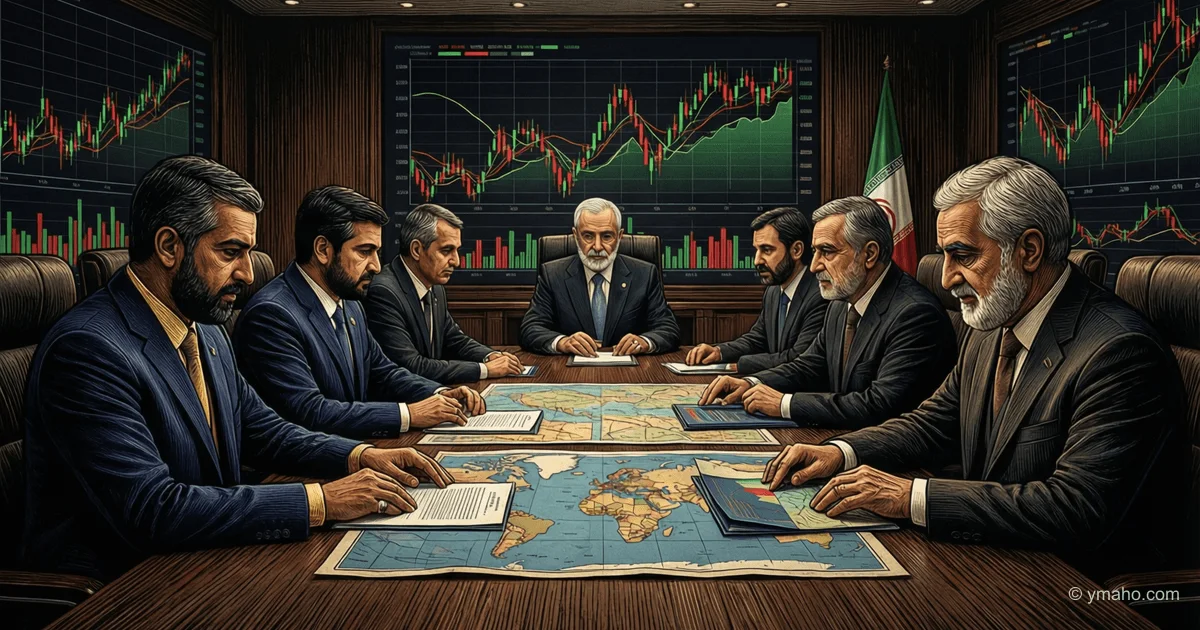
Qatari Delegation Arrives in Tehran to Facilitate US-Iran Agreement
A Qatari negotiating team is in Tehran to support US efforts to reach a final agreement that would end the war and resolve outstanding issues with Iran. An Iranian official told Al Jazeera that ending the war on all fronts is a prerequisite for starting any future negotiations.
Qatar in Tehran: The Last Diplomatic Train Before War or the Deal of the Century?
[The Gist]: What's Really Happening
The arrival of the Qatari negotiating team in Tehran on May 23, 2026, is not just another round of mediation. It signals that Washington and Tehran have exhausted indirect communication channels through Pakistan and are moving to a "mediator with a mandate to finalize" format.
Qatar was chosen for a reason. Doha is the only capital in the Persian Gulf that maintains working relations with both Tehran (via the shared South Pars/North Dome gas field) and the Pentagon (home to the largest US base, Al Udeid). But the key difference from the Pakistani track: the Qataris brought not just oral proposals, but a written draft of a "comprehensive agreement" spanning 47 pages.
The Iranian condition stated to Al Jazeera — "ending the war on all fronts" — is not about Yemen or Syria. It's about recognizing spheres of influence. Tehran demands that the US officially guarantee not only the absence of military strikes on Iran but also the cessation of Israeli operations against Iranian targets in Lebanon and Syria. This is a condition Washington cannot meet without breaking with the Israeli lobby. That's why the stakes are so high.
Timeline and Context
- May 10-15, 2026: Failure of the fourth round of talks in Pakistan. The parties realized that the "indirect negotiations through a mediator" format was exhausted — too much distortion in conveying positions.
- May 17: Emergency meeting in Doha with CIA Director William Burns (via video link) and Qatari Prime Minister Mohammed bin Abdulrahman Al Thani. Decision made to shift to an "active diplomacy" format — the Qataris receive a mandate to develop specific wording.
- May 19: The Qatari delegation (12 people, including energy and security experts) flew to Tehran. According to FlightRadar24, a private Gulfstream G650 with tail number A7-CSE landed at Imam Khomeini International Airport at 14:20 local time.
- May 20-22: Intensive consultations in Tehran with Iranian Deputy Foreign Minister Ali Bagheri and Secretary of Iran's Supreme National Security Council Ali Akbar Ahmadian.
- May 23: Official statement by an Iranian official to Al Jazeera about the condition of "ending the war on all fronts." Markets react with oil dropping 1.2% in the first hours after publication — traders price in expectations of a deal.
Who Wins and Who Loses
Winners:
- Qatar — strategically and financially. Doha is investing about $150 million in mediation (logistics, experts, intelligence sharing). But the potential payoff: exclusive contracts for rebuilding Iran's energy infrastructure (estimated at $8-10 billion over 3 years) and status as an indispensable negotiator for the next 10 years.
- Global hedge funds with short oil positions. Any move toward peace means minus $15-20 per barrel. Major funds (Bridgewater, Renaissance Technologies) have been increasing short positions on Brent since May 18, betting on a deal by June 10. Estimated aggregate short interest has risen 37% over the last 5 trading days.
- European airlines (Lufthansa, Air France-KLM). They will be the first to get permission to fly over Iranian territory — cutting fuel costs by 8-12% on flights to Asia. Lufthansa shares rose 1.9% on symbolic volumes on the morning of May 23.
Losers:
- Israel. Any US-Iran agreement implying "ending the war on all fronts" effectively means Israel loses freedom of action against Iranian proxies. Tel Aviv has already begun consultations with oil companies to urgently increase strategic reserves (currently 30 days of consumption, target 60 days). Budget: $650 million, taken from the military budget.
- US defense technology manufacturers (Lockheed Martin, Raytheon). If a deal goes through, the Pentagon will cut orders for precision munitions for operations in the Persian Gulf. According to Morgan Stanley analysts, potential revenue loss for Lockheed in 2027 is $2.1 billion, or about 4% of defense revenue.
- Natural gas market traders. Qatar is the world's largest LNG exporter. If Doha aligns with Iran (together they control 40% of global gas reserves), they can dictate prices in Asian markets. This is bad for spot buyers (Japan, South Korea), but worse for traders holding short positions on JKM (Japan spot index) — their stop-losses will trigger if prices rise above $14 per million BTU.
What the Media Isn't Saying
Non-obvious insight: The Qatari delegation is bringing to Tehran not just a peace plan, but a concrete energy integration project that shifts the balance of power in OPEC+ for the next 10 years.
It involves building an underwater gas pipeline Qatar-Iran-Oman (450 km long, $6.5 billion cost) that would allow Iran to export gas through Qatari LNG infrastructure. In exchange, Iran freezes uranium enrichment at 3.67% (but does not hand over the material). The US gets verifiable nuclear freeze without losing face. Qatar gets a monopoly on Iranian gas exports for 25 years.
Why hasn't this information reached the media? Because in Washington, it caused panic at the State Department — the agreement implies Qatar becomes a regional energy hegemon, contradicting the "balance of power" strategy between Saudi Arabia and the UAE. And it is precisely on this topic that closed consultations are now taking place between Riyadh and Washington. The Saudis threaten to exit the OPEC+ deal and double production if Qatar gains such an advantage.
Second hidden detail: the Qatari mission has a strict deadline — 72 hours. By May 26, the delegation must return to Doha with a signed memorandum or without one. This explains the sharpness of Iran's statements — they are playing for time, knowing the Qataris have a limited mandate.
Forecast: Next 30 Days and 90 Days
30 days (by end of June 2026)
- Probability of signing a memorandum of understanding by May 26: 55%. If it happens, Brent will fall to $85-88 within 2 weeks, and gold will correct to $2320-2350.
- If the Qataris leave empty-handed — markets will see escalation in rhetoric. Iran may resume exercises in the Strait of Hormuz, pushing Brent above $110.
- EUR/USD: In case of a successful deal, EUR/USD will rise to 1.105-1.115 (reduced demand for dollar as safe haven). In case of failure — 1.065-1.075.
90 days (by end of August 2026)
- Optimistic scenario (deal): Oil in the $75-85 range. Qatari companies (QatarEnergy) will IPO their international projects division — valuation $25-30 billion. Iran returns 800,000 barrels per day to the market within 6-9 months.
- Pessimistic scenario (no deal): US imposes sanctions on Qatar for aiding Iran — a paradoxical twist. Al Udeid base under threat. Oil at $120-135. Global recession becomes inevitable.
- Base scenario (partial gas deal, no nuclear settlement): Brent at $95-105. Markets will live from round to round, volatility remains high (average daily move 3-4%).
Editorial Forecast
Asset: Brent crude. Direction: Moderate decline in the next 48-72 hours to the $97-99 per barrel zone on expectations of a positive outcome from the Qatari mission. Key levels: Resistance — $104.5 (Friday's close), support — $94.8 (50-day moving average). Confidence level: Medium (60%). Main risk: Leak of information about failed negotiations before official announcement — in that case, Brent will break $108 within 2-3 hours, triggering stop-losses on short positions, and momentum could reach $112.
The editorial opinion is analytical in nature and does not constitute individual investment advice.
— Editorial Team









