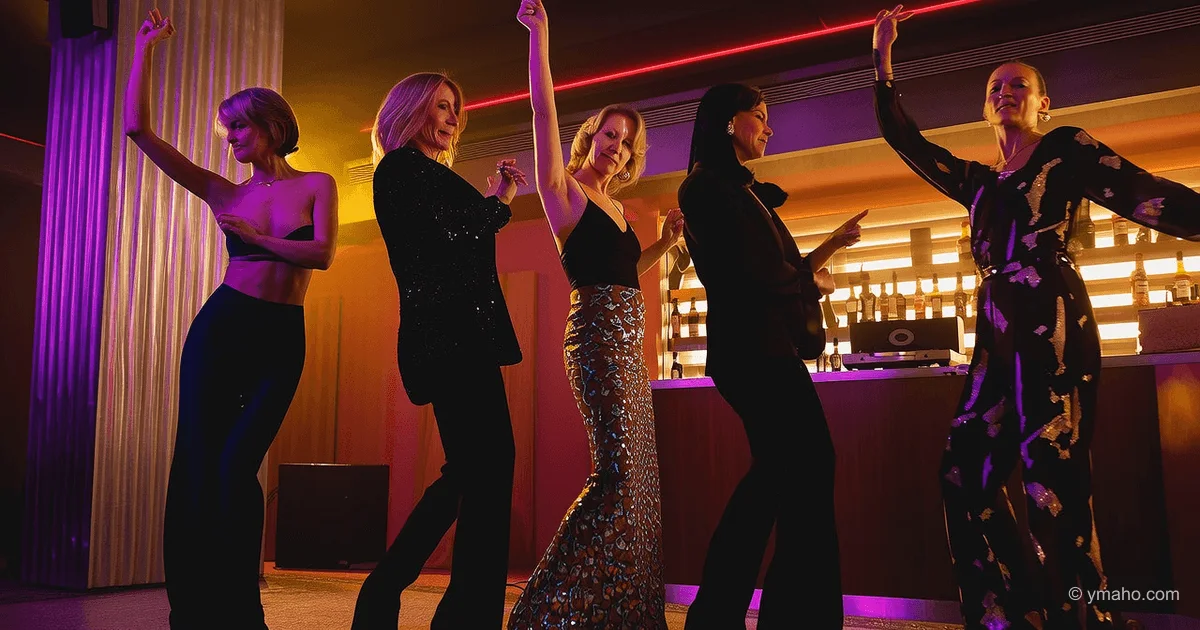
The Return of Rave Culture: Women Over 40 Seek Raves for Mental Health
A study by the University of Leeds found that women aged 40-65 find emotional support and stress relief in dance music and raves, with 65.9% describing the experience as 'spiritual'.
Rave therapy: Why women over 40 have become the main attendees of nightclubs—and how this is reshaping the health market
The Gist: What's Really Happening
In early May 2026, news broke worldwide: a study by the University of Leeds, published in the journal Psychology of Music, showed that women aged 40 to 65 actively attend raves and electronic music festivals, gaining significant mental and physical health benefits. 65.9% of participants described the experience as 'spiritual,' over 90% feel 'at home' on the dance floor, and many consider hours of dancing a full-fledged alternative to the gym.
At first glance, it's a heartwarming story about Generation X refusing to grow old. But behind these numbers lies something far more serious: a tectonic shift in how mature women manage their mental health—and how the global wellness industry is (or rather, isn't) responding.
This isn't about nostalgia. It's about a market that has been overlooked.
Timeline and Context
The study, whose results became public in late April to early May 2026, surveyed 136 women with substantial clubbing experience—most have been attending EDM events for over 20 years, starting in the late 1980s. These aren't converts who suddenly discovered techno at 45. They are scene veterans who have adapted their lifestyle to their age but never abandoned it.
Their motivation deserves close attention. The primary driver is a live performance by a favorite DJ, followed by socialization—meeting old friends and making new ones. Seeking a romantic partner was the least significant factor. In other words, a woman over 40 comes to a rave not for adventure or a partner; she comes for community and emotional release.
Alongside this study, a media discussion unfolded about double standards: older male DJs and promoters receive respect, while women of the same age on the dance floor hear the mocking 'Whose mum are you?' Professor Alice O'Grady, one of the study's authors, directly points out this imbalance. About 20% of participants feel out of place due to their age, and nearly half have experienced unwanted touching.
So this isn't just a 'cute story about older ladies at a rave.' It's evidence of a sharp conflict: the need for this form of self-care is immense, yet the culture and industry are not ready to acknowledge it.
Who Wins and Who Loses
Generation X women win—and that's the most important thing. They have found a working coping strategy that doesn't require a prescription, doesn't cost $200 per therapy session, and isn't confined to 'proper' wellness. It's an autonomous, self-organized form of self-care.
Organizers of underground and alternative events win. Study participants deliberately avoid mainstream venues in favor of safe spaces where they know the security, trust the organizers, and can control their surroundings. This creates demand for niche, community-driven events—and potential for growth in an entire segment of the event industry.
The traditional fitness industry loses. When a 50-year-old woman says that several hours on the dance floor is an alternative to the gym because it's 'not boring and time flies faster,' it's a direct blow to the classic fitness club model. If dancing provides cardio, endorphins, socialization, and a sense of identity, what's left for a treadmill membership?
Classic therapy and pharma lose. 62.9% of women say raving is an escape from everyday life. 58.3% feel like 'a different version of themselves' on the dance floor. These are therapeutic effects that pharmacology achieves with numerous side effects, while raving delivers them in one night—with music, lights, and community. The mental health industry has yet to see the dance floor as a competitor.
The wellness mainstream loses with its sterile practices. No meditation app delivers 66% 'spiritual experience.' No juice retreat replicates the sense of unity described by participants. Women are voting with their feet—and choosing bass, rhythm, and collective body.
What the Media Leaves Out
Insight #1: This isn't a 'return'—rave culture has always been their space.
Most headlines frame the story as if women over 40 suddenly discovered club life. That's wrong. The study clearly shows: participants are not newcomers; they've been in the scene since the late 1980s, since their teens. They didn't 'come back.' They never left. It's just that their presence has been invisible to a culture obsessed with youth and to research fixated on student samples.
Professor O'Grady emphasizes: the connection formed through dance, bass, rhythm, and body language creates a sense of unity that doesn't weaken with age. This isn't an 'age-related hobby.' It's a lifelong identity practice that has finally gained scientific recognition.
Insight #2: The COVID-19 pandemic was a catalyst.
Hidden in the study results is a detail: when lockdowns stopped live music, many participants reported losing touch with their core identity. This is key. The club wasn't entertainment; it was an anchor of identity. Remove it, and a woman loses not just leisure but a part of herself. Returning to the dance floor after the pandemic isn't about 'letting loose after quarantine.' It's about restoring wholeness.
Insight #3: Women are building a parallel safety economy.
Nearly half of participants have experienced unwanted touching, and 28% face regular attention perceived as intrusive. In response, they've created an informal system: alternative venues, trusted friends, contacts with organizers and security, and abstaining from alcohol to maintain control. This is a shadow safety infrastructure built from the ground up, without state or corporate involvement. And it works. It's a model worth studying for anyone designing public spaces for women.
Forecast: Next 30 Days and 90 Days
30 days (by June 13, 2026):
The study will continue to spread on social media—one participant has already printed the scientific paper as a giant vinyl and hung it on her wall. This will become a viral gesture. Expect a wave of user-generated content from women 40+ on TikTok and Instagram, with tags like #RaveTherapy #MidlifeRavery #ThisIsWhat50LooksLike.
The trend of 'Sober Sauna Raves'—alcohol-free raves with saunas, already noted in wellness forecasts for 2026—will gain momentum. Event organizers will start pitching 'day raves for adults' to investors. The first columns in business media on 'rave as wellness practice' will appear in the coming weeks.
90 days (by mid-August 2026):
The most interesting developments will begin when the study data reaches decision-makers in wellness corporations. I predict three reactions:
First, fitness clubs will start experimenting with 'rave cardio' formats for older audiences—especially since data from EDM.com indicates that dancing raises pain tolerance and mood better than standard workouts. This isn't a replacement for Zumba; it's a different product—with a DJ, lights, and community-building.
Second, we'll see athleisure and wellness brands trying to enter this territory. Lululemon, Alo Yoga, Sweaty Betty—one of them will launch a collaboration with an EDM festival or create a capsule 'for the mature raver.' For now, it seems marginal, but demographically, this is a target audience with high purchasing power that no one is serving.
Third, startups in the femtech segment will emerge, offering 'night safety as a service' for older women in nightlife spaces. If 47% of participants have experienced unwanted physical contact, that's not just a problem—it's a market. An app for coordinating safe rides to raves, a community of trusted venues, a rating system for safety levels for women 40+—all these ideas are ripe.
Conclusion. The University of Leeds study is not just an academic publication. It's a manifesto for a generation of women who have refused to age 'gracefully'—invisibly, modestly, quietly. They chose bass over meditation, the dance floor over the therapist's office, and community unity over yet another wellness app.
The health and beauty industry, which has so far seen women over 40 only through the lens of menopause, anti-aging creams, and cortisol stress, has just received a signal: its clients have found a working alternative. And that alternative isn't sold at Sephora or included in corporate wellness packages. Want to stay relevant in five years? Learn to work with night, sound, and collective body. Because the future of women's health sounds louder and bassier than we've been told.
— Editorial Team









