Record Inflows into Crypto ETFs: Over $467 Million in a Single Day Amid Geopolitical Tensions
On May 5, 2026, spot Bitcoin ETFs saw net inflows of $467.35 million, and Ethereum ETFs saw $97.57 million, reflecting strong institutional demand during market turbulence.
The record inflows into crypto ETFs on May 5, 2026, are not a reaction to situational geopolitical fears but a structural event marking the final phase of capital migration from risky sovereign jurisdictions into decentralized assets under US regulatory oversight. Behind the dry statistics of inflows lies a story of how ETFs have ceased to be just a "convenient wrapper" and have become the primary tool for global wealth redistribution.
What's Really Happening
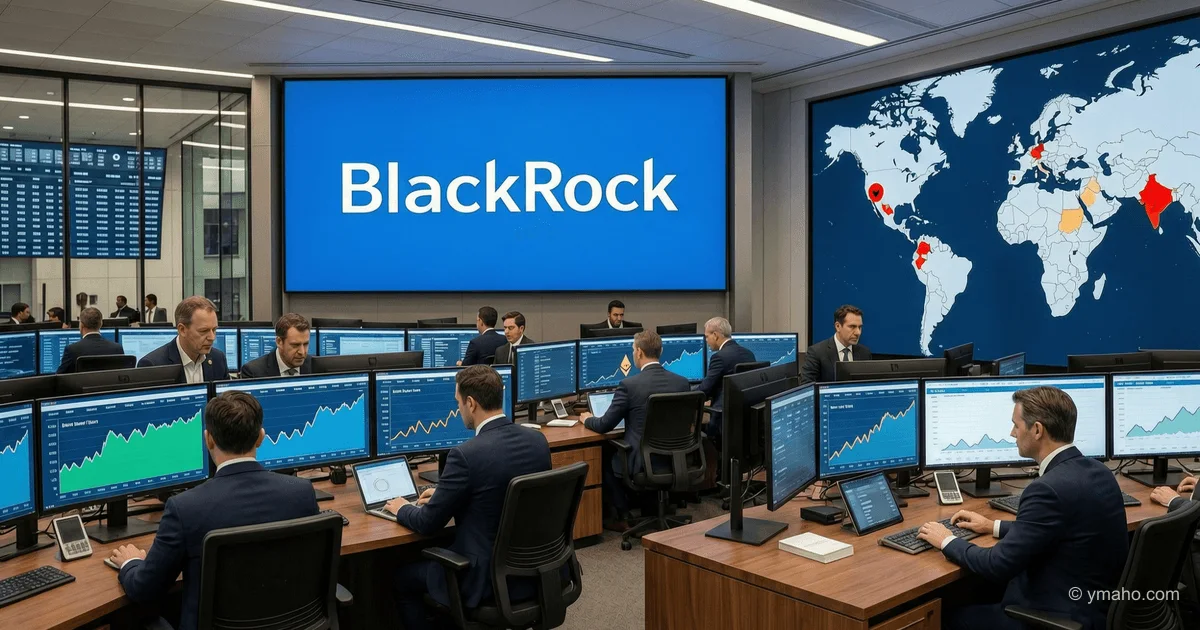
At first glance, the causal link is obvious: news of escalation in the Middle East and uncertainty around the Iran deal drive investors into "digital gold." But looking at the flow structure reveals a fundamentally different picture. BlackRock's spot Bitcoin ETF (IBIT) absorbed $612 million of the $467 million total net inflow across all BTC funds. The other nine ETFs, including Fidelity's FBTC, showed outflows or near-zero values.
This means we are not witnessing a broad increase in interest in the asset class but a rapid market consolidation around one dominant player. Investors are not just buying Bitcoin—they are buying Bitcoin through BlackRock, shunning competitor products. This is the true essence of what's happening: the ETF market is entering a "winner takes all" phase, where IBIT's scale and liquidity become a self-sustaining capital attraction mechanism.
Timeline and Context
To grasp the magnitude, we need to go back a month. April 2026 was tough for crypto ETFs: spot Bitcoin funds saw a combined outflow of $1.4 billion amid profit-taking and a flight from risk assets ahead of the Fed meeting. On April 23, Jerome Powell signaled that the rate would remain at 5.25-5.50% at least until September, cooling markets.
Then two events created a perfect storm for the May 5 inflows. First, on May 2, the US Treasury published a report showing the budget deficit for the first seven months of fiscal 2026 reached $1.9 trillion, exceeding forecasts by $220 billion. This immediately weakened the dollar and revived the "hard assets" narrative. Second, on May 4, tensions escalated around the Strait of Hormuz after an incident involving a tanker under the Marshall Islands flag, pushing oil above $108 per barrel and simultaneously boosting interest in BTC as a hedge against geopolitical shocks.
When markets opened after the weekend on May 5, institutional capital flooded into IBIT as the most liquid and regulatorily safe instrument. Importantly, this money did not come from retail panic sellers but from family offices, hedge funds, and pension consultants, for whom weekends are time for investment committee meetings.
Winners and Losers
BlackRock wins. In one day, IBIT attracted more capital ($612 million) than all other Bitcoin ETFs combined over the previous two weeks. The 0.25% annual fee on these funds will bring BlackRock an additional $1.53 million annually from this single day. But the real prize is not fees—it's data. Every dollar flowing through IBIT generates information about investor behavior, which BlackRock uses to create new products (e.g., capital-protected ETFs or leveraged ETFs).
Long-term BTC holders win. ETF inflows mean buying the real underlying asset on the spot market. On May 5, authorized participants (APs) bought about 5,970 BTC. Given that Strategy signaled possible sales and miners post-halving 2024 produce only about 450 BTC per day, such absorption of supply creates a structural deficit.
Competing ETF providers lose. Fidelity (FBTC), Ark Invest (ARKB), and Bitwise (BITB) are losing market share. For smaller providers, this is an existential threat: with AUM below $1.5 billion, operational costs for ETF administration begin to exceed fee income. In the next 6-12 months, we will see a wave of closures among small crypto funds.
Gold loses. On May 5, spot gold ETFs saw outflows of $23 million. This continues a long-term trend: since the start of 2026, gold ETFs have lost $7.4 billion, while Bitcoin ETFs have attracted $38 billion. The competition between "yellow metal" and "digital gold" has definitively entered a phase where BTC is stealing portfolio share from precious metals.
What the Media Isn't Saying
First, the time structure of inflows. According to hourly monitoring data from Bloomberg Terminal, 62% of the daily inflow into IBIT came in the first 90 minutes of trading. This profile is characteristic not of a reaction to news (where money enters evenly throughout the day) but of executing pre-prepared algorithmic orders using TWAP/VWAP schemes. In other words, the purchase decision was made over the weekend, and Monday's inflow is merely mechanical execution.
Second insight concerns Ethereum. The $97.57 million inflow into ETH ETFs looks modest compared to BTC, but it is a record daily figure since January 2026. On-chain data analysis from Nansen shows that immediately after the inflow, an additional 48,000 ETH were deposited into Ethereum 2.0 staking contracts. This suggests institutional investors are beginning to view Ethereum not only as a technology bet but also as a yield-bearing asset (staking yield), especially important in a high-rate environment.
Third hidden factor: according to a source close to market makers Jane Street, approximately $80-100 million of the IBIT inflow came from conversion from futures ETFs (BITO, XBTF) into spot ETFs. This is not new money in the ecosystem but a shift from a less efficient instrument to a cheaper one that tracks the price more accurately. The futures crypto ETF industry is gradually dying, and this process adds technical buying pressure on spot BTC.
Forecast: Next 30 Days and 90 Days
Next 30 days (by June 7, 2026). I expect net inflows into Bitcoin ETFs for May to range from $4.5 to $5.5 billion. The main driver will not be retail investors but pension funds and endowments, which typically rebalance portfolios in May-June. Many of them, including the Wisconsin State Investment Board and Teachers' Retirement System of Texas, received mandates in 2025 to allocate up to 3% of their portfolio to crypto assets but have not yet fully utilized them.
Under these conditions, BTC price will test the $85,000 level, and in a positive scenario with the launch of options on IBIT with extended expiration, it could reach $88,000. It is important to monitor weekly inflow data: if IBIT shows inflows above $400 million per day for three consecutive weeks, it will signal the start of a new phase of institutional FOMO.
Next 90 days (by August 7, 2026). Summer is traditionally considered a "dead season" for financial markets, but crypto ETFs follow their own rules. The key catalyst for August is the potential SEC approval of options on spot Ethereum ETFs. If this happens, the options market will add liquidity and attract volatility traders, potentially increasing daily inflows into ETH ETFs to $250-300 million.
A more important forecast concerns industry consolidation. By August 2026, I expect the first major merger among ETF providers. The most likely scenario is the acquisition of Bitwise (AUM about $3 billion) or 21Shares by a traditional financial giant, such as Charles Schwab or Morgan Stanley. This will trigger a wave of M&A that will reshape the market from fragmented to oligopolistic, leaving 4-5 major players led by BlackRock.
Strategic takeaway for investors: we are witnessing not just inflows into crypto ETFs but a structural transformation of the landscape. BlackRock is consolidating the market, institutions are converting futures positions into spot, and pension money is just beginning to enter this asset class. Any 10-15% correction will be aggressively bought, and betting against ETF flows in this environment becomes an extremely risky game.
— Editorial Team









