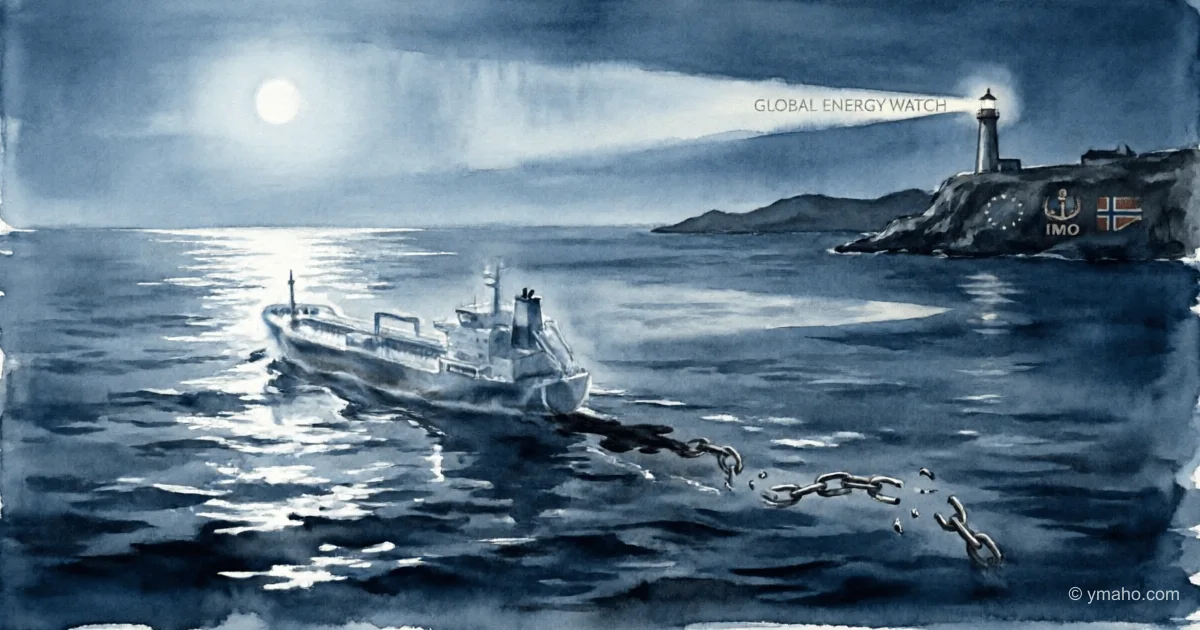
How a Russian Tanker Tricked Norwegians to Smuggle Sanctioned Oil
Imagine a smuggler changing course at the last second to slip past customs. That’s exactly what the Russian tanker Apple did—it carried sanctioned oil away by deliberately steering clear of Norwegian waters. Why should you care? Because maneuvers like this directly impact gas prices and the risk of ecological disasters in the world’s oceans.
How Did the Tanker Evade Oversight?
The 240-meter-long tanker, carrying banned crude, intentionally plotted a course through international waters. Rather than sailing within Norway’s exclusive economic zone—where inspections are mandatory—it stayed 200 nautical miles offshore. It’s like a speeding driver swerving onto a backroad to dodge a speed camera.
Norwegian authorities attempted to contact the vessel on April 16 near Bear Island but received no response. In international waters, tankers aren’t required to disclose oil spill insurance coverage or prove compliance with environmental regulations. As a result, the Apple effectively went dark for regulators—and this isn’t an isolated incident.
Why Is the World Watching Every Turn?
Back in 2013, Norway and Russia established the Barents SRS under UN auspices. It mandates that all vessels carrying hazardous cargo report their routes before entering the area between the Lofoten Islands and the Russian-Norwegian border. Why? To prevent disasters like the 2010 Gulf of Mexico spill, where negligence led to 11 deaths and widespread coastal contamination.
But Russia’s “shadow fleet” has learned how to bypass these rules. The Apple—formerly known as the View, Cup, and Lea—has flown flags ranging from Liberia to Antigua. Its current registered owner is the Azerbaijani firm Aqua Fleet Limited, which is also under sanctions. The true owners remain hidden like a nesting doll. These ships aren’t just rule-breakers; they’re part of a complex network involving 48 companies identified by the Financial Times specifically to mask Russian oil shipments.
How the Shadows Are Deepening
Operators of the shadow fleet are constantly refining their tactics:
- Leveraging Starlink satellite internet for covert operations
- Plotting courses around EU territorial waters
- Registering vessels in jurisdictions with lax regulations
- Employing “dark” data transmission methods (such as disabling tracking systems)
France, Germany, the UK, and other nations have ramped up patrols following incidents like this. Yet while one tanker slips away, dozens more keep moving oil. It’s a classic game of cat and mouse: the stricter the rules, the more inventive the workarounds become.
Key Takeaways
- Sanctions aren’t foolproof: Russia exploits loopholes via its shadow fleet
- Environmental threat: Without insurance, there’s no one left to cover cleanup costs
- Global pricing: The more oil evades sanctions, the weaker their market impact becomes
- Tech in play: Even Western tools like Starlink are being used to circumvent restrictions
- Hidden ownership: Sanctions target shell companies, but the real beneficiaries stay in the shadows
What does this mean for everyday people? First, your fuel prices hinge on how effectively sanctions are enforced. If Russia keeps selling oil, prices may stay lower than expected. Second, the risk of open-sea spills is rising—and the fallout will hit everyone through ocean pollution and higher seafood costs. Finally, these schemes highlight a harsh reality: global regulations need tighter, more coordinated international oversight.
— Editorial Team









