Russia Shuts Down Major Illegal Crypto-Mining Farm — What This Means for Miners and Electricity Prices
Russian law enforcement agencies discovered and seized over 850 mining devices in an abandoned building near Asbest. The farm’s owner connected to the power grid without a meter, causing over RUB 10 million in damages. This is not an isolated incident: according to Rosseti, illegal mining cost the country nearly RUB 5 billion in 2025 alone. Why authorities have intensified oversight—and how this could affect everyone who uses electricity.
What Actually Happened?
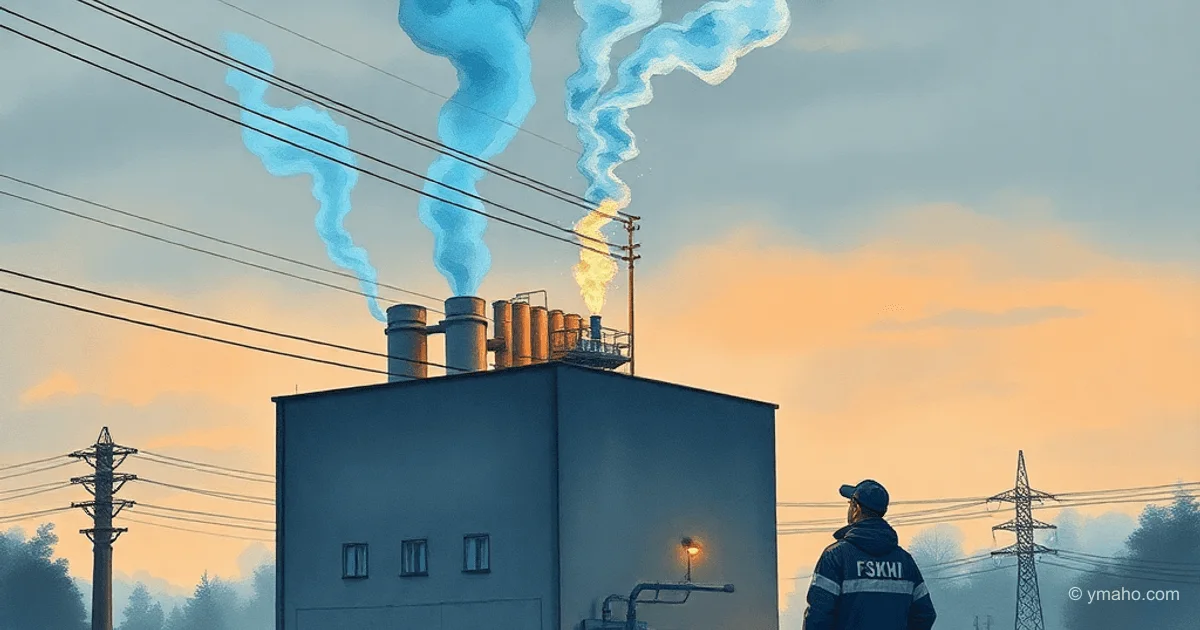
In Sverdlovsk Oblast, FSB officers teamed up with energy specialists to inspect a suspicious building and uncovered an industrial-scale cryptocurrency mining operation. In total, they found 850 mining rigs running around the clock. To conceal consumption, the owner tampered with the electricity meter. During the farm’s operation, 2.9 million kilowatt-hours were drawn “off the books”—equivalent to the annual electricity use of roughly 800 average apartments.
Energy providers documented the violation, filed an official report, and law enforcement opened a criminal case. The suspect faces up to five years in prison under the fraud statute involving property damage.
Why Is the Government Cracking Down on Such Farms?
Illegal mining isn’t just about “someone skipping their utility bills.” When hundreds of high-power computers connect to the grid without authorization, they place extra strain on transformers and wiring—potentially leading to:
- Overloaded local networks,
- Power outages for neighbors,
- Higher infrastructure maintenance costs overall.
And those costs ultimately fall on all consumers through higher tariffs. Imagine someone hooking up an entire swimming pool to your water supply—you’d pay for the leak, right? Something similar happens with electricity.
According to Rosseti, losses from such schemes exceeded RUB 4.7 billion in 2025 alone. This is now a systemic issue—not just a few rogue operators.
How Does This Relate to the Crypto Market?
Mining is the process by which computers solve complex computational problems to validate blockchain transactions (e.g., Bitcoin or Ethereum). For this work, operators receive newly minted coins. But the hardware consumes enormous amounts of electricity—sometimes more than entire villages.
When such operations run illegally, they don’t directly impact Bitcoin’s price—but they do create reputational and regulatory risks. If authorities begin shutting down farms en masse, legitimate miners may face stricter rules—or even outright bans in certain regions.
Key Takeaways
- Damage is substantial: RUB 10 million lost from a single farm sends a strong signal to others.
- Government coordination is deliberate: The FSB, Rosseti, and the Prosecutor’s Office are acting jointly—not conducting random raids.
- Trend toward legalization continues: Russia has long debated mining regulation but is currently prioritizing crackdowns on the shadow sector.
- Infrastructure risk is real: Grid overloads threaten power supply stability.
- Crypto market suffers indirectly: More scandals mean greater odds of harsh legislation.
What Does This Mean for Ordinary People?
If you’re neither a miner nor a server operator, this doesn’t affect you directly. But there are two indirect effects. First, if illegal mining continues unchecked, electricity tariffs may rise faster due to accelerated grid wear. Second, tighter oversight could slow the growth of Russia’s legitimate digital economy—including startups, data centers, and green-energy initiatives.
For now, the government is targeting resource theft—not cryptocurrencies themselves. And that approach makes sense: you can’t build a new economy on stolen electricity.
— Editorial Team









