What a Once-in-a-Century Solar Storm Could Do to Your Phone, GPS, and Power
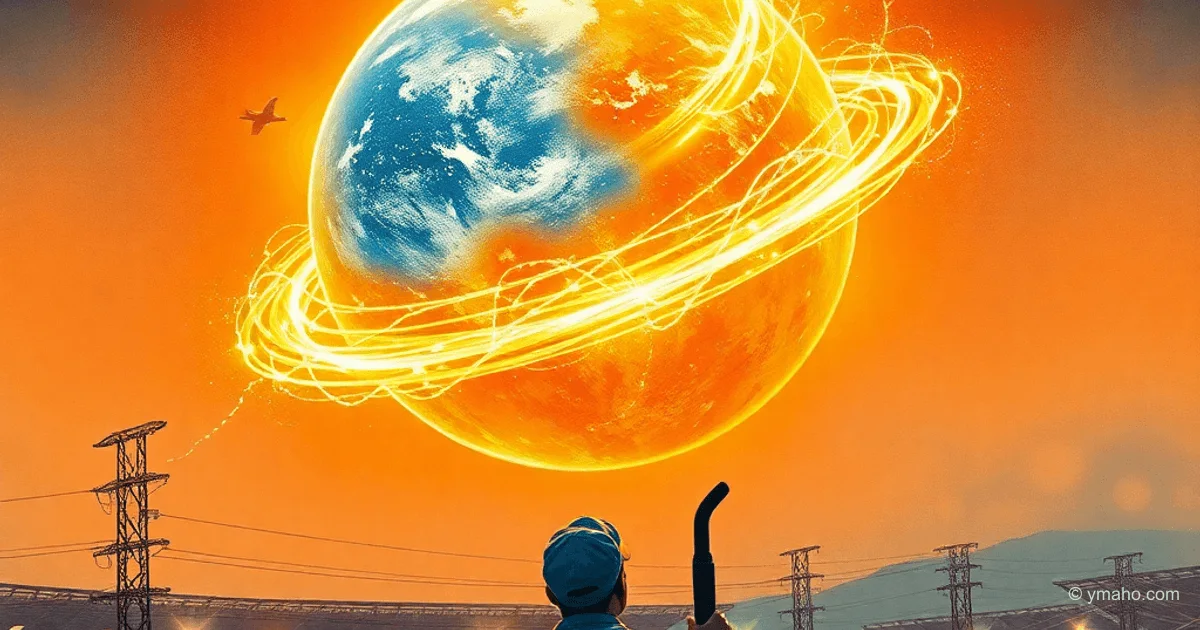
Imagine waking up to find your phone’s GPS useless, flights grounded worldwide, and parts of the power grid offline—not because of a cyberattack, but because the sun sneezed. A new scientific report warns that a worst-case solar storm, the kind that strikes once every 100–200 years, could knock out satellites, scramble navigation signals, and even damage power transformers for months. While it won’t end the world, it could seriously disrupt the invisible tech we rely on every day.
The Sun’s Hidden Weather System
Most people check the weather before heading out—but few think about “space weather,” which comes from the sun. Think of the sun like a giant, bubbling pot of magnetic energy. Sometimes, it erupts with flares (intense bursts of light) or hurls billions of tons of charged gas into space—called a coronal mass ejection, or CME. When these hit Earth, they interact with our magnetic field and atmosphere, creating what scientists call geomagnetic storms.
These storms aren’t like rain or wind. Instead, they induce electric currents in long metal structures—like power lines and undersea cables—and flood near-Earth space with radiation that can fry satellite electronics. The strongest recent example happened in May 2024, when GPS errors cost U.S. farmers $500 million in lost productivity in just a few days.
Power Grids: More Vulnerable Than You Think
During a severe geomagnetic storm, the Earth’s magnetic field wobbles like a shaken compass. This movement creates extra electric currents in power lines—especially in high-latitude regions like Canada, Scandinavia, and the northern U.S. If those currents get too strong, they can overload transformers, the massive boxes that regulate voltage in the grid.
Unlike a fuse you can replace at home, some of these transformers weigh hundreds of tons and take months to build and ship. The 2026 U.K. report warns that a worst-case storm could not only cause immediate blackouts but also age critical equipment faster, reducing grid reliability for years afterward.
Satellites in the Crosshairs
Satellites orbiting Earth are on the front lines. They’re hit by two main threats during solar storms:
- Radiation damage: High-energy particles can scramble computer chips or degrade solar panels, shortening a satellite’s life by years.
- Atmospheric drag: Solar X-rays heat Earth’s upper atmosphere, causing it to swell like a balloon. This increases drag on low-orbit satellites, slowing them down and pulling them toward re-entry.
We’ve already seen this happen. In February 2022, SpaceX lost 40 newly launched Starlink satellites when a minor geomagnetic storm expanded the atmosphere enough to drag them down before they could stabilize. A century-level storm could wipe out dozens—or even hundreds—of satellites, including those used for weather forecasting, TV, and military communications.
When Your GPS—and Flight—Goes Silent
Many systems depend on ultra-precise timing from GPS satellites. During solar flares, radio noise from the sun can drown out these faint signals, especially on the sunlit side of Earth. That disruption might last an hour—but during a full geomagnetic storm, the ionosphere (a layer of the upper atmosphere that reflects radio waves) becomes chaotic, breaking the link between ground receivers and satellites for days.
This affects more than just driving directions. Modern farming uses GPS to plant crops with centimeter precision. Airplanes use it for navigation over oceans. Even financial networks rely on GPS time stamps to process transactions. And while your mobile phone might still work, long-range aviation and maritime radios (using VHF/UHF bands) could go silent, forcing airlines to ground flights—partly for safety, and partly because crews could be exposed to elevated radiation levels at high altitudes.
What Does This Mean for Regular People?
You probably won’t lose power forever, and your phone won’t melt. But a major solar storm could mean:
- No GPS for several days, disrupting deliveries, ride-sharing, and emergency services.
- Regional blackouts lasting hours or days, especially in northern areas.
- Flight delays or cancellations due to communication loss and radiation concerns.
The good news? Scientists are getting better at predicting these storms. With telescopes watching the sun 24/7, we often get 12–48 hours’ warning—enough time for grid operators to protect equipment and satellite controllers to put systems in safe mode.
Key Takeaways
- A worst-case solar storm happens roughly once every 100–200 years and could severely disrupt modern technology.
- Power grids, satellites, and GPS are most at risk—not from destruction, but from temporary failure or accelerated wear.
- The May 2024 event caused $500 million in agricultural losses, showing even moderate storms have real economic impact.
- We’re not defenseless: early warnings allow operators to take protective actions.
- Personal risk is low, but societal disruption could ripple through transport, finance, and supply chains.
— Editorial Team









