Trump Denies Reports of Halting Negotiations with Iran
President Donald Trump called reports from Iranian media about the end of dialogue with the US "false and mistaken." On Monday, in a post on Truth Social, he stated that talks are continuing and urged Tehran to strike a deal.
Trump Denies Halting Negotiations with Iran: A Hidden Game of Raising Stakes in the Energy Casino
[The Core]: What’s Really Happening
Trump’s public denial of reports about the end of US-Iran talks is not just diplomatic rhetoric but a clear signal to major market makers and sovereign funds. In reality, negotiations are not merely "continuing," as Trump claims on Truth Social. The US administration is deliberately creating managed volatility in energy markets, aligning statements with actions by the military and Treasury.
Note the timeline. A day before the denial, Iran’s Tasnim agency announced the end of backchannel contacts. This was a trial balloon meant to test market reaction to escalation. Markets responded with a drop in gold and a correction in oil futures. Trump immediately countered, confirming that "talks had been continuous" over the past five days. This is a classic "good cop, bad cop" routine between the White House and Iranian media, but with a more cynical aim.
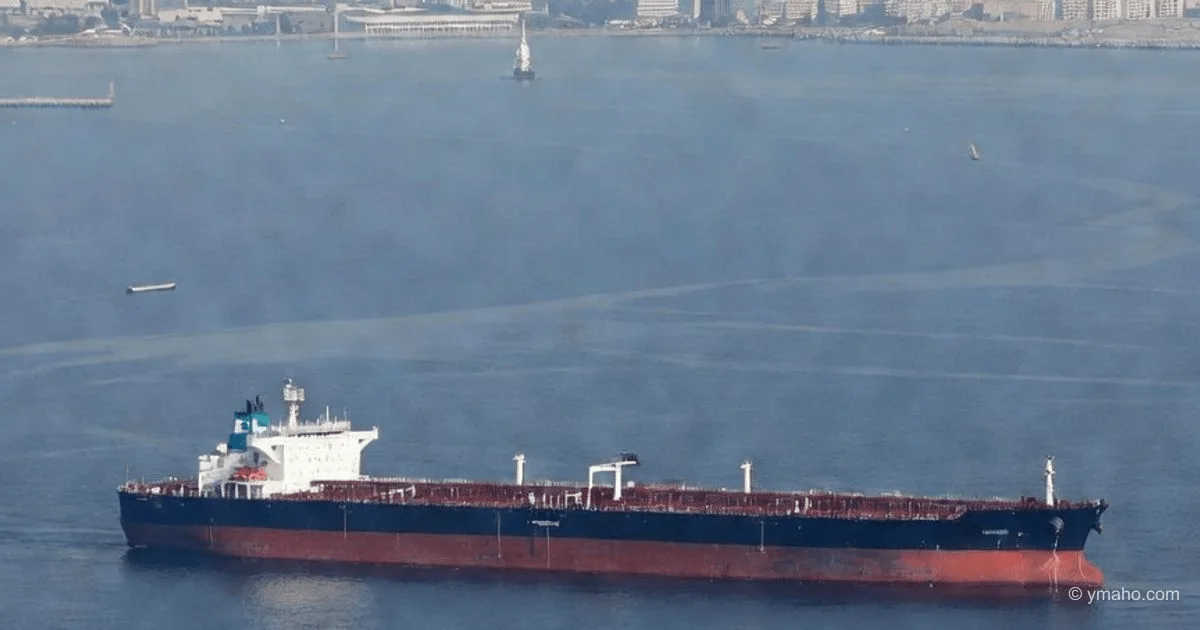
The real goal at this stage is not a ceasefire but the creation of a legitimate mechanism to control the Strait of Hormuz, which is currently all but closed. Note Secretary of State Rubio’s statement: he explicitly tied progress in talks to "full restoration of traffic through the strategic route." This means the US has no intention of ceding control of the strait and instead wants to lock in a new navigation regime favorable to Western tanker fleets.
A less obvious insider takeaway: Trump’s public denials create a "window of uncertainty" ahead of the NFP data release on June 5. The Fed is likely using geopolitical noise to justify holding rates steady at the June meeting. US inflation has already hit 3.8% year-over-year, and any genuine peace deal with Iran would instantly knock oil prices down 20-25%, triggering the deflationary scenario the Fed fears as much as inflation.
Timeline and Context
The sequence of events over the past week points to a well-coordinated signaling system between US military and diplomatic channels. On May 31, intelligence reported Kuwait intercepting Iranian missiles. The same day, the US Treasury imposed sanctions on Iran’s shadow fleet in Hong Kong and the UAE. On June 1, Iranian media claimed talks had hit a stop sign. On June 2, Rubio told the Senate that no nuclear deal was possible without reopening the strait. Finally, on June 2-3, a series of strikes: CENTCOM hit an Iranian post on Qeshm Island, and the IRGC responded with drones on bases in Bahrain.
What analysts miss? Hidden economic logic runs through these events. Every military incident coincides with sharp moves in the oil options market. On June 2, before Trump’s statement, trading volume in July-expiring Brent call options rose 40%. This shows "smart money" was positioning for a short-term price spike, even while knowing talks were ongoing.
The February-March 2026 context, when the strait was blocked, trained the market to expect oil around $90-100 per barrel. Today, $90 is the new psychological floor. Both Trump and Iranian leadership understand this. Their public statements are therefore not information but weapons. When Trump says "talks are moving," he effectively knocks spot oil prices down $3-5 per barrel in the moment, weakening Iran’s hand ahead of the next meeting.
Winners and Losers
The main beneficiary of the current uncertainty is China. While the US and Iran spar over the strait, China continues buying Iranian oil through intermediaries, exploiting the gap between Western sanctions and real economic needs. Bloomberg analysts estimate China receives a $25-30 per barrel discount versus Brent. Amid China’s K-shaped recovery (exports rising, domestic demand falling), this protects producer margins.
The second beneficiary is the US defense and energy sectors. Lockheed Martin and Raytheon secured $4 billion in contracts to replenish missiles expended in the conflict. Meanwhile, Exxon and Chevron lobby to keep energy prices high, blocking any quick reopening of the strait. They benefit from the status quo: oil at $90-100 and a spot LNG market where the US has grown to 25% of European imports.
Who loses? The European Union and Japan. For Europe the situation is dire. Eurozone growth is expected to slow to 1% in 2026 precisely because of the energy shock. German industry, especially BASF and Siemens Energy, is cutting output due to expensive feedstock. Japan received Iranian guarantees for vessel passage, but that is only a partial fix. The Tokyo Stock Exchange has lost 12% of its capitalization since early March, and every new escalation knocks the Nikkei 225 down another 2-3%.
Iran loses, but not as badly as it appears. Yes, the economy is in ruins, inflation exceeds 40% annually, and $24 billion in frozen assets remain inaccessible. Yet Tehran has gained an implicit win: legitimization of its role as a regional arbiter. Through talks with the US, Iran is trading not just uranium but stability across the Gulf. The price of that "stability package" rises every week.
What the Media Isn’t Saying
Most outlets focus on the military and diplomatic angles while ignoring the financial engineering behind the conflict. In Washington and Tehran, parallel discussions are underway to create a $300 billion international reconstruction fund for Iran. This is not a humanitarian initiative; it is a scheme to carve up future oil revenues.
The core proposal, actively pushed by France’s TotalEnergies and Italy’s Eni, would open Iran to international capital markets and technology in exchange for freezing its nuclear program, but with 40% of export revenue funneled into a trust fund managed by Western banks. In essence, it is a reverse Marshall Plan: money is not injected but extracted until political conditions are met.
The key insight missing from mainstream coverage: Russia and China have already begun building an alternative payment system for oil trade to bypass this fund. In April 2026, the Central Bank of Russia and the People’s Bank of China finalized mechanisms for settlements in national currencies via SPFS (Russia’s SWIFT equivalent) and CIPS (China’s system). If Iran accepts US terms, it would lose the ability to trade with Beijing and Moscow outside Western oversight. That is why talks are stalling and why Iran keeps demanding "guarantees"—it wants not just peace but the right to multi-currency oil arbitrage.
Outlook: Next 30 Days and 90 Days
30 days (June-July 2026). Expect a series of tactical escalations with no real progress. In the 72 hours after Trump’s denial, markets will price in reduced risk (equity rebound, gold drop), but by week’s end, after US inflation data, the geopolitical premium will return. Two or three rounds of such swings are likely in June. Watch for Brent to break above $95 if no memorandum is signed by June 15. The key date is June 20: talks in Muscat mediated by Oman. If that yields nothing, the IRGC could provoke a new tanker incident to "accelerate" decisions.
90 days (July-September 2026). A plateau. By August, the US presidential campaign will force Trump to push a deal at any cost. A "discounted deal" is probable: Iran freezes uranium enrichment above 3.67% and reopens the strait to US and allied vessels (but not all) in exchange for unlocking $12 billion in assets and lifting sanctions on three Iranian banks. This is not peace but a truce. By fall, oil prices should ease to $75-80 as demand in Europe and China falls amid recession. Gold, conversely, is likely to climb above $5,000 on disappointment over the half-measure deal.
Editorial Forecast
Asset and direction: Brent crude (short position) — moderate decline over the next 48 hours.
Key levels: Current range $89.50–$92.00. A break below $89.00 targets $87.20. The bullish option activates only on a close above $93.50.
Conviction: Medium. Trump’s denial creates a short-term "peace impulse," but military actions on Qeshm Island continue, and any new strike report could flip positions.
Main risk: Sudden diplomatic breakthrough—signing a memorandum before June 5. In that case oil could drop $7-10 in a single session. The reverse risk—a terrorist act or sinking in the strait—would push Brent above $100.
Editorial opinion, not investment advice.
— Editorial Team