Ukraine’s Experience Protecting Its Power Grid Becomes a Lesson for All of Europe
Russian attacks on Ukraine’s energy infrastructure have shown Europe that its own systems could also be at risk. This affects every EU citizen, because a stable supply of electricity and heat is the foundation of modern life.
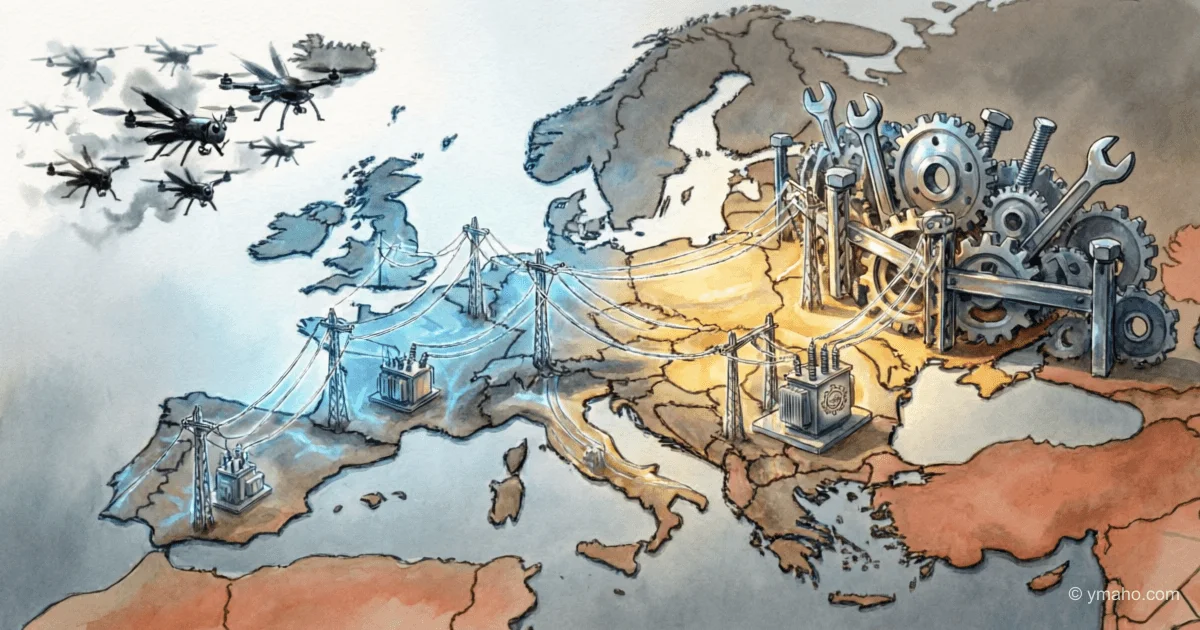
Vitaliy Zaychenko, head of Ukraine’s Ukrenergo, told a Danish publication that European countries must learn from Ukraine’s experience and prepare in advance for potential attacks on their energy facilities. He is actively promoting, within the European Network of Transmission System Operators for Electricity (ENTSO-E) and the European Commission, the idea of creating a shared reserve of critical equipment for all operators.
This proposal feels especially urgent after Russia began using new technologies in its attacks, such as Shahed drones and FPV drones. Zaychenko says plainly: with these technologies, there is no safe place in Europe.
How Attack Tactics Have Evolved
During last winter’s campaign, Russia changed its approach. Where strikes were once more chaotic, they are now targeted and large-scale. The primary targets are no longer just power lines, but combined heat and power plants (CHPs).
This is a strategic move. CHPs generate both electricity and heat for cities. Damaging them creates a dual crisis: people lose both power and heating during the coldest months. Under these conditions, electric heaters became the only way to warm homes, triggering sudden, uncontrolled spikes in electricity demand.
The system was caught in a trap: demand soared while generation capacity was severely limited due to destroyed plants. The result was prolonged, forced blackouts affecting millions.
What This Means for Europe
Europe’s power grid, despite its sophistication, was not designed for wartime conditions. It assumes reliability in peacetime, with scheduled maintenance and reserves for technical failures. Ukraine’s experience shows that this model can collapse rapidly under targeted, coordinated attacks.
Creating a shared equipment reserve is an attempt to build an "emergency response kit" for the power grid. Think of it as a shared first-aid kit for all homes in a neighborhood: if one house catches fire, tools and supplies can be quickly drawn from the common stock to help until professional services arrive.
What’s important
- Ukraine has become a real-world laboratory for protecting power grids against modern hybrid attacks.
- The main threat now targets facilities that produce both electricity and heat, creating complex challenges for populations.
- Europe is beginning to realize its energy security is not absolute and requires new, collective protective measures.
- A shared reserve of critical equipment for operators is a practical step toward strengthening the resilience of the entire European grid.
- The threat extends beyond Eastern EU countries—it affects all members, as attack technologies are easily scalable.
The Global Context of Energy Security
This situation goes far beyond the region. Energy infrastructure is the foundation of the entire modern economy—from factory operations to banking and the internet. Vulnerabilities in one country’s or region’s power system create risks for global trade, logistics, and even financial markets.
Energy instability can lead to:
- Disruptions in the production of key goods, affecting global prices.
- Breakdowns in digital infrastructure, including financial transactions.
- Increased insurance and operational costs for international companies operating in the region.
Ukraine’s experience is a lesson for all developed nations whose infrastructure was considered reliable. It shows that in today’s world, planning must account not only for technical failures but also for deliberate, coordinated attacks.
What This Means for Ordinary People
For Europeans, this means energy security is becoming more tangible. Stable electricity prices and guaranteed heating in winter may depend on how well infrastructure is protected. For the world, it’s a signal: energy is not just an economic issue—it’s the foundation of modern stability, and its protection demands new, collective approaches.
— Editorial Team









