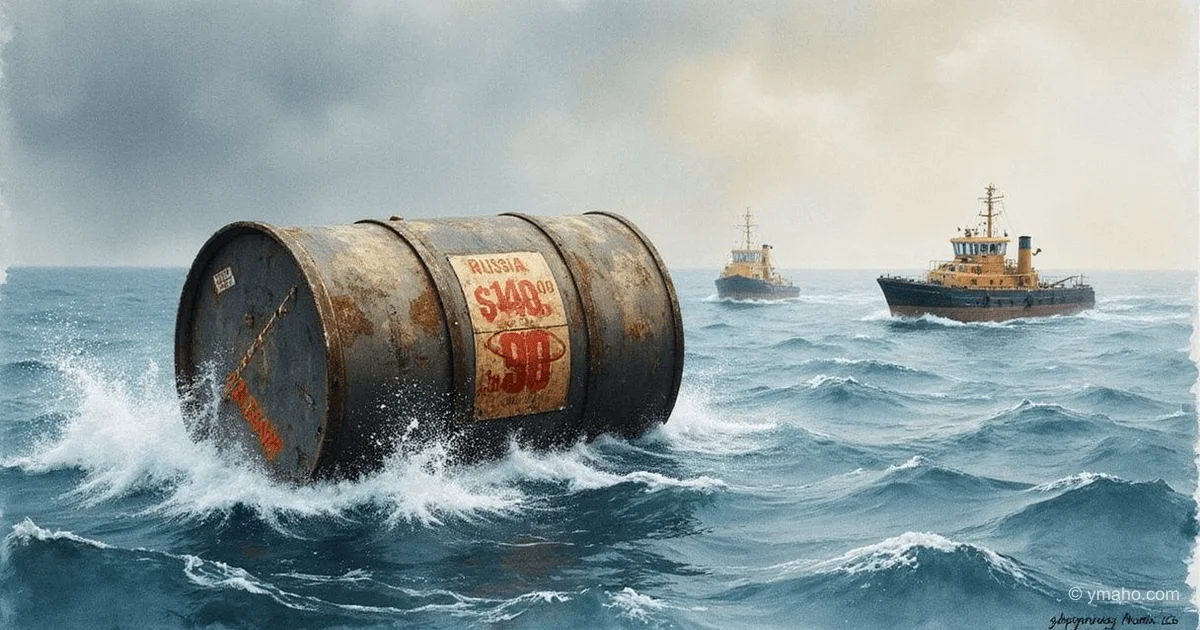
Why Russian Urals Oil Spiked in Price — And What It Means for the World
In April, the price of Russian Urals crude surged by 42% over just two weeks. This isn’t just another number from financial reports — these spikes directly impact gasoline prices, consumer goods costs, and even how much money Russia has to fund its war effort. All this is unfolding against a backdrop of escalating tensions in the Middle East.
What Caused Such a Sharp Rise?
By early April, the average Urals price at Western ports reached $106.3 per barrel — up from $75 in March. The reason is straightforward: conflict between Israel, Iran, and their allies disrupted oil shipments from key regions of the Persian Gulf. When major supply sources vanish from the market, buyers scramble to find alternatives — and they’re turning to Russian oil.
Imagine apples suddenly disappearing from your favorite orchard. People will start buying apples from a neighboring farm, even if they were previously cheaper. Demand rises — and so does the price.
Before the Middle East crisis, Russian oil traded at record discounts — as much as $30 below benchmark Brent crude. That gap has now nearly vanished.
How This Boosts Russia’s Budget
Russia budgets for oil prices around $59 per barrel in 2026. Today’s actual price is nearly double that. This creates what’s known as a ‘fiscal windfall’ — billions in extra revenue automatically flowing into the treasury through special extraction and export taxes.
Due to a one-month lag in calculations, April’s higher prices will boost the budget starting in May. If prices hold, Russia could collect roughly $9 billion from just one oil tax — double what it earned last month.
In rubles, this is especially advantageous: at today’s exchange rate, one Urals barrel is worth about 8,300 rubles — the highest since March 2022. This gives the Kremlin not only funds for military spending but also greater stability for the domestic economy.
What This Means for the Global Market
The surge in Urals prices reflects a broader global shift. Asian nations, particularly China and India, have long been top buyers of Russian oil. Now they’re paying more — but still less than for oil from other sources.
This triggers several effects:
- Strengthened Russian influence as an energy player despite sanctions.
- Higher fuel prices in import-dependent countries.
- Global inflation pressure — since oil affects transport, plastics, fertilizers, and countless other goods.
Key point: Even if you don’t buy oil directly, its price impacts your wallet every day.
Key Takeaways
- Russian Urals crude hit $106 per barrel — a 42% increase from March.
- The spike stems from reduced Middle East supplies due to ongoing conflicts.
- Russia will see significant additional revenue in May thanks to its oil taxation system.
- Global energy and commodity prices may rise as a result.
- Sanctions haven’t halted exports — Russia has adapted by shifting trade routes.
What This Means for Everyday Life
You might not track oil futures, but oil prices shape your daily life. Rising oil costs often lead to higher gas prices, airfares, groceries, and delivery fees. Meanwhile, extra revenues allow Russia to keep funding its war, prolonging geopolitical instability. This isn’t just a distant issue — it’s a factor affecting global security and the economy of every nation.
— Editorial Team









