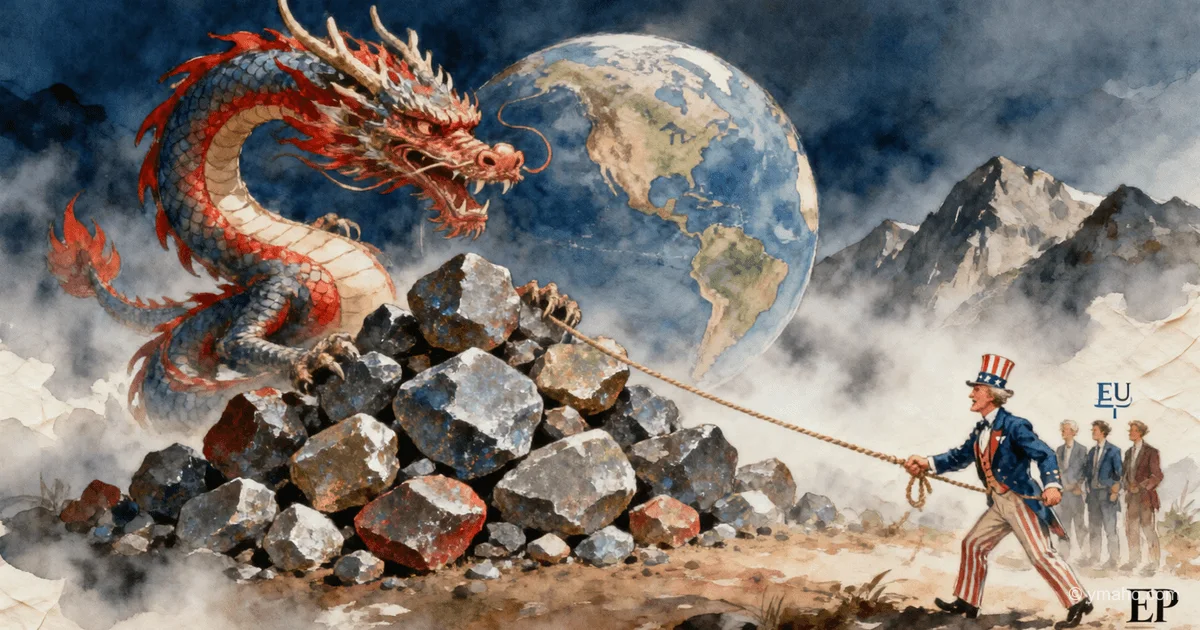
US demands allies pay more for rare metals: how it will hit global markets
The Donald Trump administration has proposed a new scheme for trading critical minerals with allies that could radically reshape global supply chains and spark a trade war with China.
What the US is proposing
US Trade Representative Jamieson Greer said that American allies should pay a "national security premium" for supplies of rare earth metals and other strategic minerals. The idea is to create a closed club of countries that would trade raw materials at set minimum prices. This is intended to protect investments in mining and processing outside China.
At the same time, the US may impose high tariffs or other barriers on external producers — primarily China — to prevent dumping. Washington is thus trying to break Beijing's long-standing monopoly on key resource supplies.
Why this matters for the world
China has invested for decades in mining and processing rare earth metals, lithium, cobalt, and other minerals needed for electronics, batteries, defense systems, and green energy. Today, China accounts for over 60% of global rare earth mining and up to 90% of processing.
The US attempt to create an alternative trading system could lead to:
- Higher raw material prices for manufacturers worldwide, including Europe, Japan, and South Korea.
- Retaliatory trade measures from China — Beijing could impose its own export restrictions on minerals or raise tariffs.
- Accelerated inflation in Western economies already struggling with high energy prices.
Allies' reaction: concerns and skepticism
Negotiations are being held behind closed doors, but sources told the Financial Times that US allies are alarmed. Key concerns:
- The scheme will raise business costs, especially in defense, automotive, and energy sectors.
- Minimum prices contradict free trade principles and efficiency.
- China could impose retaliatory sanctions, hitting the same Western companies.
Greer counters: "When partners talk about economic costs, I say it was precisely the pursuit of cheapness that led us to dependence on China."
What this means for ordinary people
If the scheme is implemented, consumers worldwide could face higher prices for goods — from smartphones and electric vehicles to military equipment. Rising raw material costs will hit manufacturers, who will pass them on to buyers. Moreover, trade tensions between the US and China could trigger new waves of instability in global markets.
— Editorial Team









