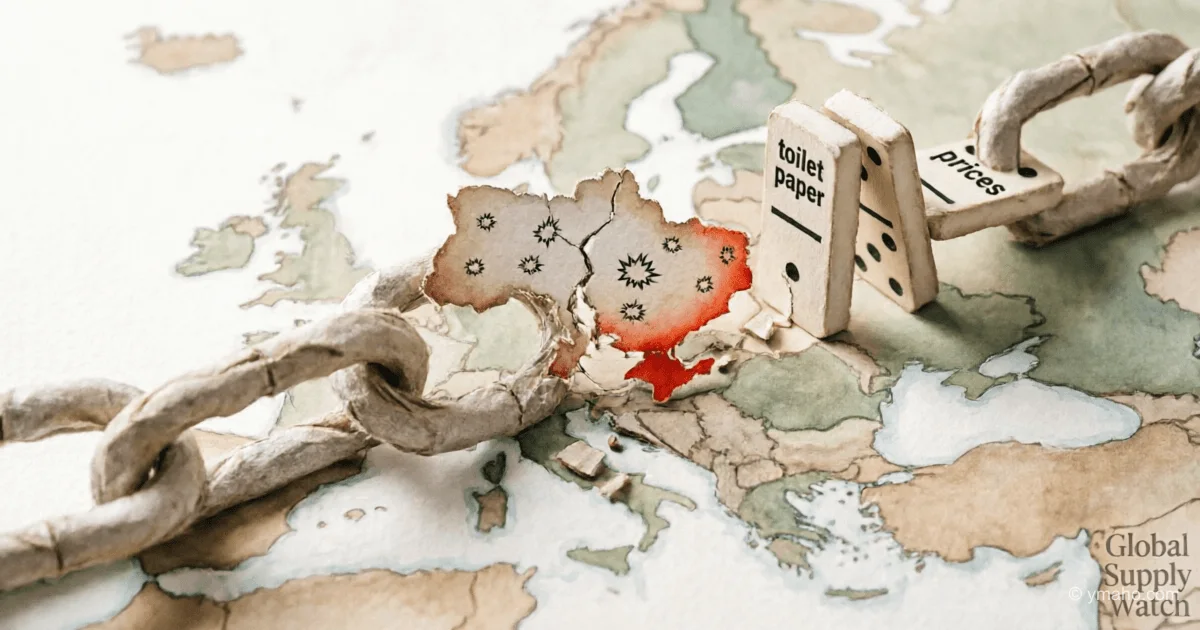
How Missile Strikes in Ukraine Are Affecting Your Toilet Paper?
Imagine walking into a grocery store for toilet paper, only to find the shelves completely empty. This might not be due to panic buying, but because of missiles that landed just 30 kilometers outside Kyiv. One of Europe’s largest manufacturers drastically cut production, and the ripple effect will soon hit your shopping cart. The war in Ukraine has long ceased to be just a regional conflict; it’s now squeezing the wallets of anyone who relies on everyday essentials.
Why Is the Obukhov Plant Important to the Whole World?
The Kyiv Board and Paper Mill (KBPM) isn’t just another Ukrainian factory. It’s a massive operation employing 2,500 people and ranking among the top five European producers of packaging and hygiene products. Owned by an Austrian company, its goods are distributed across the continent. When missiles struck on March 14 and April 3, pulp production came to a halt—cutting off the raw material supply for toilet paper, napkins, and cardboard boxes.
In March alone, output dropped to one-third of last year’s levels. Think of global supply chains like a conveyor belt in a massive supermarket: if one critical link breaks (say, the Obukhov plant), familiar items can start disappearing from shelves in Berlin or Warsaw within a month. That’s how the modern economy operates—everything is interconnected, much like links in a chain.
What You Need to Know
- One factory, global impact: KBPM used to produce 7% of all packaging for major European brands. Companies are now scrambling to find alternative suppliers, but securing new contracts takes months.
- Prices are already climbing: Pulp costs have jumped 12% over the past six months. It’s akin to flour prices suddenly spiking—bread becomes more expensive for everyone.
- It’s not just about toilet paper: Disruptions in cardboard box manufacturing are also affecting shipments of electronics, pharmaceuticals, and groceries. Even your latest smartphone could face delays due to packaging shortages.
Why Does This Matter to You?
If you buy goods made in Europe (which covers nearly every major brand), you’ll likely notice two shifts soon. First, prices for paper products could rise by 5–10% as manufacturers pass along their increased costs. Second, stockouts of specific items will become more frequent—not because shoppers are hoarding, but because real bottlenecks are forming in supply networks. It’s a stark reminder that conflicts don’t just affect soldiers; they directly impact your weekly grocery run.
— Editorial Team









