The 2008 Financial Crisis: Causes, Failures, and Legacy
The 2008 financial crisis stands as the most severe economic downturn since the Great Depression, a systemic collapse that nearly brought the global financial system to its knees. Understanding what caused the 2008 financial crisis explained requires examining a perfect storm of permissive macroeconomic conditions, regulatory failures, and human motivators—fear and greed—that conspired to break down confidence and trust in the financial system . The crisis triggered a complete overhaul of the global regulatory environment and its effects continue to shape economic policy, political polarization, and inequality today .
What You'll Learn
The 2008 financial crisis was caused by a complex interaction of loose monetary policy, global imbalances, deregulation, and the proliferation of risky financial products like subprime mortgages and mortgage-backed securities. The collapse of Lehman Brothers in September 2008 triggered a full-blown panic, exposing the fragility of an over-leveraged financial system built on flawed risk models and weak oversight. Its legacy includes sweeping regulatory reforms like Dodd-Frank, but also persistent economic inequality and political divisions that remain unresolved more than a decade later.
How It Works: The Mechanics of a Systemic Collapse
The 2008 crisis was not a simple event but a cascade of interconnected failures. To understand what caused the 2008 financial crisis explained in mechanistic terms, it helps to break it down into three distinct phases.
Phase 1: The Macroeconomic and Regulatory Setup
Over the decade preceding the crisis, OECD economies struggled to maintain aggregate demand. The US, lacking the export-led growth model of Asian economies, cut taxes in 2001 and 2003 while fighting a major war, creating significant budget deficits . Monetary policy also played a role: a simple Taylor Rule calculation suggests official rates in the OECD were "super-loose"—about 180 basis points below normal in 2003 and 270 basis points in 2004 .
This environment encouraged risk-taking. US households, buoyed by rising property prices, spent approximately 4 cents out of every $1 increase in their paper wealth, driving consumption and pushing household debt ratios to unprecedented levels . The US current account deficit averaged over 5% of GDP from 2001—a classic warning sign that the economy was consuming more than it produced .
Phase 2: The "Shadow Banking" Machine
The financial sector itself underwent a dramatic transformation. Investment banks, responding to the search for yield, invented complex, highly leveraged investment vehicles funded on the wholesale money market . Key mechanisms included:
- The "Originate and Distribute" Model: Banks originated mortgages and other loans, then packaged them into securities sold to other parties—moving them off balance sheets and bypassing capital requirements .
- Mortgage Mis-selling: Salesmen, paid per sale with no responsibility for consequences, aggressively pushed subprime mortgages to borrowers who could not afford them .
- Credit Rating Agency Failures: Agencies gave complex mortgage vehicles "triple A" ratings—implying they carried the same risk as major government bonds—despite the underlying assets being toxic . The agencies were also conflicted, as they were paid by the very issuers they rated .
- The Shadow Banking System: Hedge funds, private equity firms, and other unregulated financial companies became the primary demand side for collateralized debt obligations (CDOs), mortgage-backed securities, and credit default swaps (CDSs), fueling an explosion of leverage throughout the system .
Phase 3: The Unraveling and Panic
Then suddenly, asset values turned. Confidence and trust collapsed, and leverage, which had amplified profits on the way up, turned into a savage enemy on the way down . The defining event of the crisis was the "hemorrhagic stroke"—a paralytic implosion of the loanable funds market that brought the global monetary and credit system to the brink of Armageddon .
The cascade unfolded at breathtaking speed:
- September 7, 2008: Fannie Mae and Freddie Mac, holding $12 trillion in mortgages, were placed into conservatorship .
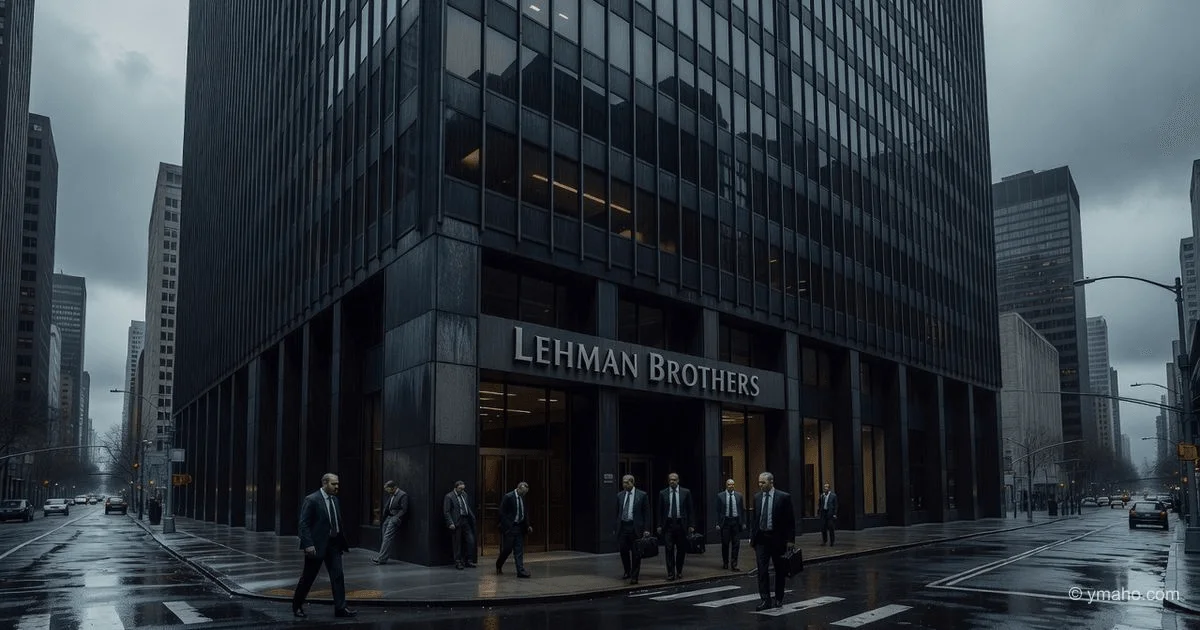
- September 10, 2008: Lehman Brothers filed for bankruptcy after failing to find a buyer or federal bailout .
- September 16, 2008: The Federal Reserve announced an $85 billion rescue loan to AIG, the insurance giant heavily involved in securitization .
- Banks ceased lending to each other as LIBOR (the London Interbank Offered Rate) soared, and the SEC temporarily suspended short selling to stem the panic .
Why It Matters: Concrete Impact on People's Lives
The legacy of the crisis is not just a matter of academic interest—its effects have rippled through the lives of millions. More than a decade later, countries like Greece, Spain, Italy, Portugal, and Cyprus continue to reel from the aftereffects, while the US and UK remain in the grip of a long slump .
- Home Loss and Foreclosures: The housing bust that triggered the crisis led to millions of foreclosures, wiping out the primary source of wealth for middle-class families.
- Job Losses and Stagnant Wages: The resulting recession led to mass unemployment, with persistent, near-double-digit joblessness in some economies . The crisis exposed deeper structural problems, including stagnant real wages and flagging mass consumption demand that predated the crash .
- Rising Inequality and Political Polarization: The continuing effects of the crisis include increasing economic inequality and political polarization . The 2017 Tax Act and other subsequent policy choices have also exacerbated the gap between the wealthy and everyone else .
- Sovereign Debt Crises: The financial crisis morphed into a sovereign debt crisis in Europe, with countries like Iceland, Ireland, and Greece facing crushing debt burdens that dampened aggregate demand and raised the specter of European Union dissolution .
By the Numbers: Key Stats, Dates, and Milestones
Understanding what caused the 2008 financial crisis explained requires grounding the narrative in hard data. The following table captures the key quantitative dimensions of the crisis.
| Metric | Value | Context | Source |
|---|---|---|---|
| US Current Account Deficit (2001-2008) | Averaged ~5% of GDP | A classic sign of macroeconomic imbalance, signaling the US was consuming more than it produced. | |
| US General Government Deficit (2002-2008) | ~5% of GDP | Compared to an average of under 0.5% in the previous five years and over 2% for the Euro area. | |
| Household Debt Ratios | Took off dramatically from 2001 | US households, buoyed by rising property prices, spent 4 cents out of every $1 increase in paper wealth. | |
| Lehman Brothers Collapse | September 10, 2008 | Filed for bankruptcy after failing to find a buyer or Federal bailout. | |
| Fannie Mae/Freddie Mac Conservatorship | September 7, 2008 | Held $12 trillion worth of mortgages. Placed into conservatorship by the Federal Housing Financing Agency. | |
| AIG Rescue Loan | $85 billion | Announced by the Federal Reserve on September 16, 2008. | |
| TARP (Troubled Asset Relief Program) | $700 billion | Emergency loan package requested by Secretary Paulson to purchase sour mortgages. | |
| Potential Lost Wealth (US & Europe) | ~10% | The failure to adequately respond to the crisis is projected to have cost the US and Europe 10% of their potential wealth. |
Common Myths vs. Facts
Many misconceptions persist about the 2008 crisis. Separating myth from fact is essential to prevent future collapses.
| Myth | Fact |
|---|---|
| "The crisis was caused by poor people who couldn't afford mortgages." | The crisis was fundamentally a failure of the financial system, not of individual borrowers. While subprime mortgages were a key ingredient, the real drivers were deregulation, flawed risk models, and the "originate and distribute" model that allowed banks to offload risk and create complex, toxic securities . Mortgage mis-selling was widespread, with salesmen paid per sale and bearing no responsibility for the consequences . |
| "No one saw it coming." | Many economists and risk managers did see warning signs. At Lehman Brothers, a model called Damocles predicted financial crises. When run on the US, it consistently scored between 75 and 100 over the preceding 10 years, implying a 1-in-3 to 50-50 chance of crisis . The Ovigstad rule—which flags trouble if key indicators exceed 4% of GDP—also indicated the US was in trouble for years . The problem was that those in power were unwilling to act. |
| "The crisis was caused solely by a few bad actors on Wall Street." | While individual greed and poor corporate governance were factors, the crisis was systemic, with multiple causes that interacted . Regulatory frameworks were "light," and there was a widespread intellectual consensus—including among policymakers—that markets were efficient and self-correcting . Chief economists within investment banks repeatedly warned about unsustainability, but their warnings were ignored . |
| "We've learned our lesson and fixed the problem." | The regulatory response has been significant—most notably the Dodd-Frank Act in the US and new capital requirements like Basel III. However, the legacy of the crisis is still unfolding. The failure to strengthen financial-sector regulation has left the world economy exposed to the risk of another major crisis . Many of the same practices that led to the crisis, like complex derivatives and a "too big to fail" mentality, persist . |
| "Austerity was the right response to the crisis." | Many economists, including Martin Wolf and Barry Eichengreen, argue that austerity was the wrong response. The partial success of initial bailouts allowed politicians to declare the crisis over and embrace austerity, which stalled growth and led to today's stagnant economy . The result has been anemic growth that threatens to become the new normal. |
What You Should Do With This Knowledge
Understanding what caused the 2008 financial crisis explained is not just an academic exercise. It provides critical lessons for individuals, policymakers, and investors.
For Individuals: Watch the Warning Signs. The Ovigstad rule, which flagged the US crisis years in advance, suggests that any economy with a public sector deficit, current account deficit, or inflation rate exceeding 4% of GDP is in trouble . Pay attention to these indicators—they signal that a major economic shock may be on the horizon. Also, be wary of financial products you don't fully understand. The crisis was fueled by opaque, complex instruments that even the professionals who created them didn't fully grasp .
For Investors: Beware of Leverage and Complexity. The crisis was driven by excessive leverage. As the OECD paper notes, "leverage, which until that moment had been everybody's friend, turned into a savage enemy" . Be cautious of strategies that rely on high levels of debt, especially in opaque markets. Also, scrutinize "ratings" from credit rating agencies—as the crisis showed, triple-A ratings were given to securities that turned out to be toxic .
For Policymakers: Address Structural, Not Just Cyclical, Issues. The lessons of the crisis point to fundamental, unresolved issues. These include tackling inequality, implementing "more global regulation," and freeing individual countries to craft their own responses . Additionally, the crisis exposed the failure of the efficient-market hypothesis—the idea that markets always price assets rationally. Policy must incorporate a more realistic view of financial markets that accounts for systemic risk .
For Citizens: Demand Accountability and Transparency. The crisis exposed a massive disconnect between risk and reward. CEOs of major banks made fortunes while gambling with shareholders' and taxpayers' money, protected by "golden parachute perks" and the "too big to fail" mentality . The failure to prosecute many of the perpetrators—through mechanisms like "Deferred Prosecution Agreements" in the US—has eroded trust and created a moral hazard . Citizens should demand stronger corporate governance and real accountability for financial misconduct.
Frequently Asked Questions
What was the main cause of the 2008 financial crisis? The main cause was a complex interplay of permissive macroeconomic policies, financial deregulation, and the proliferation of risky financial products like subprime mortgages and mortgage-backed securities. A light regulatory framework, flawed risk models, and the "originate and distribute" model allowed risk to build up across the system until confidence collapsed and the music stopped .
What happened when Lehman Brothers collapsed? Lehman Brothers declared bankruptcy on September 10, 2008, after failing to find a buyer or federal bailout. This triggered a full-blown financial panic as confidence evaporated. It exposed the fragility of the over-leveraged financial system and led to the freezing of credit markets, forcing massive government bailouts of other institutions like AIG .
How were credit rating agencies involved in the crisis? Credit rating agencies (CRAs) played a critical role by giving complex mortgage-backed securities "triple A" ratings, implying they carried the same low risk as major government bonds. These ratings were deeply flawed, and the agencies were conflicted because they were paid by the very issuers they were rating. When the true risk was revealed, these downgrades contributed to the panic .
Is another financial crisis likely to happen again? Yes, many experts believe the risk remains significant. While regulatory reforms like Dodd-Frank and Basel III have strengthened some parts of the system, the underlying causes—including excessive leverage, complex financial products, and weak corporate governance—persist. The failure to fully implement and enforce reforms has left the world economy exposed to the risk of another major crisis .
What are the lasting effects of the 2008 financial crisis? The crisis continues to shape the world economy and politics. Lasting effects include increasing economic inequality, political polarization, sovereign debt crises in Europe, and anemic economic growth in the US and Europe. The crisis triggered a "lost decade" of potential wealth and fundamentally altered the relationship between governments, central banks, and financial markets .
— Editorial Team