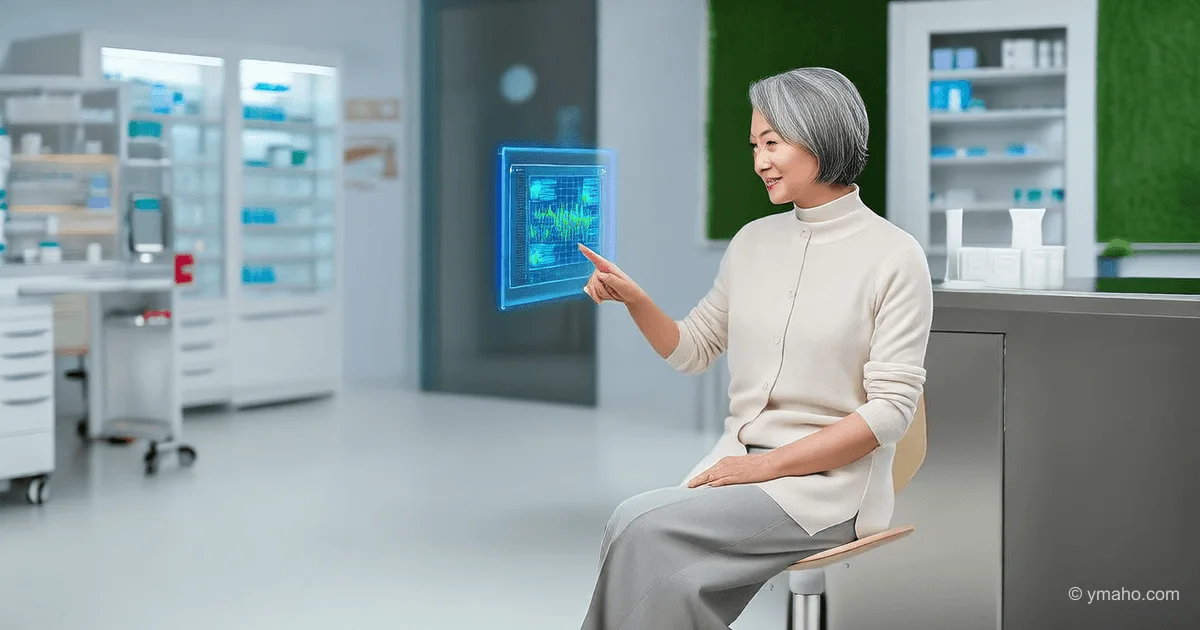
Women 45+ Take Power into Their Own Hands: Pharma Bets on Their Health
Pharma companies are rethinking products for active women who no longer want to 'put up with' age-related changes. Demand for evidence-based nutraceuticals and ecosystems of endocrine health care for a generation of informed female patients is breaking records.
Women 45+ have just become the most dangerous consumer segment for brands that ignore them.
Gen X spends $279 billion a year on beauty. In ten years, that figure will reach $430 billion. Add boomers, who will pour in another $8 billion between 2024 and 2034, and you get a consumer group that is financially more powerful than any zoomer, but which the industry has pretended not to notice for decades. Patience has run out. At the BeautyMatter FUTURE50 Summit in April 2026, women 45+ articulated a demand that sounds like an ultimatum: evidence-based efficacy, respectful marketing, and products designed for real hormonal changes, not watered-down versions of what is sold to twenty-year-olds.
$55.88 Billion Reasons to Stop Ignoring Women's Health
Femtech as an industry will grow from $46.47 billion in 2025 to $55.88 billion in 2026 — a jump of 20.2% in one year. By 2030, the market will reach $118.99 billion with an annual growth rate of 20.8%. This is not startups in garages. This is pharma companies, biotech ventures, and diagnostic platforms that have realized: the woman 45+ is the most undervalued asset in healthcare.
The global women's health market overall is going from $167.6 billion in 2025 to $254.9 billion by 2031. The segment of menopausal supplements was valued at $18.92 billion in 2025 and will reach $35.81 billion by 2032 — a CAGR of 9.7%. But the main thing is not the growth rates. The main thing is who and how takes this money.
Korea Rebuilds K-beauty into K-femtech — and This Is a Systemic Shift
While the West is just waking up, South Korea is building a national strategy. The country's domestic femtech market was valued at $478.5 million in 2024 and is growing at 16.9% annually — by 2030 it will almost triple to $1.214 billion.
February 2026 was a turning point: the Korean Association of Women Entrepreneurs, the Women's Enterprise Support Center, and the Korean Venture Capital Association signed a memorandum on joint financing and globalization of femtech companies. The government launched a women's business development program for 2026 with grants of up to $54,000 per company, explicitly including AI and biotech startups in women's health as priorities.
At the same time, the average revenue of women-founded companies in Korea grew by 15% in 2024 and reached $1.535 million. Total sales of women's enterprises jumped 22.1% to $425.4 billion, R&D spending soared 34.9%, and exports rose 11.9%. K-beauty was built on ten-step skincare and BB creams. K-femtech is built on diagnostics, nutraceuticals, and hormonal support — and it has a government backing.
Pharma Companies Restructure Portfolios Around Hormones and Microbiome
On the American front, Viatris is on the home stretch with a low-dose estrogen contraceptive patch: the FDA accepted the application and set a decision date for July 2026. The company presented pivotal Phase 3 data at a major scientific conference — six abstracts, direct engagement with prescribing physicians. The product is positioned within Viatris's growing women's health franchise and gives investors a clear regulatory milestone.
Daré Bioscience is building an entire platform around clinically validated women's products: DARE to PLAY Sildenafil Cream launched through the 503B channel in late 2025 and is scaling nationwide in 2026, DARE to RESTORE vaginal probiotics launch in Q1 2026, DARE to RECLAIM intravaginal ring with estradiol and progesterone is planned for early 2027. The company uses a dual-path model — 503B compounding alongside classic FDA approval — to get to market faster and generate cash flow without endless equity financing rounds. Plus non-dilutive grants from NIH and ARPA-H for Ovaprene, DARE HPV, DARE LARC1 — research is funded, risks are reduced.
Gen X No Longer Wants to 'Put Up With It' — and Votes with Their Wallets
A panel discussion at BeautyMatter FUTURE50 featuring Laura Geller, Sarah Creal, and makeup artist Erica Taylor captured a shift in tone. Women 45+ articulate their demand firmly: 'We are tired of being invisible. We are tired of products that don't work. We are tired of marketing that either ignores us or talks to us like patients in a nursing home.'
Kristina Montemayor, editor of BeautyMatter, framed the situation as a 'reality check': Gen X spends $279 billion a year, boomer spending will reach $8 billion over the decade — and brands that don't adapt will lose not just market share, but an entire generation of loyal customers.
The demand is extremely specific: not 'anti-aging creams' with vague promises, but products designed for the hormonal changes of perimenopause. Not marketing metaphors, but clinical data. Not infantilizing advertising, but respectful conversation with an adult, solvent woman.
Who Wins and Who Loses in This Reshuffling
Winners are companies that build ecosystems: telemedicine + diagnostics + prescription drugs + nutraceuticals. Evernow, Alloy, Midi Health are capturing an audience that traditional gynecology ignored. Korean femtech startups are getting government funding and access to global markets.
Evidence-based nutraceuticals win. The menopausal supplement market will double by 2032, with consumers demanding ingredient transparency, clinical trials, and personalization. By 2030, over 1.2 billion women worldwide will be in menopause — this is not demographics, it's a tsunami. AI systems that collect data from lab tests, diet, and wearables for personalized recommendations are becoming the standard.
Losers are brands that continue to perceive 'anti-aging care' as a cosmetic category. A woman 45+ no longer wants a cream that 'reduces wrinkles.' She wants a product that protects bones, supports cognitive health, and stabilizes mood. Losers are companies whose marketing is built on photos of twenty-year-old models with filters. Gen X demands authentic representation — and gets it from brands like Laura Geller Beauty and Sarah Creal Beauty, founded by women of this age for themselves.
Losers are investors who still consider women's health a 'niche.' $55.88 billion in 2026 and nearly $119 billion by 2030 — that's not a niche.
Forecast for 2027–2030
By the end of the decade, the boundary between femtech, telemedicine, and preventive geriatrics will disappear. A woman 45+ will open an app where an AI algorithm analyzes her hormonal profile, wearable data, and microbiome tests — and delivers a personalized stack: prescription drug, nutraceutical, exercise regimen. Pharma companies investing today in women's health franchises will earn loyalty for decades to come.
The Korean K-femtech model — government funding, venture capital, global expansion — will become a benchmark for countries wanting to capture this market. China, with its huge aging population and AI ecosystem, will inevitably join the race.
Women 45+ have taken power into their own hands not with slogans, but with their wallets. And that is the most convincing argument the women's health market has ever seen.
— Editorial Team









