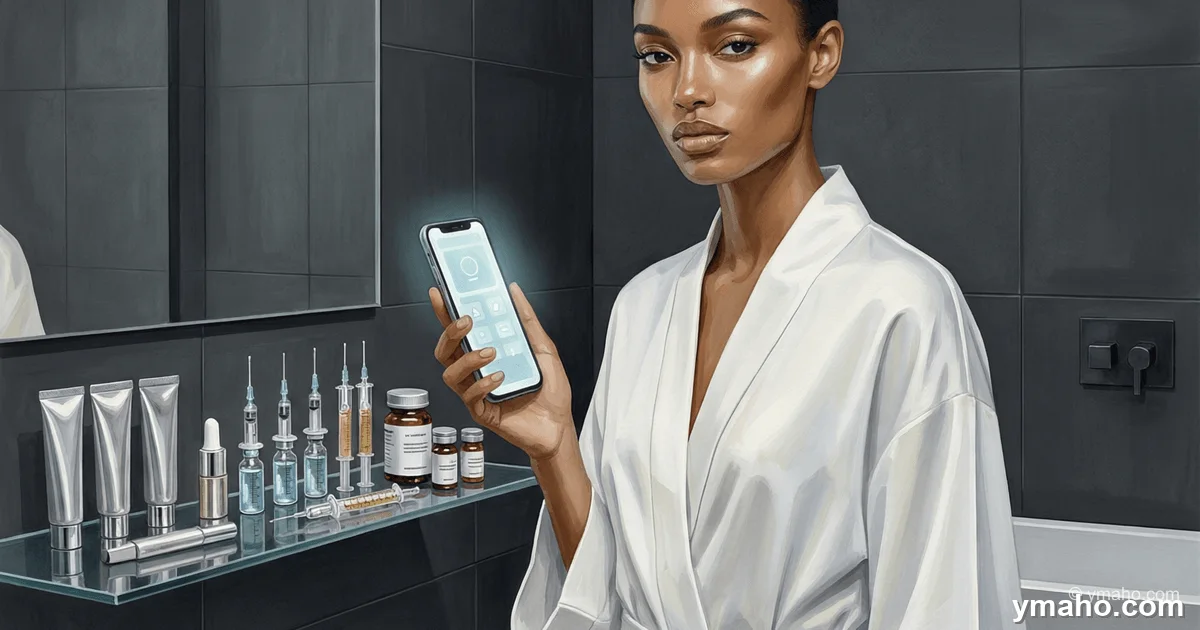
Beauty Optimizers Are Reshaping the Market: 15 Million Americans Spend $3,000 on Procedures and Longevity
A BCG and WWD report reveals a new type of consumer who combines skincare with injectables and longevity supplements. 75% use AI to choose products, favoring science over social media.
Headline: Optimization as the New Religion: Why 15 Million Americans Spend $3,000 a Year on a Symbiosis of Injections, AI, and Supplements
Introduction: The End of the "One Hero" Era in Your Cosmetic Bag
A joint report by BCG and WWD, published on May 13, 2026, based on a survey of 5,000 American consumers, has revealed a tectonic shift that the industry has felt for the past two years but was afraid to name. The emergence of the "Beauty Optimizer" segment is not just a marketing niche. It is a new anthropological reality.
We are talking about 6% of the US adult population—approximately 15 million people—who spend an average of $3,000 per year, seamlessly combining a cream from Sephora, a filler injection at the dermatologist, and a jar of collagen for longevity. This is no longer a consumer who "buys lipstick." This is a manager of their own biology. And the scariest part for legacy brands: 75% of them trust AI recommendations over beauty blogger advice.
[The Core]: What Is Really Happening
The core is the convergence of three markets. Previously, cosmetics, plastic surgery, and nutrition existed in parallel. Now, the optimizer has blurred the lines. For them, "skincare" is a unified ecosystem where one enhances the other.
80% of optimizers say beauty is about how they feel physically and mentally, not just about appearance. But behind this nice phrase lies pragmatism. Where you once had a "beauty ritual," you now have a "body management protocol."
Key Driver: The rise of GLP-1 agonists (Ozempic, Wegovy). About 30% of optimizers have used these drugs in the past 12 months. Rapid weight loss has created demand for "post-weight loss" cosmetics: skin tightening, facial volume restoration. Nearly 80% of those who experienced skin sagging increased their use of fillers and laser lifts. The optimizer doesn't want to choose between an injection and a cream—they want both, because they solve different problems in the same cycle.
Timeline and Context
2023–2024: Surge in GLP-1 popularity. The market faces side effects ("Ozempic face," sarcopenia).
2025: Growing interest in "beauty from within" (beauty supplements)—Euromonitor records an 8% increase in online sales to $1.1 billion in the US and China.
April 2026: BCG/WWD survey conducted among 5,000 respondents.
May 13, 2026: Report published. The term "Beauty Optimizer" is born as an official category.
Who Wins and Who Loses
Winners:
- Medical brands with direct distribution: Brands like SkinMedica, Alastin, or ZO Skin Health. 70% of optimizers invest in premium or medical-grade skincare to maintain procedure results. This is a death blow to drugstore brands lacking clinical backing.
- AI assistant platforms (Replika, Skinive, L'Oréal Beauty Genius): 75% of optimizers already use AI for research, and 25% call it their primary source of information. Bloggers lose trust to algorithms.
- Longevity supplement manufacturers: Optimizers are 4 times more likely to use longevity and anti-aging supplements. Old formulas like "collagen for joints" are transforming into "NAD+ for cellular rejuvenation."
Losers:
- Brands relying on viral marketing: Optimizers trust social media only at a 1 to 20 ratio when making purchase decisions. A TikTok algorithm can create hype, but it doesn't convert to sales in this segment.
- Mass-market brands without scientific backing: A consumer spending $3,000 a year won't buy a $5 cream with cucumber extract. They want peptides with proven bioavailability.
What the Media Isn't Saying
Everyone talks about AI and injections. But they stay silent about the gender gap in technology use.
Non-Obvious Insight: Among male optimizers, 40% use AI to create personalized beauty routines. That is 2.6 times higher than among women.
Why does this matter? Men traditionally face a barrier to entry in the beauty space (awkward to ask a store consultant, embarrassed to admit to a dermatologist). AI has removed this barrier. A chatbot allows a man to anonymously learn he needs an anti-wrinkle serum without losing masculinity. This opens a huge, previously inaccessible market for premium men's cosmetics that doesn't require "masculine" black bottles—just a smart AI interface.
Second Insight: Doctors and medical professionals remain the most trusted source. But their time is expensive. AI becomes their "digital avatar." Brands that learn to integrate doctor recommendations into an AI system (so the algorithm replicates a top dermatologist's logic) will capture the market.
Forecast: Next 30 Days and 90 Days
30 Days (June 2026):
- Rebranding wave: Cosmetic companies will mass-remove the words "makeup" and "skincare" in favor of "performance," "longevity," and "wellbeing." R&D departments will start hiring specialists in GLP-1-associated conditions.
- Launch of "medical" marketplaces: Platforms will emerge where you can simultaneously buy a retinol prescription, a set of probiotics, and book a laser resurfacing session in one cart.
90 Days (August 2026):
- AI vs. regulators conflict: As soon as AI starts directly recommending prescription drugs (e.g., "you need tretinoin 0.05%"), the FDA will step in. We'll see the first lawsuits against beauty-tech startups for "practicing medicine without a license."
- Supplement industry cannibalization: The beauty nutraceutical market (currently $1.1 billion online) will face competition from functional foods. Consumers will want collagen not from a jar, but from their morning coffee or protein shot.
Bottom Line: The era of "just cream" is dead. We are entering the age of the "biohacker approach," where every optimizer is their own clinical research center, and AI is their lab assistant. If your brand hasn't yet integrated longevity science, AI diagnostics, and GLP-1 support into its strategy, you're not just losing 6% of the market—you're losing the future, because these 15 million are setting trends for the remaining 94%.
— Editorial Team