The 'Clean Eating' Trend Is Changing Russian Consumer Habits
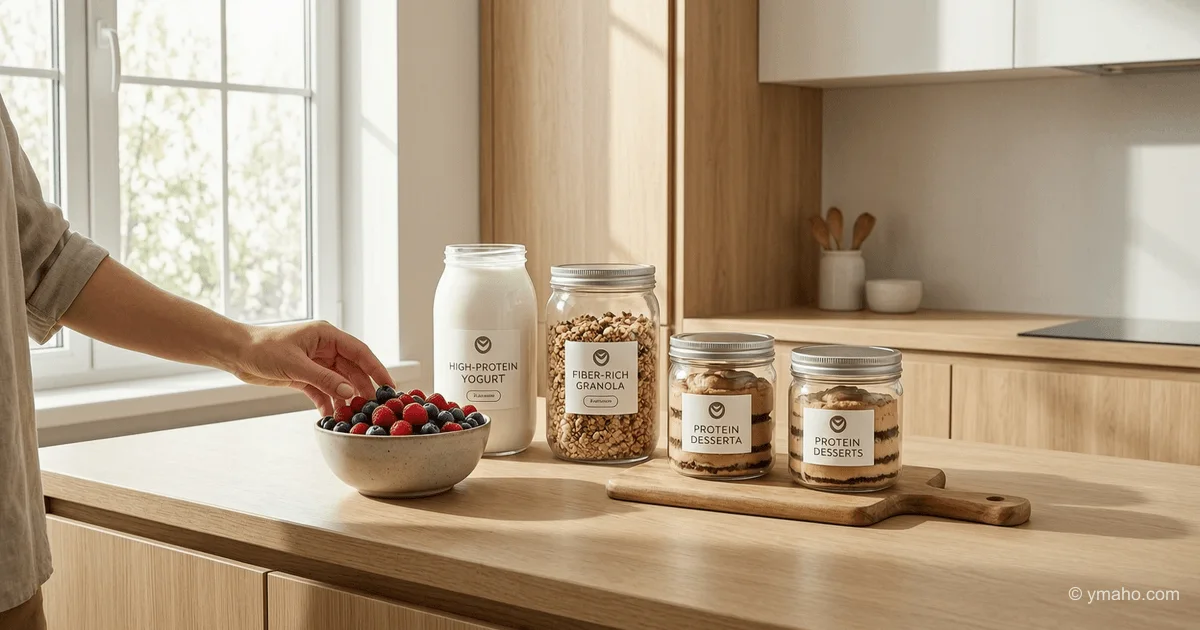
People are increasingly abandoning complex diets in favor of everyday benefits. Demand is growing for products high in protein and fiber, appearing in new categories from snacks to desserts.
Clean Eating as a Business Strategy: Why 'Everyday Benefits' Beat Diets
The Gist: What's Really Happening
The news that Russians are abandoning complex diets in favor of 'clean eating' high in protein and fiber is presented as a story about mindfulness. Like, people finally realized that healthy eating isn't about short-term restrictions but everyday choices. However, behind this 'enlightenment' lies a hard-nosed business logic that the media prefers to ignore.
In reality, we are witnessing not a shift in consumer habits but a shift in the food industry's business model. Manufacturers and retailers are moving from the 'diet product' model to the 'functional everyday food' model. The reason is simple: a diet product is bought for 2-3 months, while a functional one is bought for years. A customer on a keto diet is a temporary customer. A customer who habitually buys high-protein yogurt with fiber is a customer for life.
The Russian functional food market was valued at $10.22 billion in 2024 and is projected to reach $21.59 billion by 2033, with a CAGR of 8.62%. That's doubling in nine years. And the key driver of this growth is precisely the shift from 'diet' positioning to 'everyday benefits'.
Timeline and Context
The shift has been building for several years but crystallized in the public sphere by spring 2026.
2023–2024. The GLP-1 boom began—drugs like Ozempic radically changed the weight loss landscape. The food industry saw a threat: if people lose weight with pharmacology, diet products lose their purpose. The response was a restructuring of assortments toward 'functional foods'—products not for weight loss but 'for health'.
December 2025. VkusVill publishes its food trend forecast for 2026, identifying key directions: fiber as the 'new protein', proteinization of everyday products, and 'new nostalgia'—a return to familiar childhood flavors but with clean ingredients and improved nutritional value. The retailer's analysts note: nearly 50% of consumers actively seek products with increased fiber content, and one in four looks for prebiotics.
April 2026. T-Data publishes data: revenue and sales volume in the healthy eating segment grew by 27% year-on-year. The consumer profile varies by gender and age: among men, the core audience is 35-44 years old; among women, 15-24 years old. This means 'clean eating' has ceased to be a niche product for fitness enthusiasts and has become mainstream for two key demographic groups.
May 2026. Nuriya Dianova and other experts publicly name the 2026 food trends: 'clean and understandable food', care for the microbiome, emotional well-being through food. The media picks it up. The trend is institutionalized.
Who Wins and Who Loses
Winners are functional food manufacturers and retailers who managed to restructure their assortment.
The Russian functional food market is growing at 8.62% per year. The largest segment is probiotics, which will remain a key growth driver throughout the forecast period until 2033. Dairy, bakery, and snack producers adding protein and fiber to their lines gain the ability to sell ordinary products at a premium markup.
A telling case: protein desserts. According to Roskachestvo, protein cookies and pastries accounted for 85.7% of sales in the protein product category. Powdered protein—only 11.6%, bars—2.7%. This means consumers don't want 'sports nutrition' in its traditional form. They want a dessert that 'happens' to be healthy.
Retailers like VkusVill win twice: they shape the trend through their own forecasts and then fill the shelves with products that meet those forecasts. Protein waffles, high-protein cottage cheese, fermented milk drinks with protein, protein ice cream without added sugar—these are all launches that VkusVill has touted as hits of 2026.
The global clean label ingredients market is also on the rise: $136.11 billion by 2033 with a CAGR of 4.32%. Russia is present in the European segment of this market, meaning global suppliers of natural flavors and ingredients (Firmenich, Kerry, and others) see the Russian consumer as a growing sales market.
Losers are traditional diet product manufacturers. 'Weight loss' lines with low fat and artificial sweeteners are losing ground: the 2026 consumer reads labels and rejects 'chemicals' even in diet products. Manufacturers who haven't switched to clean label formulations will be pushed off the shelf.
Small manufacturers without budgets for certification and repackaging lose out. Clean label is expensive: natural ingredients cost more than synthetic ones, and retooling production lines for 'clean' formulations requires investment. Small players who can't afford it remain in the 'ordinary food' segment with declining margins.
Low-income consumers also lose. 'Clean eating' high in protein and fiber is a premium segment. When VkusVill talks about growth in healthy food sales, it's talking about its audience—the urban middle class. For a significant portion of the population, 'clean eating' remains unaffordable. The functional food market was worth $10.22 billion in 2024, and it's growing, but it's not a market for everyone.
What the Media Leaves Out
First non-obvious insight. 'Abandoning complex diets' is not a rise in mindfulness but a market adaptation to the GLP-1 reality. When weight loss drugs became mainstream, the food industry lost its main marketing hook—the promise of 'losing weight on our diet'. Now that hook doesn't work: why suffer on a diet when you can get a shot? The industry's answer: 'We're not about weight loss, we're about health.'
This is a brilliant pivot: a product that used to be sold as 'diet' is now sold as 'functional'. The margin is the same or higher, and the customer lifetime value is many times longer.
Second insight. Behind the growth figures lies a geographical paradox. T-Data records the highest growth in healthy food sales in the Magadan region (+215%), Kalmykia (+214%), and Yakutia (+122%). These are regions no one would call centers of healthy lifestyle culture. The explanation is simple: a low base effect plus expansion of federal chains' assortments in the regions. But for marketers, this means 'clean eating' has ceased to be a Moscow-St. Petersburg story. The next frontier is regional expansion.
Third insight—about fiber. VkusVill and other experts call fiber the 'new protein'. This is not a metaphor but a strategic forecast. The protein market is nearing saturation: protein desserts already account for 85.7% of the category. The next frontier is fiber and prebiotics. Nearly 50% of consumers seek products with increased fiber content. Manufacturers who first occupy this niche at the same pace as they did with protein will reap the rewards.
Fourth insight—the deepest. 'Clean eating' in its Russian incarnation is not so much about health as about 'new nostalgia'. A trend noted by analysts: consumers want childhood flavors but with clean ingredients and no additives. This is a uniquely Russian hybrid of the global clean label and a local demand for 'home-style food'. The 'potato' cake in Belgian milk chocolate, vanilla ice cream, tubes with protein cream—these products sell far better than anonymous 'health bars'. Consumers vote with their wallets for the same emotion as with purple ube coffee: food should comfort, but now it also has to be 'clean'.
Forecast: Next 30 Days and 90 Days
30 days (by June 7, 2026). The 'clean eating' trend will get a new boost from the summer season. Manufacturers will ramp up launches in the 'functional snacks' category: protein ice cream, high-protein smoothies, fiber bars. Major retailers (VkusVill, Pyaterochka, Azbuka Vkusa) will expand their clean label product shelves under own brands. Expect at least 2-3 federal chains to announce private label launches in the functional food segment.
The protein dessert market will continue to grow, but a shift toward fiber and prebiotics will begin. Manufacturers currently launching protein products will start adding fiber and labeling it as 'double benefit'.
90 days (by August 7, 2026). By the end of summer, we will see the first results of sports nutrition labeling: from September 1, 2026, the circulation of unlabeled sports nutrition in Russia will be completely banned. This will clear the market of small players operating without certification and strengthen the positions of large manufacturers.
At the same time, consolidation in the clean label segment will begin. Large corporations, noticing the functional market's 8.62% annual growth, will start buying successful niche 'clean eating' brands. Expect deals in the categories of protein desserts, functional beverages, and snacks with prebiotics.
A key risk is regulatory. If the government tightens requirements for the term 'clean composition' (as happened with 'organic' labeling), some manufacturers will face the need for recertification. Those not financially prepared will leave the market.
Final takeaway: the 'clean eating' trend in Russia is not so much about changing eating habits as about restructuring the entire business model of the food industry. From the 'sell a diet' model, the market is moving to the 'sell everyday benefits' model. This means consumers will no longer be scared with excess weight—they will be sold 'health' every day, with every meal, with every snack. And those who understand that fiber is the new protein, and that a 'potato' cake with a clean composition is the new healthy lifestyle, will cash in.
— Editorial Team









