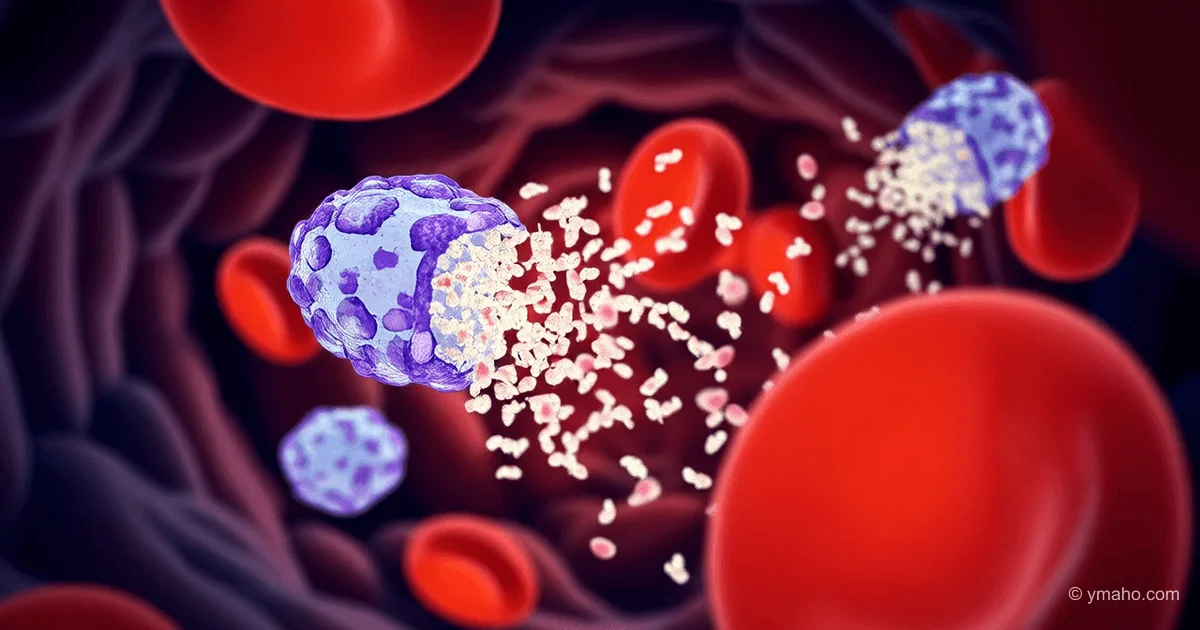
Scientists Find a Way to Wake Up Sleeping Cancer Cells and Destroy Them Before Relapse
For the first time in a randomized phase II trial, it has been proven that 'dormant' tumor cells can be detected in breast cancer survivors and selectively targeted with repurposed drugs. This shifts the strategy for preventing recurrence from passive surveillance to active threat elimination.
Leana Casiano-Vazquez beat triple-negative breast cancer—an aggressive form with a 25% chance of returning within five years. Chemotherapy and double mastectomy were behind her, but a bone marrow analysis revealed that dormant tumor cells were still hiding in her body. Instead of waiting for a relapse, doctors at the University of Pennsylvania gave her a combination of two long-known drugs. Six months later, the 'sleeping' cells were gone. Seven years on, the cancer has not returned.
This is not a miraculous cure. It is the result of a randomized phase II trial called CLEVER, published in Nature Medicine in September 2025. And it is changing the rules of the game in oncology—from passive surveillance to actively hunting down recurrence before it happens.
Hydroxychloroquine and Everolimus: A Pharmacy Kit Against Relapse
The CLEVER trial started with a simple but radical hypothesis. Scientists led by Dr. Angela DeMichele from the Abramson Cancer Center knew that disseminated tumor cells (DTCs) break away from the primary tumor and lie dormant in the bone marrow for years. Standard adjuvant therapy neither sees nor touches them. Then, often without warning, they wake up and cause metastases that are already incurable.
The solution turned out to be elegantly simple. Instead of inventing a new molecule for a billion dollars, DeMichele and her colleague Lewis Chodosh repurposed two drugs that have been sitting on pharmacy shelves for decades: hydroxychloroquine (an antimalarial and immunomodulatory agent) and everolimus (an mTOR inhibitor used in transplantation and certain cancers).
The biology behind it is specific. Dormant cells survive through two mechanisms: autophagy—a process where the cell consumes its own components to avoid starvation—and the mTOR signaling pathway, which regulates growth and division. Hydroxychloroquine blocks autophagy. Everolimus shuts down mTOR. Deprived of energy sources, the sleeping cells die.
The study enrolled 51 women at high risk of recurrence—all had completed primary treatment no more than five years earlier, and all had DTCs found in their bone marrow. They were divided into three groups: 15 received hydroxychloroquine, 15 received everolimus, and 21 received a combination of both. After three months, sleeping cells were no longer detectable in over 80% of participants. Three-year recurrence-free survival was 91.7% for hydroxychloroquine, 92.9% for everolimus, and 100% for the combination.
For context: about 30% of breast cancer patients experience a return of the disease after seemingly successful treatment, and the prognosis for metastatic disease remains fatal. 100% recurrence-free survival on the combination is a number oncologists are not used to saying out loud.
From Surveillance to Interception
Until now, the standard approach for patients in remission has been frustratingly passive: waiting for cancer to show up on scans. 'We don't find cancer until it has already made its way to another part of the body, and by then it's incurable,' explains DeMichele. 'Our goal is to find a way to detect the cells that are truly hiding.'
The problem is that DTCs cannot be seen with standard imaging methods. They sit in the bone marrow, do not divide, do not form a tumor mass—and that is precisely why chemotherapy, which targets rapidly dividing cells, misses them. DeMichele and Chodosh spent years on preclinical studies in mice, which showed that suppressing autophagy and mTOR reduces the residual tumor burden and improves survival—and the effect depends on the duration of exposure.
In February 2026, at the San Antonio Breast Cancer Symposium, the team presented updated data with a median follow-up of 77 months—nearly six and a half years. Of the 51 patients, only two (6%) had a recurrence. Five-year recurrence-free survival was 96%. For triple-negative breast cancer—100%.
Both women whose disease did return had an estrogen receptor-positive subtype. In one of them, nearly two years passed between the first positive DTC test and the relapse—and a liquid biopsy (ctDNA) detected circulating tumor DNA several months before the clinical recurrence. This means that monitoring DTCs and ctDNA could work as an early warning system—giving doctors a window for intervention before metastases become visible on CT scans.
Who Wins and Whose Business Model Is Cracking
The most obvious beneficiaries are patients. About one in four women with aggressive forms of breast cancer has sleeping cells in their bone marrow. Now these women have not just hope, but a clinically validated pathway: a DTC test, a course of affordable drugs, and monitoring.
The pharmaceutical market has also been shaken. Hydroxychloroquine costs pennies—it is a generic produced by dozens of companies worldwide. Everolimus is more expensive but has long lost its patent protection. Neither drug was developed for oncology in this context—and this is precisely the kind of story where generics can do what a $150,000-a-year blockbuster cannot.
For Big Pharma, this is both an opportunity and a threat. Companies with liquid biopsy platforms—Guardant, NeoGenomics (whose RaDaR test was used in CLEVER), Natera—become key players in the new paradigm. If screening for sleeping cells becomes part of standard follow-up for survivors, the market for such tests will grow exponentially. Meanwhile, manufacturers of expensive targeted drugs for treating established metastases risk losing part of their audience: why treat what was prevented?
Regulators are also moving. In March 2026, the FDA issued guidance on including minimal residual disease as an endpoint for clinical trials. CLEVER was one of the catalysts for this decision.
What's Next
Two confirmatory studies are already enrolling participants—NCT04523857 and NCT04841148. They will test the combination of hydroxychloroquine and everolimus in larger cohorts with longer follow-up.
At the same time, Chodosh's team is developing a new flow cytometry-based test to detect sleeping cells—faster, more sensitive, and potentially automatable. The existing immunohistochemistry method is time-consuming and can miss cells, especially when they are very few. 'Patients crave more certainty. Am I cured or not?' says Chodosh. The new test should provide answers in hours, not days.
The most intriguing question is whether this strategy works for other cancers. Logic suggests yes: prostate, melanoma, and colorectal cancer also leave behind sleeping cells. The dormancy mechanisms—autophagy and mTOR—are conserved and not tied to a single tissue type. If similar trials are launched for other solid tumors, we could have a universal platform for preventing recurrence using cheap generics.
The next three years will provide answers. But one thing is already clear: oncology is no longer a discipline that only reacts to disaster. It is learning to predict and intercept. And for hundreds of thousands of people who live for years with the shadow of possible recurrence, this changes everything.
— Editorial Team









