Israel's Knesset Prepares to Vote on Self-Dissolution and Early Elections
The Israeli parliament will consider a bill to dissolve itself, potentially leading to early elections as soon as the first half of September. According to polls, current Prime Minister Netanyahu risks losing.
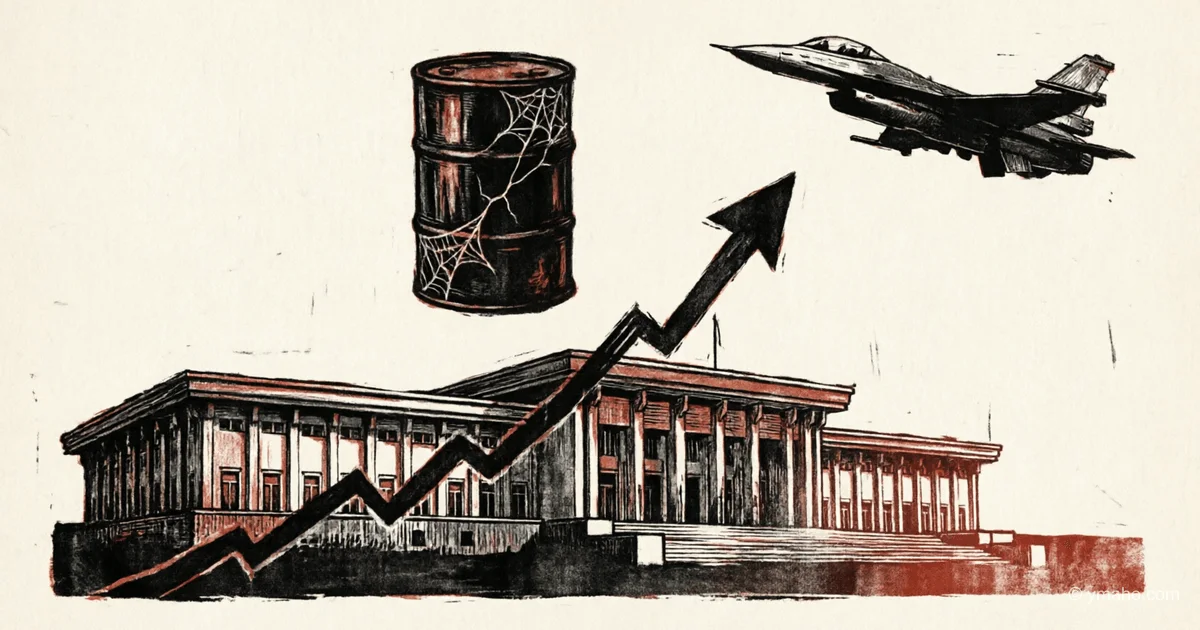
The bill to dissolve the Knesset, which passed its preliminary reading on May 20, is not a parliamentary crisis in the classic sense. It is an event that could reshape the investment map of the Middle East more dramatically in two weeks than rocket attacks. While political analysts count mandates, a consensus deal is forming in the market that goes unspoken: early elections in Israel are the main catalyst for reaching a peace agreement with Iran and opening the Strait of Hormuz.
The Essence: What Is Really Happening
On May 20, the Knesset approved the bill for self-dissolution in a preliminary reading with 110 votes in favor and none against. The formal reason is the crisis surrounding the law exempting ultra-Orthodox Haredim from military service. Leaders of ultra-Orthodox parties announced a break in their alliance with Netanyahu and their intention to push for early elections. This is true, but only on the surface.
The real reason is tectonic: Netanyahu's coalition is losing the ability to govern amid a prolonged war. The opposition is consolidating: Gadi Eisenkot's party "Yashar!" is gaining 16 seats, and the opposition bloc (without Arab parties) already holds 61 seats—a minimal majority. Most importantly, 55% of Israelis want Netanyahu to leave politics.
Timeline and Context
The crisis developed rapidly:
- May 13: The ruling coalition itself introduces a dissolution bill—a preemptive maneuver to seize the initiative from the opposition.
- May 14: A Maariv poll shows the coalition dropping to 49 seats and the opposition strengthening.
- May 17: Opposition leader Avigdor Lieberman publicly warns that Netanyahu may take military action for electoral purposes.
- May 20: Preliminary vote: 110 in favor, 0 against. Netanyahu himself was absent, attending a security meeting.
The bill has now been sent to the relevant committee and must pass three more readings. Technically, this could be done in 48 hours, but the coalition is deliberately slowing the process. If the law passes, elections will be held in 90 days, tentatively in the first half of September.
Who Wins and Who Loses
Winner: Foreign capital and the shekel. Paradoxically, the shekel is trading at a 33-year high—around 2.90 to the dollar. The reason: investors are pricing in an optimistic scenario. A change of power in Israel is seen as key to ending the protracted conflict. As Bank of Israel Governor Amir Yaron noted in early May, the shekel's strength reflects "expectations of a ceasefire deal between the US and Iran." Early elections reinforce these expectations, and if the opposition wins, the market expects a wave of capital inflows.
Loser: Benjamin Netanyahu and the export sector. For the prime minister, these elections are an existential threat. He is playing a double game: on one hand, pushing the dissolution bill; on the other, trying to revive a deal with the Haredim to save the coalition. For exporters, a strong shekel has already become a disaster. The Manufacturers Association of Israel estimates export losses of 31.5 billion shekels ($10.9 billion) by year-end and 3 billion shekels ($1 billion) in tax revenue. High-tech companies are already moving hiring abroad: "It's simply not profitable to pay Israeli salaries," says venture investor Liad Agmon.
What the Media Isn't Saying
Everyone writes about the Haredim and the political crisis. But they overlook the main economic effect: these elections are a disguised referendum on ending the war.
Lieberman warned on May 17 that Netanyahu might "take military action for electoral purposes." This is not rhetoric. Military escalation in Lebanon and strikes on Iranian proxies just before elections could consolidate the right-wing electorate. But the price of such escalation is further prolonging the crisis in the Strait of Hormuz and keeping oil prices above $100 per barrel.
The market, however, is pricing in the opposite scenario: opposition victory = peace deal with Iran = opening of the strait = shekel strengthening. This explains why the shekel continues to rise despite political uncertainty.
The second overlooked factor: exporters are demanding the Bank of Israel cut rates by 0.5% to weaken the currency, but the regulator refuses. If elections lead to a change of power, the new finance minister may insist on interventions—and that would change the shekel's dynamics.
Forecast: The Next 30 Days and 90 Days
30 days. The bill will go through committees and readings. Netanyahu may attempt to revive a deal with the Haredim and withdraw the bill, but the ultra-Orthodox are determined. The shekel will remain in the range of 2.85-2.95 to the dollar. Any news of accelerated elections will push the currency up; any military escalation will push it down. The opposition will continue to gain in the polls.
90 days. Elections in September will lead to a victory for the opposition bloc (probability 65-70%). The new government will prioritize de-escalation on the Lebanese and Iranian fronts. This will pave the way for lifting the blockade of the Strait of Hormuz, crashing oil prices to $85-90 per barrel and triggering a massive inflow of capital into Israeli assets. The shekel could strengthen to 2.70-2.75, creating a new wave of pressure on exporters.
Editorial Forecast
Asset: Shekel (USD/ILS)
Direction: Shekel strengthening (USD/ILS decline) in the next 24-72 hours. The bill's passage through the preliminary reading with a record 110 votes reinforces market confidence in early elections and subsequent de-escalation of the conflict.
Key Levels: Immediate support at 2.88, target at 2.85. Resistance at 2.95. A break below 2.85 opens the path to 2.75 in the medium term.
Confidence Level: Medium. The political process could drag on for weeks, and any military incident involving Israel (especially in Lebanon) could temporarily reverse the trend. However, the fundamental momentum for shekel strengthening remains.
Main Risk: Netanyahu strikes a last-minute deal with the Haredim and withdraws the dissolution bill. In that case, the shekel would correct to 2.95-3.00 in a single session.
Editorial opinion, not investment advice.
— Editorial Team









