Fed Hawks Tighten Rhetoric: Minutes Flag New Inflation and Rate Hike Risks
The minutes of the April FOMC meeting showed that most officials see risks of a resurgence in inflation and may raise rates further. The yield on 30-year US Treasury bonds hit its highest level since 2007.
Headline: Fed Minutes: Why the Hawks Prevailed and What 5.2% on 30-Year Bonds Means for Every Investor
Author: Macro strategist with 12 years of experience trading Treasury bonds and interest rate futures
The Bottom Line: What's Really Happening
The minutes of the Federal Reserve's April meeting, released on May 20, revealed not just "concern" about inflation—they documented a tectonic shift within the committee itself. Four dissenting votes against keeping rates steady is the highest number of dissenters since 1992. And this despite the fact that the rate formally remained at 3.5–3.75%.
The media writes about "hike risks." But the reality is harsher: a majority of FOMC members are already ready to remove language hinting at future rate cuts from the statement and replace it with neutral or even hawkish wording. An "overwhelming majority" noted that inflation will take longer to return to the 2% target than previously expected.
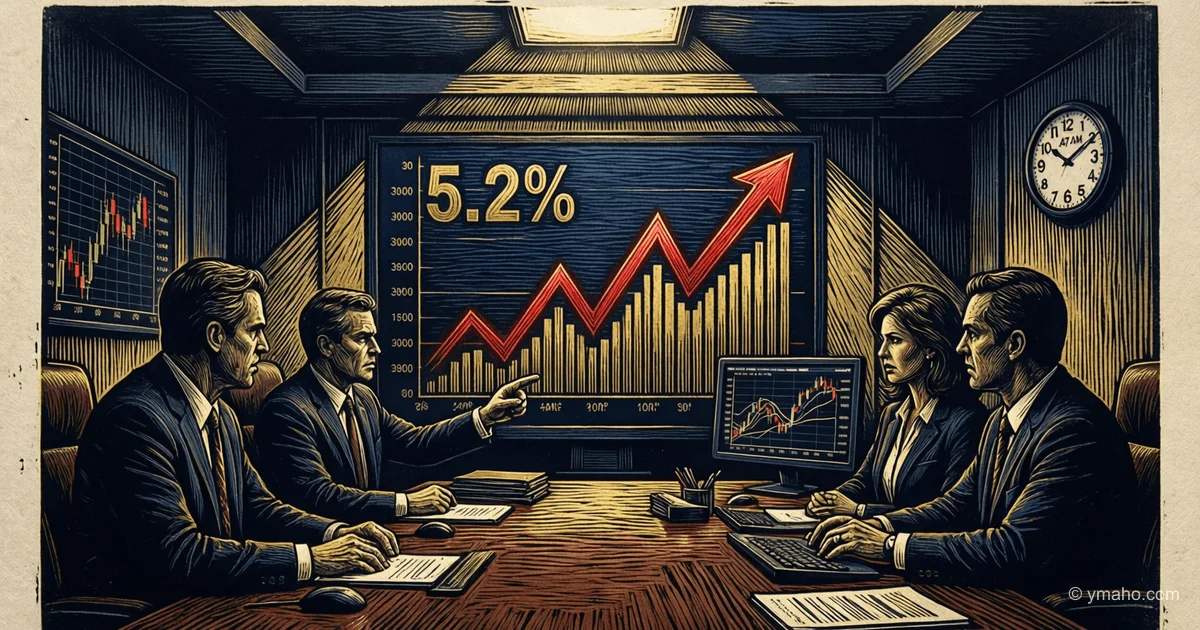
The yield on 30-year Treasury bonds reached 5.2%—the highest since 2007. This is not just a number. It is a market signal that investors no longer believe inflation is "transitory" and demand a premium for long-term risk.
But the real insight that didn't make the headlines: the hawkish shift occurred not because of a strong economy, but due to fear of the budget deficit and the new Fed leadership's inability to act independently. Kevin Warsh, who takes over as chair at the June 16–17 meeting, has publicly promised to cut rates. But the bond market is telling him: "No, you won't."
Timeline and Context
April 28–29, 2026: Last FOMC meeting under Chair Jerome Powell. Rate held at 3.5–3.75%. Four members vote against—regional presidents demanding removal of the "dovish tilt" from the statement.
April 30 – May 14: Oil prices continue to rise due to the blockade of the Strait of Hormuz. Inflation expectations spiral out of control.
May 13: Senate confirms Kevin Warsh as new Fed Chair.
May 14: US Treasury auctions $25 billion in 30-year bonds at a maximum yield of 5.058%—the first time since 2007.
May 15: 30-year bonds on the secondary market reach 5.125%.
May 19: 30-year yield rises to 5.2%.
May 20: Release of the April FOMC meeting minutes. Market prices in a probability of a rate hike by end of 2026: 21 basis points, i.e., an 84% chance of one 25-point hike.
May 21: S&P 500 falls for the third consecutive day. 62% of asset managers in a Bank of America survey expect 30-year yields at 6%.
Winners and Losers
Winners (non-obvious list):
- Banks with a high share of floating-rate assets. JPMorgan, Bank of America, and Wells Fargo will see net interest margin expansion if the Fed actually raises rates. Their stocks rose 2–3% amid the broad market decline.
- Hedge funds betting on rising volatility. Funds that bought options on the VIX volatility index saw their positions gain 15–20% over the week. The largest player in this field—Citadel—opened additional positions on May 18.
- Insurance companies and pension funds. They have suffered from low yields for decades. Now they can buy 30-year Treasuries at 5.2% and lock in that yield for years. MetLife has already announced an increase in long-term bond purchases by $12 billion.
Losers:
- Tech companies with high debt loads and low profitability. The Nasdaq fell 0.9% on the day after the minutes were released. Companies that borrowed at floating rates were hit especially hard: ZoomInfo, Cloudflare, UiPath—their stocks lost 5–8% over the week.
- Issuers of high-yield corporate bonds. Spreads on "junk" bonds have widened by 65 basis points over the past two weeks. Tesla, which placed $2 billion in high-yield bonds in March, now pays a premium of 400 basis points over Treasuries.
- Retail investors holding leveraged long stock positions. Margin requirements are tightening. According to Interactive Brokers, the number of margin calls rose 35% over the past week.
What the Media Isn't Saying
Insight number one: The real reason for the rise in 30-year yields is not just inflation, but the expectation that new Fed Chair Kevin Warsh will come under pressure from the White House. President Trump has publicly demanded rate cuts. But if Warsh caves and cuts rates amid rising inflation, the bond market will revolt—"bond vigilantes," as Ed Yardeni calls them, will punish fiscal irresponsibility by selling off debt.
In simple terms: the market is pricing into 30-year yields not one, but two scenarios. First: the Fed raises rates to 4–4.25% to fight inflation. Second: the Fed succumbs to political pressure, cuts rates, and inflation accelerates to 4–5%, sending bond yields soaring to 6–7%. The market is hedging against the second scenario by demanding a high premium now.
Insight number two: The minutes for the first time directly mention "price pressures associated with large investments in AI." This is new. The Fed acknowledges that the AI boom is not only creating demand for chips but also fueling inflation through rising costs in industries—from electricity to skilled labor. NVIDIA and Microsoft data centers consume so much energy that it is already affecting regional tariffs. In Northern Virginia, home to 70% of US data centers, electricity prices have risen 22% year-over-year. This "AI inflation" will not go away even after the Middle East conflict ends.
Insight number three: A 30-year yield of 5.2% is a historic inflection point. For comparison: in December 2025 it was 4.78%, and a year earlier 4.41%. But more importantly, this benchmark level of 5.2% makes US stocks historically overvalued. The Fed model compares stock yields (inverse of P/E) to bond yields. The S&P 500 trades at a P/E of about 22, giving a yield of 4.55%. When 30-year bonds yield 5.2%, stocks no longer have a risk premium. This is the first time since 2002 that bonds have outperformed stocks in yield over the long horizon.
Forecast: Next 30 Days and 90 Days
30 days (through end of June 2026):
The main event is the FOMC meeting on June 16–17. This will be the first meeting under Kevin Warsh. I expect the rate to remain unchanged (3.5–3.75%), but the statement language will change radically. The phrase about "additional adjustments" (which hinted at cuts) will be removed. In its place will be neutral wording, possibly even a direct indication of readiness to raise rates if inflation persists.
The market will be volatile 2–3 days before the meeting. The 30-year yield may temporarily pull back to 4.9–5.0% on expectations of a "dovish" Warsh. But after the statement is released, I expect a new jump above 5.3%.
Stocks: The S&P 500 will likely test the 4800 level (currently around 5100). The greatest pressure will be on growth stocks and sectors with high multiples (tech, consumer discretionary).
90 days (by mid-August):
By August, the market will have fully digested the new Fed regime. My base case (60% probability): the rate stays at 3.5–3.75% through end of 2026, but the market stops expecting cuts. The 10-year yield stabilizes at 4.7–4.9%, the 30-year at 5.1–5.4%.
Alternative scenario (30% probability): inflation continues to accelerate (CPI exceeds 3.5% year-over-year), forcing the Fed to raise rates by 25 basis points in September. This would trigger a new wave of selling in the stock market—the S&P 500 could fall to 4500.
Optimistic scenario (10%): Warsh manages to convince the market he will fight inflation, and the Middle East conflict unexpectedly ends. Yields fall to 4.5% on 30-year bonds, stocks recover losses.
I'm betting on the first scenario. The key indicator I'll watch in July is the June consumer price data. If core CPI remains above 3%, get ready for a rate hike.
Editorial Forecast
Asset: S&P 500 index — decline in the next 24–72 hours. The Fed minutes are already priced in, but the market has not yet priced in the fact that 62% of managers expect 6% on 30-year bonds. Key support level: 5050 points (200-day moving average). We expect a move to 5080–5100 with a possible downside break if the news background on the Middle East worsens. Confidence level: medium (60%), as a technical bounce is possible ahead of the long US weekend (Memorial Day, May 25). Main risk: a sudden statement from Warsh about his commitment to fighting inflation could temporarily calm the market and trigger a 1–2% bounce. Editorial opinion, not investment advice.
— Editorial Team









