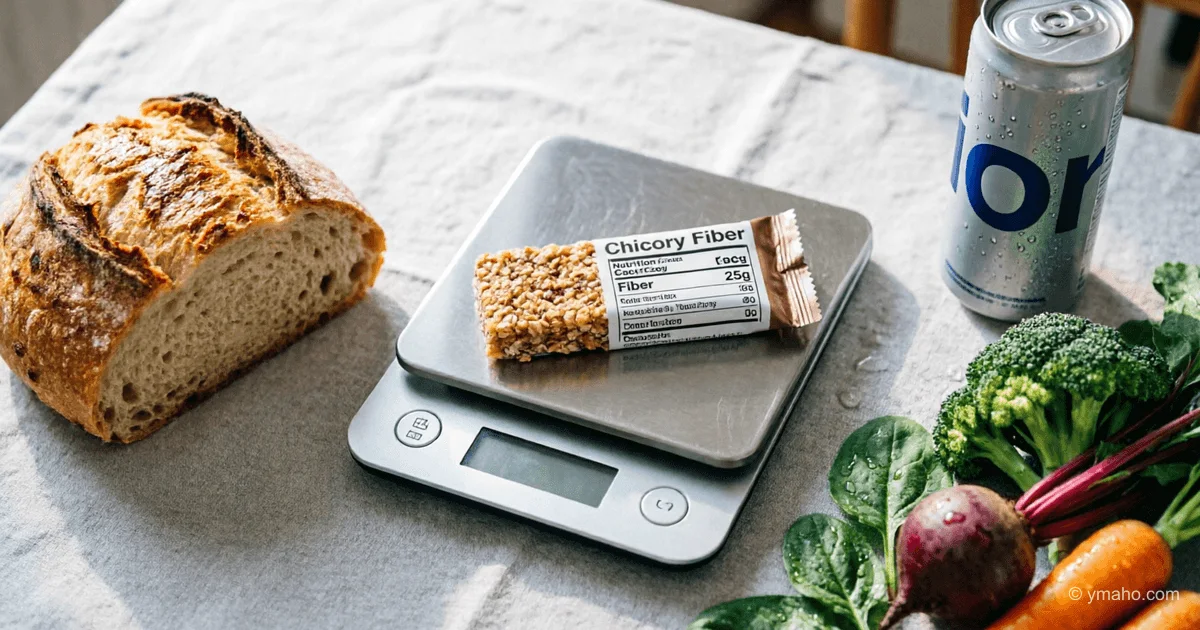
Fiber as the New Protein: The Focus on Gut Health
Gut health is taking center stage: interest in prebiotic fiber is growing faster than any other segment in functional nutrition. Consumers are actively seeking out sourdough bread, smoothies, and high-fiber bars.
An in-depth analytical article based on the provided news and data on the rapid growth of interest in fiber and gut health.
Fiber as the New Protein: Why Gut Health Is Becoming the Decade's Biggest Trend
Introduction
Not long ago, the word "fiber" conjured images of bland, dietetic foods only pensioners cared about for "regularity." Today, in 2026, dietary fiber is experiencing a renaissance comparable only to the protein boom two decades ago. Fiber is being called "the new protein," and this is not just a marketing buzzword.
Interest in prebiotic fiber is currently growing faster than any other segment of functional nutrition. Nearly half of shoppers actively seek out products with increased fiber content, and one in four deliberately chooses products with prebiotics. Store shelves are filling with sourdough bread, functional bars, "smart" grains, yogurts, and even sodas with prebiotic fibers.
What lies behind this transformation? Why has fiber suddenly become the hero of the day? The answer lies at the intersection of several global shifts: the move away from protein extremism, the understanding of the microbiome's role in immunity and mental health, and fatigue with complex, expensive nutraceuticals. People want a simple, understandable, and enjoyable way to take care of themselves. And fiber—in the form of a tasty bar or a loaf of aromatic bread—turns out to be the ideal solution.
Event Details and Timeline
Fiber's rise from "boring component" to "nutrition superhero" took about five years and passed through several distinct stages.
2019–2021 — The Protein Era and Carbohydrate Demonization. The market is obsessed with protein: protein bars, powders, cereals, ice cream. Carbohydrates, including fiber, are seen as secondary. However, scientists sound the alarm: 95% of the population does not meet the daily fiber intake. The WHO recommends at least 25 g of fiber per day, but average consumption barely reaches 16 g.
2022–2023 — The Microbiome Discovery. Large-scale studies are published linking the gut microbiome to immunity, mood, weight, and even the risk of neurodegenerative diseases. Consumers begin to understand: "feeding" your bacteria is as important as getting protein for muscles.
2024–2025 — The term "fiber is the new protein" enters the lexicon. Analysts at Comet Bio, using their own Gut Health Index, record explosive growth in prebiotic searches. Major retailers, including Russia's VkusVill, conduct research and confirm the trend with their own data: demand for products with fiber and prebiotics outpaces other functional nutrition categories.
2026 — Mass Expansion. Fiber penetrates all categories: from bread and grains to beverages and snacks. PepsiCo launches Pepsi Prebiotic Cola with 3 g of prebiotic fiber per can. Russian manufacturers launch lines of "enriched" products. The dietary fiber market reaches $32.7 billion, and by 2035, it is projected to grow to $63.8 billion.
The key trigger in 2026 is the realization of "protein imbalance." Studies show that 85% of Americans meet their protein needs, but 94% suffer from fiber deficiency. The paradigm shifts: "more protein" is no longer the universal answer. The era of "protein + fiber" begins.
Impact and Significance
For the world: The fiber trend has enormous implications for global health. Chronic fiber deficiency is a factor in the epidemics of obesity, type 2 diabetes, colorectal cancer, and cardiovascular disease. The popularization of enriched products is the largest experiment in "hidden" dietary improvement since salt iodization. If the trend continues, a 5–7% reduction in metabolic syndrome incidence can be expected within 5–10 years.
For the industry: The food industry is undergoing a reassortment of product matrices. Where fiber was once an "additive to additives," it is now becoming a key ingredient. Manufacturers of bread, pasta, snacks, beverages, and dairy products are racing to enrich their products with inulin, pectins, and beta-glucans. The prebiotic fiber market is growing by nearly 10% annually. This is a boom for raw material suppliers—Cargill, ADM, Ingredion, Tate & Lyle—and a challenge for small producers unable to reformulate.
For society: A new food culture is forming. "Enough fiber" is becoming as much a marker of mindfulness as "enough protein." Consumers study labels for inulin and psyllium. However, there is a downside: excessive consumption of enriched products can cause bloating and discomfort in unprepared individuals. A niche emerges for "dietary behavior schools" that teach gradual fiber introduction. Social media fills with recipes for high-fiber dishes, and bloggers compete in creativity, adding bran to everything.
Reactions of Key Players
1. Major Retailers (VkusVill, X5 Group, Magnit): They are the main drivers of the trend in Russia. VkusVill not only records category growth but actively shapes it by introducing grain bars with candied fruits, oat flakes from naked oats, spinach and beet pasta, and Jerusalem artichoke bread—a natural prebiotic. Retailers set up special "Gut Health" shelves and educate customers through apps and newsletters.
2. FMCG Giants (PepsiCo, Nestlé, Danone): They attack the category from two sides. PepsiCo acquires the prebiotic soda brand Poppi for $1.95 billion and launches Pepsi Prebiotic Cola. Nestlé introduces Resource Fiber Choice, a prebiotic supplement based on partially hydrolyzed locust bean gum. Danone bets on yogurts with bifidobacteria and prebiotic fiber. The strategy is simple: take familiar, "adult" products and add functionality.
3. Ingredient Manufacturers (Cargill, ADM, Tate & Lyle, BENEO): They invest in capacity expansion. Cargill invests over 45 million yuan to expand its plant in Beijing to increase dietary fiber production. Tate & Lyle partners with the MassChallenge incubator to find startups in healthy nutrition. These companies are the "invisible heroes" of the trend, providing industrial quantities of inulin and oligofructose.
4. Niche and Craft Producers (local bakeries, cheese dairies): They bet on authenticity. They do not "add" fiber artificially but use traditional recipes with high proportions of natural ingredients: whole-grain sourdough bread, muesli with plenty of seeds and dried fruits, kombucha with added prebiotics. Their advantage is the story of "naturalness" that mass-market lacks.
5. Russian Mass Market (retail examples): According to VkusVill's forecast, the assortment already includes: grain bars with candied fruits, oat flakes from naked oats (gluten-free and high in fiber), spinach and beet pasta (Spigelli), rye-wheat products with seeds, as well as bio-yogurts, acidophilus, kombucha, and yogurt ice cream with probiotics. All these categories are actively growing.
Forecast and Conclusions
The trend of fiber as the "new protein" is not a fad but a structural shift. It will only intensify over the next 5–7 years.
Forecasts for 2027–2030:
1. Fiber will become a mandatory component in most products. Just as probiotics are now added to almost every yogurt, tomorrow prebiotic fiber will be added to almost every bar, bread, pasta, or beverage. This will become a "quality standard," not a premium option.
2. Personalization of fiber. Different types of dietary fiber (inulin, fructooligosaccharides, beta-glucan, resistant starch) affect the microbiome of different people in various ways. Services will emerge that, through DNA and microbiota analysis, will select "your" type of fiber. "One size fits all" will give way to prebiotic blends.
3. Synergy with protein and nootropics. Fiber will be combined not only with protein (as a satiating duo) but also with mood-enhancing ingredients. Already, manufacturers note a 178% increase in products with prebiotics that claim to affect the brain or nervous system. Bars with "fiber + adaptogens + collagen" will be popular.
4. Regulatory support. Governments (especially in countries with high obesity and diabetes rates) will begin subsidizing the production of fiber-enriched products, similar to how iodized salt is subsidized now. National programs to "hiddenly" increase fiber intake through social nutrition (schools, hospitals, military) will appear.
5. Fiber in unexpected categories. Manufacturers will experiment: meat semi-finished products with added fiber (for increased juiciness and reduced calories), ice cream with prebiotics, and even alcoholic beverages with dietary fiber (as a "less harmful" option).
Conclusion. We are witnessing the birth of a new paradigm in healthy eating. Protein was the hero of the 2010s—it built muscles. Fiber is becoming the hero of the 2020s—it builds the microbiome, which governs immunity, mood, and weight. This is a smarter, more integrated approach to health. Companies that first reformulate their products will take leading positions. Consumers who learn to "feed" their microbiome will gain access to longevity and quality of life unavailable to previous generations. Fiber is no longer boring. Fiber is the future. And that future has already arrived.
— Editorial Team









