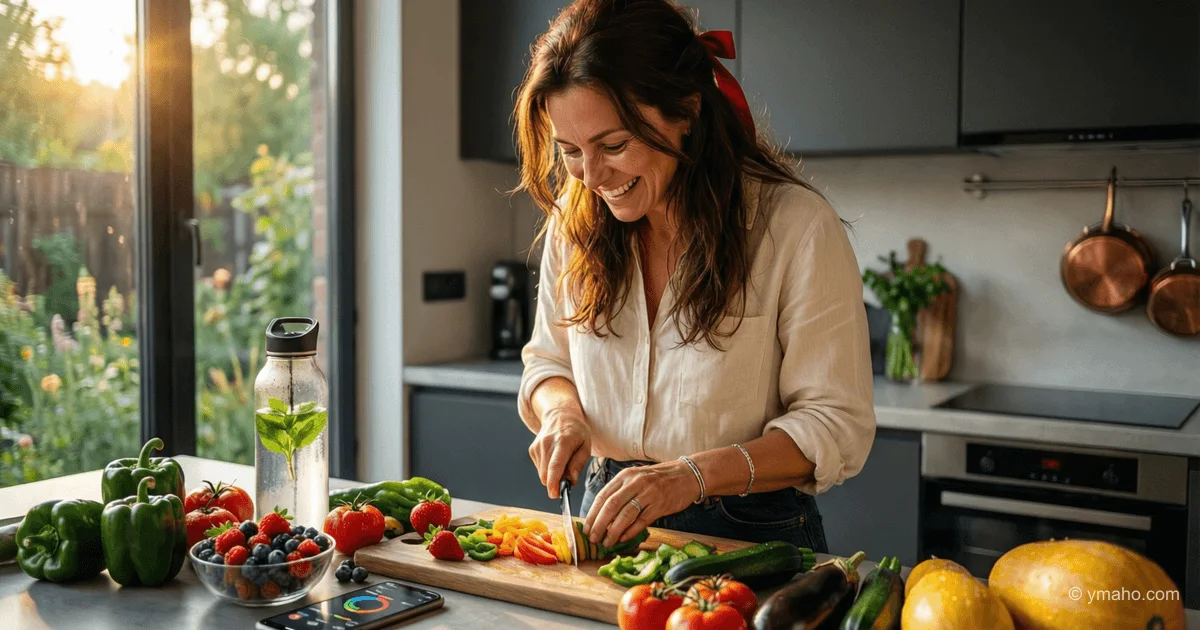
But the Choice Is for a Healthy Lifestyle, Not Strict Diets
57% of Russians choose proper nutrition as a permanent lifestyle rather than strict diets. With the arrival of warm weather, 79% eat more vegetables and fruits, 61% prefer light salads, and 59% increase their water intake.
Proper Nutrition as a Lifestyle: Why Russians Are Abandoning Strict Diets
Introduction
The seasonal urge to lose weight for summer is a familiar phenomenon. However, 2026 presents a fundamentally different picture: Russians are massively shifting from short-term diets to a long-term healthy lifestyle strategy. According to recent data, 57% of Russians opt not for strict restrictions but for transitioning to proper nutrition as a permanent practice. This is not just a statistic—it marks a deep transformation of the nation's eating behavior.
As X5 Group studies show, the vast majority (85%) try to eat more healthily when the weather warms up. With spring, 79% of Russians increase their consumption of vegetables, fruits, and berries, 61% prefer light salads, and 59% consciously drink more water. One in five reduces meat consumption. At the core of these changes is not a temporary diet campaign but the formation of a new food culture where balance and moderation replace prohibitions and restrictions.
Event Details and Timeline
The transformation of Russians' eating habits did not happen overnight. Its prerequisites formed back in 2020–2021, when the COVID-19 pandemic forced many to reconsider their attitudes toward health and immunity. At that time, the trend of conscious consumption began to gain momentum, actively fueled by bloggers and influencers sharing knowledge about product ingredients and the benefits of various nutrients.
By 2024, it became clear that short-term diets do not yield sustainable results. As experts, including bariatric surgeons, note, diets rarely provide a stable effect because the body activates protective mechanisms and slows down metabolism. This realization led to a more balanced approach.
2025 was a turning point: the market recorded steady growth in healthy food sales. According to Perekrestok data, in the first quarter of 2026, sales of the protein line grew by 51% year-on-year, vegan products showed a 22% increase, and gluten-free items rose by 19%.
Finally, in spring 2026, a study by X5 Group and analytical agencies confirmed the final consolidation of the trend. 57% of respondents consciously choose proper nutrition as a lifestyle rather than an emergency measure. People have become more discerning, paying attention not only to calorie content but also to product quality: 72% check the ingredients, 35% look at sugar content, and 29% monitor calories. A third of respondents (31%) control the balance of proteins, fats, and carbohydrates.
Impact and Significance (for the World / Industry / Society)
Shift in Consumer Psychology
The most significant aspect of this trend is the shift in focus from restrictions to enriching the diet. As Yulia Mikhaleva, Deputy Head of Roskachestvo, notes, "Consumers have stopped focusing only on restrictions. People are starting to look on shelves not for products labeled 'without,' but for products labeled 'with': with high protein content, with vitamins, with beneficial ingredients."
This is a fundamentally important shift. Previously, healthy eating was perceived as a system of prohibitions—"without sugar," "without gluten," "without fat." Today, a positive agenda dominates: enriching the diet with beneficial substances, functional nutrition, and conscious choice.
Impact on the Food Industry
The market is sensitively responding to changing demands. According to the Association of Retail Trade Companies (AKORT), demand for healthy lifestyle products in federal chains has grown by 15–30% over two years, and for some retailers, up to 40%. The ready-to-eat food market in Russia, according to INFOLine's forecast, could reach 1.3 trillion rubles in 2026, 18% higher than in 2025.
Interest in functional products is particularly noticeable. Two or three years ago, few had heard of them; today, it is a stable term in all industry reports. The Association of Functional Food Producers, founded just a few years ago, now unites 42 companies. The Russian market features over a hundred such products certified by Roskachestvo.
Social Impact: From Diets to Culture
It is important to note that this is not an elitist trend for the "advanced." The category of healthy lifestyle consumers is expanding: if previously these were people with health issues, professional athletes, or medical workers, today it is a mass phenomenon, a "popular" trend. Everyone can compose their diet so that almost a third consists of functional products—and these are not exotic items but familiar breakfast cereals, bread, pasta, and desserts.
At the same time, Russians do not completely abandon familiar foods. According to X5 Group data, consumers tend to supplement their usual items with more balanced products rather than completely eliminating anything from their diet. This indicates a healthy, not fanatical, approach to nutrition.
Reactions of Key Players
Retailers were the first to respond to changing consumer preferences. Perekrestok is actively developing its own Green Line brand, whose share of all purchases in the chain reached 9.1%—almost every tenth receipt. Already in April 2026, the company announced the launch of a new proper nutrition line in co-brand with Perekrestok Select.
Analysts note that interest in healthy eating is especially high among young people. Among Russians aged 18–24, one in ten follows a high-protein diet, while in older age groups only 2–4% choose this approach. Young people are also more actively interested in lactose-free and gluten-free products.
Food manufacturers are restructuring their product matrices. The trend is toward functional products with high protein, dietary fiber, and vitamin content. Protein is added not only to bars but also to yogurts, cottage cheese, cheeses, and even ice cream.
According to RBC Market Research, 23.2% of shoppers note the need to expand the range of healthy food—organic products, dishes with clean ingredients and high nutritional value. Another 20.4% are interested in expanding offerings of balanced nutrition with an optimal ratio of calories, proteins, fats, and carbohydrates.
It is important to note that the healthy eating trend in 2026 is not limited to large cities. Statistics show that residents of regions demonstrate the same dynamics, although Moscow, as a flagship, sets the overall direction.
Forecast and Conclusions
The next 2–3 years will be a time for the final consolidation of the new food culture.
First, the segment of functional products will continue to grow. The Health and Wellness Foods market will expand at a pace exceeding the overall food market. Manufacturers will seek new niches—products for gut health, immunity, and cognitive function.
Second, the trend toward personalized nutrition will strengthen. People will increasingly turn to DNA tests and microbiome analysis to create individual diets. Already, sales of specialized products for specific needs—lactose-free, gluten-free, high-protein—are growing.
Third, an important driver will be the Clean Label concept—products made from natural ingredients with minimal processing. Consumers are becoming more demanding about product composition and origin, preferring local producers with transparent supply chains.
Main conclusion: Russians have made an important transition—from emergency "summer diets" to a conscious, systematic approach to nutrition. The 57% who chose proper nutrition as a lifestyle is not just a statistic. It is the foundation on which a healthy nation will be built in the coming decades. Of course, much work remains—only 7% of Russians can call their approach to nutrition "strictly healthy," and 29% do not monitor their diet at all. But the direction is set correctly. The future lies not in prohibitions and deprivations, but in balance, diversity, and a conscious choice in favor of health.
— Editorial Team









