Mastering Economic Supercycles: A Guide to the Long Wave
For decades, economists and investors have observed that history doesn't just repeat—it rhymes in long, sweeping arcs. These are economic supercycles, and understanding how do economic supercycles work and what drives them is essential for anyone looking to navigate the multi-decade regimes of growth, inflation, and stagnation that shape our world.
What You'll Learn
You'll understand the foundational theory of Kondratieff waves, the primary drivers behind these 40-to-60-year cycles, and how to distinguish them from shorter business cycles. By the end, you'll be able to use this framework for long-term scenario planning, not as a crystal ball for market timing, but as a powerful lens for understanding the generational shifts in technology, demographics, and debt that define our economic era.
The Anatomy of a Supercycle
An economic supercycle, often referred to in academic literature as a Kondratieff wave (or K-wave), is a hypothesized long-term cycle in the modern world economy, lasting between 40 and 60 years . Unlike the standard business cycle, which plays out over 3 to 10 years, these supercycles represent sweeping shifts in growth, inflation, and interest-rate regimes across decades . The concept originated with Soviet economist Nikolai Kondratiev, who observed recurring long-term patterns in commodity prices and interest rates in the 1920s .
Kondratiev's original theory identified three phases—expansion, stagnation, and recession—which have since been refined into a four-season model: spring (prosperity), summer (recession), autumn (depression), and winter (improvement) . Each phase is characterized by distinct economic dynamics, from the initial boom of a new technology to the inevitable bust and restructuring that follows .
What Drives the Long Wave?
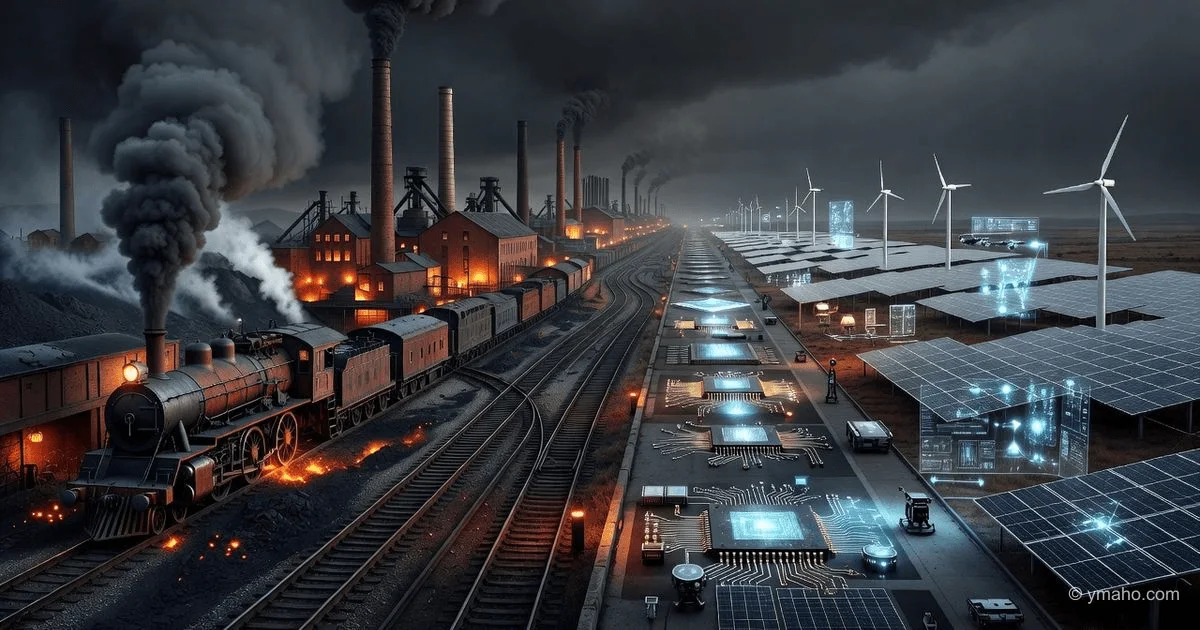
The central question of how do economic supercycles work and what drives them has several compelling answers. While Kondratiev himself focused on the interplay of prices and interest rates, the most widely accepted explanation centers on technological innovation . According to this theory, supercycles are born from the "bunching" of basic innovations that launch technological revolutions . These innovations create leading industrial sectors—think railroads, electricity, the automobile, and, more recently, information technology—that act as the engine of growth for an entire generation .
This process is closely tied to Joseph Schumpeter's concept of "creative destruction," where new innovations disrupt and replace old industries . The theory posits that the cycle proceeds as follows: a new technology emerges, attracts massive investment, and drives prosperity. As the technology matures and becomes widely adopted, its enormous growth potential fades, leading to overcapacity, declining returns, and eventual economic stagnation . The downturn continues until the next cluster of transformative technologies emerges, sparking a new cycle.
Alternative Drivers
While technology is the primary lens, other significant factors are theorized to drive these long waves :
Demographics: Population booms and busts, such as the post-WWII baby boom, create predictable patterns of spending over the life cycle. A large cohort entering the workforce and consuming for decades can fuel a long upswing, while an aging population can contribute to an economic slowdown .
Debt and Credit Cycles: The theory of debt deflation, developed by Irving Fisher and later expanded by Hyman Minsky, suggests that the expansion and contraction of credit is a primary driver of economic cycles. Long periods of rising debt can create fragility, making the economy vulnerable to a major downturn when the process reverses .
Google AdInline article slot
Historical Waves: The Innovation Timeline
To visualize how this works in practice, proponents of the theory have mapped historical supercycles to clusters of technological change . While exact start and end years are debated, a commonly cited timeline of past waves linked to technological paradigms is as follows :
- First Wave (c. 1771): The Industrial Revolution, driven by the steam engine and mechanization of the textile industry.
- Second Wave (c. 1829): The Age of Steam and Railways, fueled by the expansion of rail networks and the Bessemer steel process.
- Third Wave (c. 1875): The Age of Steel and Heavy Engineering, powered by electricity, chemicals, and the rise of heavy industry.
- Fourth Wave (c. 1908): The Age of Oil, the Automobile, and Mass Production, driven by the internal combustion engine and the assembly line.
- Fifth Wave (c. 1971): The Age of Information and Telecommunications, ignited by the rise of computers and the internet.
Where Are We Now?
Many analysts today debate the current phase of the cycle. Some argue we are in the late stages of the Fifth Wave, with the next supercycle—potentially driven by artificial intelligence, biotechnology, and clean energy—just beginning . Others, like researcher Daniel Šmihula, hypothesize we are on the cusp of a sixth wave driven by a "post-informational" technological revolution .
How to Apply the Supercycle Framework (Without Getting It Wrong)
It is important to note that long wave theory is not accepted by most mainstream academic economists . Critics argue that the data sample is too small for robust statistical validation and that the patterns identified may be a result of "apophenia"—seeing patterns where none exist .
However, as historian Eric Hobsbawm noted, the theory has enabled some accurate predictions about long-term trends, suggesting it has merit even if the precise mechanisms remain debated . Instead of treating it as a precise clock, a more responsible approach is to use it for scenario planning .
A Practical Workflow
| Do | Don't |
|---|---|
| Use it to frame multi-decade regime questions. | Use it to call exact market peaks and troughs. |
| Cross-check multiple indicators (commodities, inflation, rates). | Rely on one commodity like copper as a single signal. |
| Treat phase identification as inherently uncertain. | Present one "true" timeline as an absolute fact. |
By viewing the supercycle as a decision-making framework for questions—rather than a source of predictions—you can effectively navigate the long, sweeping tides of the global economy.
Frequently Asked Questions
What exactly is an economic supercycle, and how long does it last?
An economic supercycle, synonymous with a Kondratieff wave, is a hypothesized long-term economic cycle believed to last roughly 40 to 60 years . It consists of alternating periods of high and low economic growth driven by major structural shifts, primarily technological innovation, and is distinct from the shorter business cycle of 3 to 10 years.
How do economic supercycles work and what drives them?
They are primarily driven by the clustering of major technological innovations—like the steam engine or the internet—which create new leading industries and a long period of prosperity . This boom eventually leads to overcapacity and diminishing returns, causing a prolonged downturn until the next wave of innovations emerges, restarting the cycle . Other contributing factors include demographic shifts and long-term debt cycles .
Are economic supercycles a proven theory?
No, this theory is not widely accepted by mainstream economists . A primary criticism is the lack of statistical proof due to the limited number of historical cycles available for study. Many economists see it as a form of pattern recognition that may not represent a genuine underlying economic causality .
How are supercycles different from regular business cycles?
The key difference is their duration and driver. Business cycles typically last 2 to 10 years and are driven by short-term factors like inventory changes, interest rates, and consumer demand . In contrast, supercycles span 40 to 60 years and are believed to be driven by generational technological revolutions and major structural shifts in the economy .
How can I use the theory of supercycles in my own planning?
It is best used as a framework for long-term scenario planning and strategic thinking . Instead of using it to predict short-term market moves, use it to ask broad questions about the future: Will the next decade be inflationary or deflationary? Which technologies could disrupt existing industries? This approach helps frame risk and opportunity over a multi-year horizon .
Sources
- Sage Knowledge. (2007). Long-Wave Theory.
- LongPort. (2026). Kondratieff Wave.
- The Free Dictionary. (n.d.). Kondratiev wave.
- Diversification.com. (n.d.). Kondratieff wave: Meaning, Criticisms & Real-World Uses.
- EPFL Graph Search. (n.d.). Kondratiev wave.
- Wikipedia. (2013). Kondratiev wave.
- Wikipedia. (2002). Long-cycles.
— Editorial Team