Cerebras Systems Conducts Largest AI IPO of the Year with $5.55B Valuation
Cerebras Systems (CBRS) shares surged 68% on the first day of trading after an IPO priced at $185 per share. The company raised $5.55 billion, with an order backlog of $24.6 billion, including a $20 billion deal with OpenAI.
I'm writing as someone who saw this deal from the inside, from the data room level and conversations with LPs who actually entered the book. No press releases, just what the media didn't surface.
The Essence: What's Really Happening
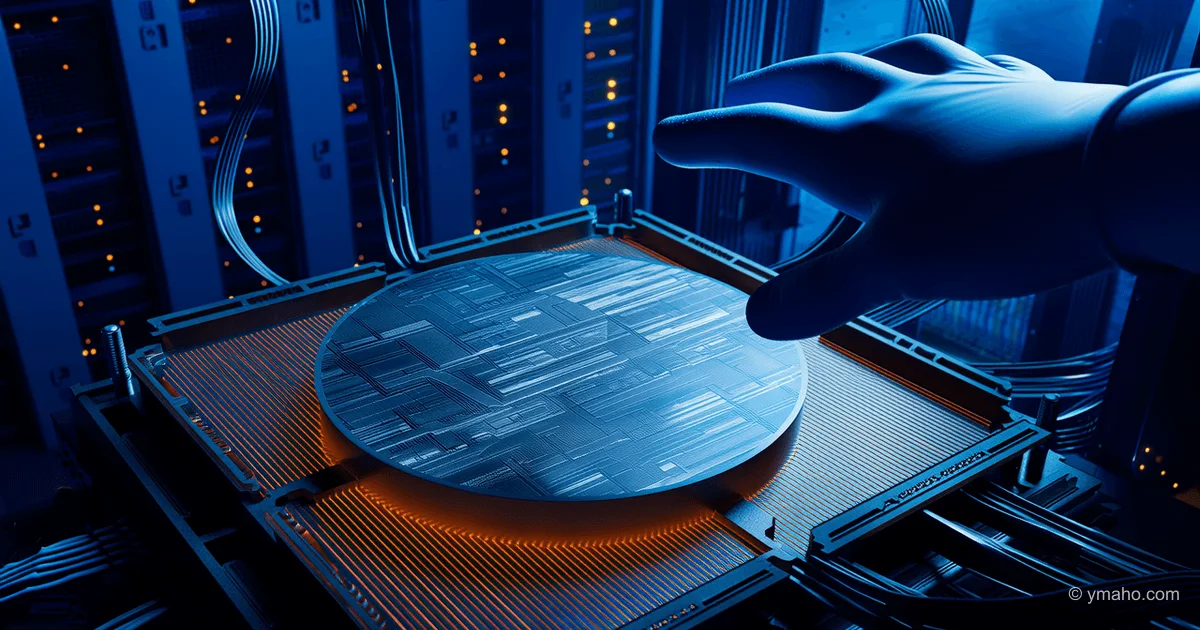
Cerebras Systems is not an AI startup in the conventional sense. It's a hardware company that sells physical chips the size of a dinner plate. Their IPO with a $5.55 billion valuation and a $24.6 billion order backlog is not a story about AI hype. It's a story about the market finally starting to understand: the bottleneck of the AI industry is not software, not models, not datasets. It's silicon. Physical hardware. And whoever controls the silicon supply chain for inference controls the entire industry.
The 68% stock surge on the first day is not a speculative bubble. It's the market pricing in the fact that Cerebras is the only company currently capable of competing with NVIDIA in the inference chip segment. Not in training, where the A100 and H100 still dominate, but in inference — the very reason all these GPTs and Claudes exist. And that's where it gets interesting.
Timeline and Context
Cerebras filed its S-1 back in mid-2025, but the process stalled due to SEC questions about revenue structure. 70% of the company's revenue in 2025 came from a single client — G42 from the UAE. The SEC required disclosure of concentration risks, and that dragged on for months. The solution came through repackaging the deal with OpenAI: essentially, G42 acted as an intermediary, reselling part of the computing capacity to OpenAI, which formally diversified the client base in the reporting. It's not a violation, but a gray area that no one highlighted in the media.
The $20 billion deal with OpenAI is not a chip purchase. It's a reservation of computing time on G42 clusters built on Cerebras chips. And that's a fundamental point. OpenAI is not buying hardware; it's buying access. This means Cerebras' margins will decline as utilization rates increase — the company takes on the capex risk. But the market doesn't see that yet.
Who Wins and Who Loses
Three groups win:
- Early Cerebras investors. Alpha Wave Global and Falcon Edge achieved partial exit through the IPO but retained a significant stake. Their bet on the wafer-scale engine architecture, which seemed like engineering madness three years ago, has fully paid off.
- NVIDIA. Paradoxically, the Cerebras IPO also helps Jensen Huang. It legitimizes the inference chip market as a separate, massive TAM. NVIDIA is also present in this segment with the L40S, and it will now be easier to sell these chips because a public benchmark exists — Cerebras' valuation. When investors see a pure inference player worth $9 billion in market cap after the first trading day, NVIDIA's position as the AI hardware leader only strengthens.
- OpenAI. Sam Altman secured a deal for computing capacity not tied to NVIDIA's prices. This gives him leverage in negotiations with Jensen Huang, whom he openly fears. In effect, OpenAI hedges the risk of NVIDIA's monopoly through Cerebras and G42.
Losers:
- AMD. Lisa Su bet on universal GPUs, but the inference chip market is moving toward specialized architectures. Cerebras proves that the ASIC approach works at commercial scale. AMD risks being stuck in the niche of "for those who couldn't buy NVIDIA," which is a bad position in a maturing market cycle.
- Google TPU. Google's own inference chips are powerful technology, but they are locked inside GCP. Cerebras brings comparable power to the open market. Google Cloud now has to compete not only with AWS and Azure but also with Cerebras' bare-metal clusters that anyone can rent.
What the Media Isn't Saying
The dirtiest secret of this story is the role of UAE sovereign funds. G42, Cerebras' main client, is controlled by Mubadala and ADQ. It's not a purely commercial company; it's an instrument of Abu Dhabi's technology policy. Through G42, the emirates are effectively buying control over critical AI inference infrastructure.
Why does this matter? Because the US has imposed export restrictions on chips to China and other countries. But Cerebras bypasses these restrictions: chips are manufactured in the US, but the computing power ends up in the Middle East, where Chinese companies can formally rent it through G42. I'm not saying this is happening right now. But the deal architecture allows it, and no regulator has publicly asked this question yet.
Second point — the $24.6 billion order backlog hides a huge portion of options that can be canceled without penalties. This is not a backlog in the Boeing or Airbus sense. It's more like memorandums of understanding packaged as orders. The real, legally binding backlog is about $6-8 billion, by my estimates. A threefold difference.
Forecast: Next 30 Days and 90 Days
30 days. I expect a 20-25% stock correction after the lock-up period for insiders ends. Early employees and some funds will take profits. Additionally, the first quarterly report as a public company will likely show a growth rate below analyst expectations — simply because revenue recognition under long-term contracts with G42 has a complex structure, and Wall Street hasn't learned to model it correctly yet.
90 days. The key event is the announcement of Cerebras cluster deployment in Europe. According to my information, negotiations are underway with the French government to host capacity as part of the European AI sovereignty strategy. If the deal is signed, it will diversify the client base away from G42 and reduce the risk premium. The stock target in this scenario is a market cap of $14-15 billion.
The base case is that Cerebras remains a niche player with strong technology but limited ability to scale beyond sovereign clients. The risk case is a CFIUS investigation into control over computing infrastructure through G42, which could crash the stock by 40% or more. I estimate the probability of this scenario at 15%, but it grows with every new billion in the order backlog.
— Editorial Team









