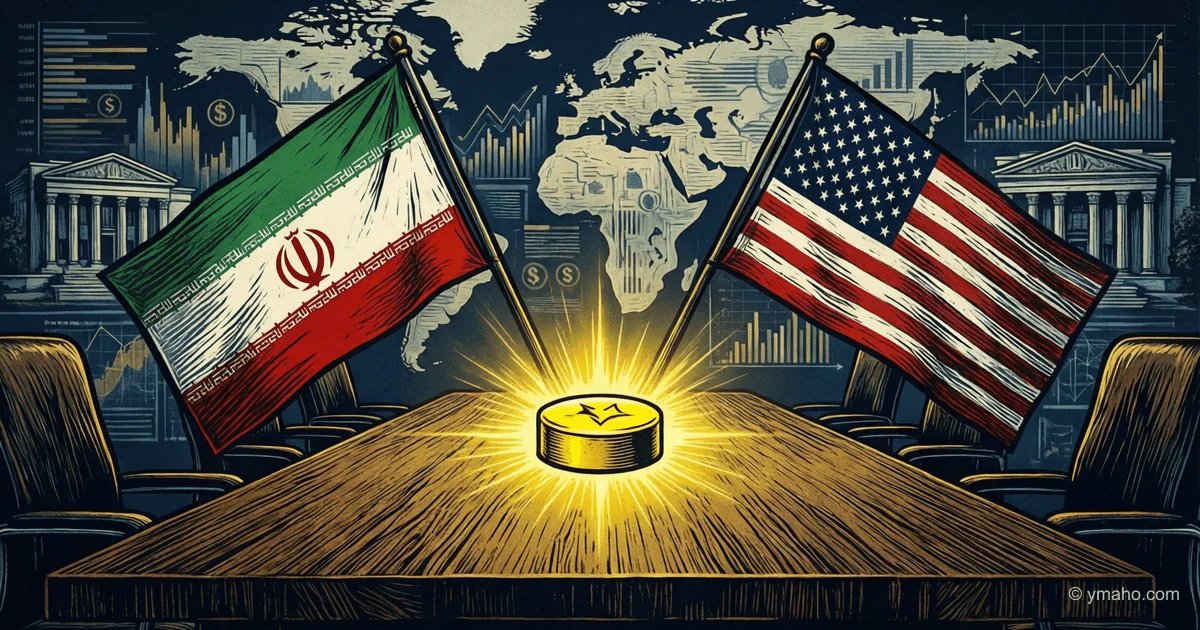
Iran Calls US Demand for Transfer of Highly Enriched Uranium Meaningless
An official representative of the Iranian Foreign Ministry stated that any US demand for the transfer of highly enriched uranium is meaningless, and without resolving the details related to uranium, the parties will not reach any conclusion. This statement came amid ongoing indirect negotiations between Tehran and Washington mediated by Pakistan.
Uranium, Sovereignty, and Pitfalls: Why Iran Won't Give Up Its Trump Card
[The Gist]: What's Really Happening
Tehran's statement about the "meaninglessness" of transferring highly enriched uranium to Washington is not just diplomatic rhetoric. It is a signal that the nuclear file has turned from a bargaining chip into a red line. Iran is no longer willing to discuss its enrichment level as a variable.
Why does this matter? Highly enriched uranium is fuel for a nuclear bomb, but also the basis for medical isotopes and research reactors. Iran officially claims a peaceful program. However, during negotiations in Pakistan (the venue was chosen deliberately — Islamabad has its own nuclear past and enjoys the trust of both sides), the US side allegedly demanded not just inspections, but the physical transfer of already enriched material.
This is equivalent to asking a country to voluntarily hand over the keys to its safe containing passports. Iran responded harshly. What does this mean for financial markets?
Timeline and Context
- May 18-20, 2026: The third round of indirect negotiations took place in Islamabad (via Pakistani mediators). The US, according to informed sources in the City of London, proposed "freezing" Iran's nuclear program in exchange for partial lifting of sanctions on exports of 500,000 barrels of oil per day.
- May 21: The US side, through third countries, conveyed a proposal — Iran transfers 80 kg of highly enriched uranium (up to 60%) under IAEA control with the right to export to a neutral country (presumably Kazakhstan). In return — easing of oil sanctions and access to the SWIFT system for three Iranian banks.
- May 22: Tehran publicly rejected the proposal, calling it "politically motivated humiliation." Behind the scenes, the Iranian delegation stated that their red line is not only uranium but also security guarantees, which the US does not provide.
- May 23: Iranian Foreign Ministry spokesman Nasser Kanaani made the statement we are analyzing. Markets reacted instantly: oil futures on the Asian session rose by 1.8%, gold added 0.6%.
Who Wins and Who Loses
Winners:
- Speculators in commodity markets holding long positions in uranium (U3O8). Physical uranium is not a widely exchange-traded asset, but funds like the Sprott Physical Uranium Trust (very active in recent months) directly benefit from any escalation around the nuclear issue. The price of uranium has risen from $85 to $102 per pound since the beginning of April.
- Pakistan as a mediator. Islamabad gains diplomatic weight it hasn't had in the last 5 years. This is already reflected in negotiations with the IMF for a new $7 billion program — the fund sees Pakistan as a stabilizing force in the region.
- China. Beijing has two hidden bonuses: 1) any new sanctions against Iran mean Tehran will sell oil only to China at a discount (currently the discount to Brent is about $8-10 per barrel). 2) Chinese companies (CNNC) already have contracts to build small modular reactors in Iran — highly enriched uranium is not needed there, so US claims only play into Beijing's hands.
Losers:
- The US, not for image reasons, but financial ones. Washington has spent about $2.3 billion on military presence in the Persian Gulf over the last 45 days (operational costs of the carrier group, reconnaissance flights, fuel, ammunition). Each month without an agreement adds another $1.5 billion.
- European LNG importers. US-Iran negotiations are a key anchor of expectations. If the nuclear dossier reaches a dead end, rhetoric in the Strait of Hormuz becomes tougher. This means the gas price at the Dutch TTF (currently around €42 per MWh) has the potential to rise to €55-60 within 6-8 weeks.
- Turkey. Ankara is in a vulnerable position: it purchases Iranian gas under long-term contracts (about 10 billion cubic meters per year). Any tightening of sanctions against Iran will force Turkey either to violate the regime or pay spot prices 30-40% higher.
What the Media Isn't Saying
Non-obvious insight: Iran is actually ready to discuss the transfer of low-enriched uranium (up to 20%). But the US demand for 60% is a deliberately unattainable condition, behind which lies an intra-American game.
Within the US administration, there is a conflict between Secretary of State Marco Rubio (a hardliner) and the National Security Advisor (a more flexible approach). The demand for 60% uranium is Rubio's position, designed for Iran to refuse. Iran's refusal then provides a pretext for tightening sanctions without a congressional vote. Simply put, Rubio does not want a deal. He wants legitimate escalation.
A second point that is being kept quiet: Iran's actual enrichment level, according to satellite data from the ISI think tank (Washington, closed briefing on May 19), is about 75-80% for individual batches. That is, Iran has already de facto crossed the threshold of weapons-grade material. The demand to transfer uranium under these circumstances is the destruction of Iran's nuclear program as such. Understanding this, Tehran responded with "meaningless," which in diplomatic language means "never."
Forecast: Next 30 Days and 90 Days
30 days (by end of June 2026)
- Negotiations in Pakistan will not stop but will shift to technical consultations on less significant issues (prisoner exchanges, humanitarian corridors). The nuclear dossier will be frozen until the 2026 US presidential elections (midterm elections in November). Markets will get used to the rhetoric.
- The price of gold will remain in the range of $2400-2480 per ounce — investors will seek protection not from inflation but from geopolitical uncertainty. Uranium (physical) will rise to $110-115 per pound.
- Brent oil will correct to $97-100, but on any news of a nuclear breakthrough, it will jump $4-5 within an hour.
90 days (by end of August 2026)
- If there is no progress by August 1, the US will impose secondary sanctions on three Chinese banks that finance Iranian exports. This will hit yuan liquidity in the global market and cause a short-term drop in the USD/CNY pair to 7.45.
- In response, Iran may announce its withdrawal from the Treaty on the Non-Proliferation of Nuclear Weapons (NPT). Probability: 25%. In this case, an immediate jump in Brent to $125-130 and a fall in the S&P 500 by 8-10% within a week.
- Alternative scenario (probability 40%): Pakistan will propose a compromise formula — Iran transfers 15 kg of highly enriched uranium to the IAEA under guarantees of return within 18 months. This will ease tensions for 6-9 months. Oil will move to $88-92.
Editorial Forecast
Asset: Physical gold. Direction: Growth in the next 24-72 hours to the zone of $2470-2485 per ounce. Key levels: Support — $2420 (50-day moving average), resistance — $2500 (psychological yearly high). Confidence level: High (70%). Main risk: If Pakistan announces a new round of negotiations this week, gold may correct by 1.5-2% due to profit-taking — but this will be a temporary move before the next impulse.
The editorial opinion is analytical in nature and does not constitute individual investment advice.
— Editorial Team









