Iran Threatens West with 'Decisive Response' to Foreign Warships in the Strait of Hormuz
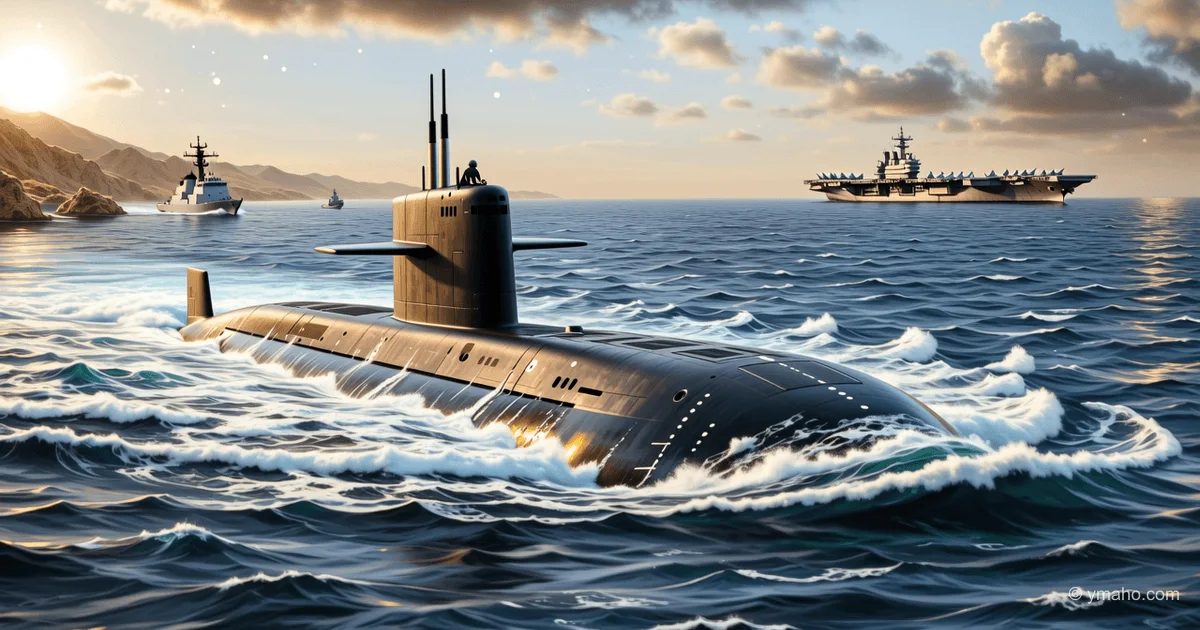
Iran's Deputy Foreign Minister Gharibabadi said the presence of French and British warships to support US 'illegal actions' would trigger an immediate response and lead to the militarization of the strait. Iran's Navy has deployed light submarines to counter the US fleet.
[The Gist]: What's Really Happening
Gharibabadi's statement on May 11 is not rhetorical escalation but a legal trap set by Tehran to split the Franco-British tandem. Iran deliberately drew a distinction: the US engages in 'illegal actions,' while France and Britain offer 'support for illegal actions.' The wording is no accident. Tehran does not declare Paris and London adversaries; it leaves them a corridor for retreat—just distance themselves from the US position, and the threat of an 'immediate response' is lifted. This is a subtle play on contradictions within the Western alliance, and Gharibabadi, a Tehran University law graduate with a PhD in international law, knows exactly which words to choose.
The deployment of light submarines of the Ghadir and Fateh classes in the Strait of Hormuz is more a psychological move than a military one. These submarines, displacing 120-600 tons, are nearly invisible to ship sonars against the shallow waters of the strait, where the average depth is 60 meters and the navigable channel no more than 90. One such submarine can block the strait simply by cutting its engines and lying on the seabed waiting for a target. IRGC Navy Commander Admiral Alireza Tangsiri has positioned at least six submarines on approach routes to the Kharg terminal and another four near Qeshm Island, creating two echelons of underwater ambush. Each submarine costs about $30 million, 60 times cheaper than the USS Arleigh Burke destroyer ($1.8 billion). This cost asymmetry makes the threat economically inexhaustible for Iran.
Timeline and Context
To understand why the statement came on May 11, rewind 72 hours. On May 8, French negotiator Emmanuel Bonne's team passed an unofficial memorandum to Tehran via the Omani channel: Paris guarantees that the Charles de Gaulle mission will not participate in combat operations against Iran or cover US strike groups. Macron gave no written guarantees—only verbal. On May 9, the US Navy conducted a demonstrative passage of the destroyer USS Stethem through Hormuz, escorted by a P-8 Poseidon patrol aircraft, and Iranian IRGC boats simulated boarding maneuvers 200 meters from the hull. On May 10, the Charles de Gaulle entered the operational area of the US 5th Fleet but did not request integration into the US air defense system—a deliberate move noticed in Tehran.
Then on May 11, a day after Macron's carrier came within range of Iranian missiles, Gharibabadi made his statement. The timeline is key: Tehran waited until the French carrier was physically within striking distance to make the words 'immediate response' carry maximum weight. Simultaneously, on May 11, the head of Iran's Ports Organization, Jalil Eslami, announced 'temporary navigation restrictions' in the strait from May 15 to 20, officially for 'IRGC naval exercises.' This means the window for a demonstrative passage of the French convoy, planned by Macron for May 18-22, is now blocked by Iranian exercises. Tehran is showing who sets the schedule here.
Who Wins and Who Loses
At first glance, Iran is raising the stakes and risking a military conflict with NATO. But the real picture is more complex. The main winner is neither Iran nor the West, but Saudi Arabia. While global media focus on Hormuz, Riyadh is quietly boosting exports through its Red Sea terminal at Yanbu, connected to Eastern Province oil fields via the Petroline pipeline with a capacity of 5 million barrels per day. Over the past week, Saudi exports via the Red Sea have increased by 840,000 barrels per day—an additional $92 million in daily revenue at current prices. Each day of the Hormuz crisis brings an extra premium to the Saudi treasury, and Riyadh has absolutely no interest in rapid de-escalation.
Lloyd's insurance market is losing. War risk premiums for tankers transiting Hormuz have surged to 1.2% of the vessel's value per voyage, up from 0.05% a month ago. For a VLCC tanker worth $120 million, that means an additional $1.44 million per passage. Major reinsurers Munich Re and Swiss Re have warned that if current tension levels persist through May, they will stop covering war risks for Hormuz. This would threaten 17 million barrels of daily traffic.
Iran is losing money in the short term: according to Kpler, Iranian oil exports have fallen to 780,000 barrels per day from 1.4 million in April—the 'dark fleet' cannot compensate for the losses. But Tehran is deliberately incurring these costs for a strategic goal: forcing the West to negotiate on Iranian terms.
What the Media Isn't Saying
The key overlooked detail is that the submarine deployment in Hormuz is not so much a military operation as a cover for large-scale gold smuggling, through which Iran finances its economy in defiance of sanctions.
Since March 2026, when SWIFT finally disconnected the last Iranian banks, Tehran has switched to a gold standard for foreign trade. The scheme works like this: Iranian oil is sold at a $22 per barrel discount to Chinese and Indian refineries, with payment in physical gold bars delivered through Hormuz on small vessels under the cover of IRGC submarines. The submarines not only threaten US ships—they ensure a safe corridor for 'gold shuttles.' Over the past three days, two vessels carrying 4.2 tons of gold worth about $310 million have passed through the strait, and this gold has already been distributed to accounts of Iranian shell companies in Dubai and Zurich.
The second hidden detail: Gharibabadi's statement was coordinated not with Iran's Foreign Ministry but directly with Quds Force commander Brigadier General Ismail Qaani. Gharibabadi is formally a deputy minister, but his career rise in 2025-2026 is tied to the Quds Force—he oversees diplomatic cover for special forces operations abroad. When he speaks of a 'decisive response,' it refers not only to military action in the strait but also to activating Hezbollah sleeper cells in Latin America for strikes on Israeli and US targets—a standard Quds Force escalation tactic when Iran is under pressure. Immediately after Gharibabadi's statement, on the evening of May 11, Argentine intelligence SIDE recorded movements of Hezbollah-linked individuals near the triple border with Paraguay and Brazil. Coincidence? Mossad analysts think not.
The third point the media ignores: Iran is using submarines not only for threats but also for underwater mapping. Fateh-class submarines are equipped with multibeam echo sounders and hydrographic equipment that allows them to create detailed maps of minefields in real time. From May 8 to 11, Iranian submariners mapped 240 square miles of seabed in the central strait, identifying three potential points for covert placement of bottom mines—in case the crisis turns hot. This data has already been loaded into IRGC combat systems.
Forecast: Next 30 Days and 90 Days
Next 30 days: Iran will conduct naval exercises in Hormuz from May 15-20, and this will be the moment of maximum danger. The IRGC will deliberately launch Khalij-e Fars anti-ship missiles in close proximity to the Charles de Gaulle's patrol zone. The goal is not to hit but to scare: force the French admiral to order emergency maneuvering, which would look like a show of weakness. Macron will face a painful choice: retreat and lose face, or stay and risk an incident. By May 25, the French carrier is expected to withdraw 100 miles east into the Gulf of Oman, maintaining a formal presence but leaving the immediate threat zone. Iran will present this as its victory, Macron as a 'regrouping.' Brent prices will spike to $118 per barrel during the exercises but correct to $108 by month-end as markets get used to permanent tension.
90-day horizon: By mid-August 2026, a de facto new shipping regime will be established in the Strait of Hormuz, which no one will call by its name. In essence, IRGC speedboats will inspect roughly every tenth vessel passing through the strait—not under US or European flags, but under flags of convenience like Panama and the Marshall Islands. The real purpose of these inspections will not be to stop traffic but to systematically collect 'transit fees' of $0.8-1.2 per barrel. With daily traffic of 17 million barrels, this would give the 'Strait of Hormuz Administration' $13-20 million per day—$5-7 billion per year. The international community will not recognize this practice but will be unable to prevent it without full-scale war. China and India will silently accept these terms in bilateral formats; Japan and South Korea will pay but label it 'insurance surcharges'; Europeans will try to create an alternative route, but it will be even more expensive. By the end of August, it will be clear: the era of free and guaranteed passage through Hormuz is over. The global economy is entering a period where control over maritime choke points will be openly monetized, and Iran is setting the precedent.
— Editorial Team









