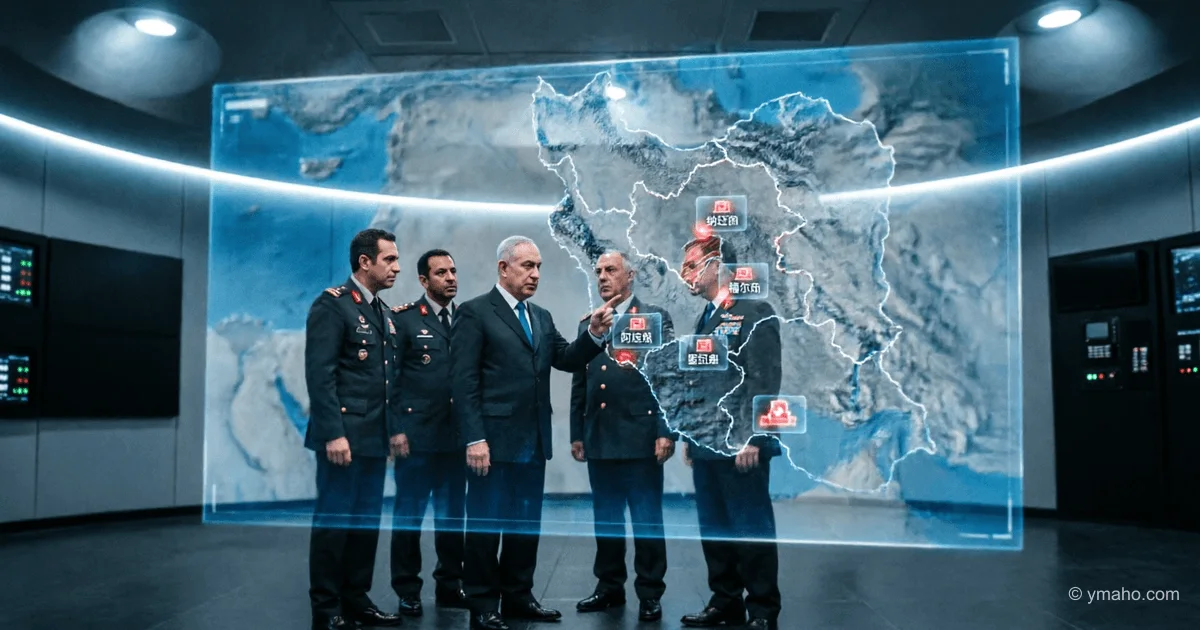
Israel Discusses Strikes on Iran's Nuclear Facilities After Trump's Criticism
Prime Minister Netanyahu convenes security cabinet to discuss resuming military action against Iran's nuclear program and Hamas in Gaza.
Nuclear Threshold: Israel Prepares Strike on Iran Amid Trust Crisis with Trump
Introduction
On May 3, 2026, Israel's security cabinet, led by Prime Minister Benjamin Netanyahu, will convene for an emergency meeting that could determine the fate of the entire Middle East. On the agenda are two fronts simultaneously: resuming military operations against Hamas in the Gaza Strip and, more importantly, preparing strikes on Iran's nuclear facilities.
This meeting comes at a time of deep trust crisis between the two main allies—Israel and the United States. Journalist Seymour Hersh, citing sources, reports that President Donald Trump "no longer trusts Israel," believing that Netanyahu misled him about the progress and goals of the military campaign against Iran. Moreover, according to The Wall Street Journal, Trump is skeptical about Tehran's ability to faithfully implement any peace agreement.
Israel, for its part, is "extremely disappointed" with Washington's position, believing that the US president is ignoring existential threats to the Jewish state. Under these circumstances, Netanyahu, demonstrating unity at home (the opposition led by Yair Lapid has expressed support), is preparing to act if not alone, then with minimal regard for the White House.
Event Details and Timeline
The security cabinet meeting, scheduled for Sunday, May 3, is a direct response to two failed negotiation tracks.
First track—Gaza. Negotiations on disarming Hamas, led by "Peace Council" representative Nikolay Mladenov, have reached a dead end. Hamas was given a deadline of April 11 to agree to a phased surrender of weapons but largely rejected these demands. The movement insists that Israel stop violating its commitments under the first phase of the ceasefire and abandon the expansion of the controlled "buffer zone," which now occupies over 50% of the strip's territory. Meanwhile, the IDF continues operations: reservists of the "Egrof HaBarzel" brigade destroyed eight underground tunnels and dozens of militants in northern Gaza.
Second track, the most dangerous—Iran. The joint US-Israeli operation against Iran began on February 28 and formally ended on April 8. The ceasefire regime declared by Trump was unilaterally extended indefinitely, causing irritation in Tel Aviv. On April 11, direct talks were held in Islamabad, which yielded no results due to fundamental disagreements over control of the Strait of Hormuz and the nuclear program.
It is precisely now, when diplomacy is stalling and trust between allies is undermined, that Netanyahu convenes the security cabinet to discuss unilateral military action. Notably, earlier—in February 2026—planning for strikes on Iran was conducted in close coordination with the Americans, including the development of joint operational procedures. Today, the situation is different.
Impact and Significance (for the World/Industry/Society)
Israel's decision could be the trigger for a war of catastrophic proportions. UN special rapporteurs warned back in March that strikes on Iran risk dragging the entire region into an "armed conflict of catastrophic proportions."
Nuclear aspect. For Israel, an Iranian nuclear bomb is an existential threat. In Tehran, according to open sources, Supreme Leader Ali Khamenei has died, creating a power vacuum and heightening fears about the unpredictability of Iran's response. Israeli leadership, including Foreign Minister Gideon Sa'ar, argues that delay would allow Iran to enter a "zone of immunity" for its nuclear program.
Gaza. Resuming war in the Gaza Strip on the 940th day of the conflict means the collapse of an already fragile ceasefire regime. Hamas, according to the Israeli side, is not complying with demilitarization conditions, forcing the IDF to maintain control over the buffer zone.
US position. Trump, as WSJ writes, was "distrustful" of Iran's peace plan, fearing that Tehran would not faithfully adhere to the agreement. However, the US president also made it clear that he does not share Israel's "existential concerns." If Israel launches an operation without coordination, Washington may be faced with a fait accompli, unprepared for escalation.
Reactions of Key Players
Israel. Unprecedented unity is observed within the country. Politicians from the opposition to the coalition, including opposition leader Yair Lapid, Itamar Ben-Gvir, and Bezalel Smotrich, have expressed full support for the operation—both in Iran and Gaza. Ben-Gvir stated that all security forces are "ready for any scenario," and Smotrich reported that the Finance Ministry is prepared to provide economic support for the war. Former Prime Minister Naftali Bennett, usually critical of Netanyahu, said: "I support the prime minister, the government, and the IDF."
USA. The official position of Washington has not yet been announced, but leaks to the media paint a picture of deep distrust. Trump believes that Netanyahu misled him and sees no need to destroy the Iranian regime. The US is blocking Iranian ports but, apparently, is not eager to support an Israeli "blitzkrieg" against nuclear facilities.
Hamas. The Palestinian movement rejects demands for full disarmament and accuses Israel of violating the ceasefire, insisting on humanitarian supplies and an end to the expansion of the buffer zone.
International organizations. The UN previously condemned strikes on Iran as a violation of international law, and Secretary-General António Guterres called for moving the region back "from the brink."
Forecast and Conclusions
The coming days will be decisive. Three scenarios are possible.
First, the most likely—Israeli "power diplomacy." The security cabinet will approve preparations for strikes but give diplomacy one last chance. This is classic Netanyahu tactics: push to the limit to extract concessions in negotiations—both with Hamas (tunnel disarmament) and with the US (a tougher stance against Iran).
Second—limited strikes. Israel conducts pinpoint strikes on Iranian facilities without entering a full-scale war. But under conditions where the Strait of Hormuz is already effectively closed and Iranian proxies have become active, this could lead to unpredictable escalation.
Third, pessimistic—full-scale war on two fronts. Simultaneous resumption of fighting in Gaza and strikes on Iran. This is a scenario that even the Pentagon fears. It threatens to collapse oil prices, cause a humanitarian catastrophe, and involve Hezbollah and Yemeni Houthis.
The conclusion for observers is clear: Netanyahu is entering a zone of turbulence. Having lost Trump's trust and facing a tactical deadlock in Gaza, he is forced to go all-in. The May 3 meeting will show whether Israel is ready to cross the nuclear threshold alone. The world holds its breath.
— Editorial Team









