A Father Still Searching: The One Child Missing After a School Bombing in Iran
Seven-year-old Makan Nasiri loved gymnastics and helping at his local religious center. But after his school in Minab, Iran, was bombed on February 28, 2026, his parents became the only family unable to bury their child—because no remains were ever found.
The attack on Shajareh Tayyebeh elementary school was part of a broader U.S.-Israeli military operation across Iran. While no official claim of responsibility was made, evidence points to the use of U.S. Tomahawk missiles. The school was located next to an Islamic Revolutionary Guard Corps (IRGC) base in southern Iran's Hormozgan province.
What Happened at the School
Shortly after 11 a.m., Makan's mother, Asieh Rahinejad, got a call from a teacher telling her to pick up her son immediately because the school had been attacked. She didn't yet know that war had begun—bombings in Tehran and the killing of Iranian leaders had already started. She called the school bus driver to go get Makan, but a second missile struck within minutes, leaving little chance for anyone on the premises.
The final death toll, announced on April 9 by the general prosecutor of Minab, was 156 people—revised down from an earlier count of 168. Among the victims:
- 120 students (73 boys, 47 girls)
- 26 teachers (all women, one six months pregnant)
- 7 parents
- A school bus driver
- A technician from a nearby clinic
The Search for Makan
Forensic experts identified all other bodies, many torn apart by the explosions. But there was no trace of Makan, even after extensive DNA testing. Iran's Legal Medicine Organization reported that around 40% of bodies recovered during the war could not be immediately identified due to severe damage. Of the 3,375 confirmed war deaths, only four people remain unidentified—and Makan is one of them.
His father, Cyrus, rushed to the school after hearing the news. "When we arrived, the school was destroyed. In those first moments, we only saw one thing: ruins," he told Iranian state media. He searched from before noon until 2:30 a.m. the next day, and returned repeatedly in the weeks that followed. "I would go back even if they found a fingernail," he said.
A Single Shoe
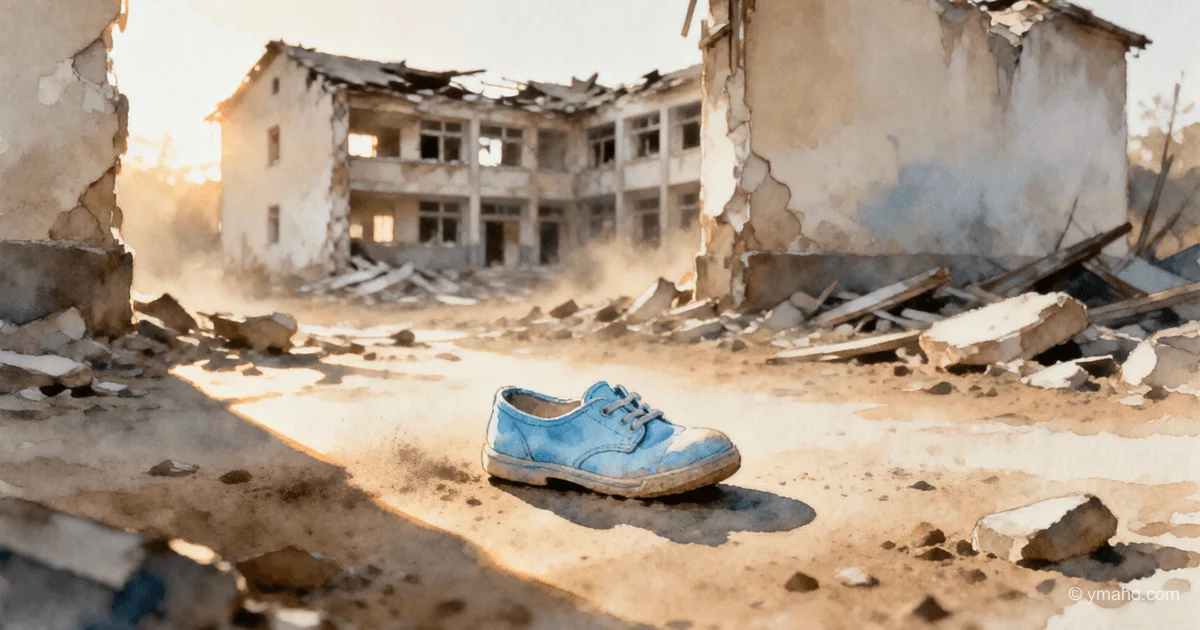
On the 38th day of searching, Makan's uncle found a shoe some distance from the main building. The family identified it as Makan's. A damaged blue sweater was also reportedly found, but nothing else. His mother, Asieh, later told a crowd at a memorial gathering: "I was terrified by the idea of having to place Makan in the grave. I couldn't stand that. I prayed to God for help, and it may explain why we couldn't find him."
The shoe was placed in a box and is now kept at a local mosque to commemorate him.
Key Takeaways
- Makan Nasiri, age 7, is the only child from the Minab school bombing whose remains have not been found.
- The attack killed 156 people, mostly children, and was part of a broader U.S.-Israeli military operation.
- Despite extensive DNA testing and a 38-day search, only one shoe and a sweater were recovered.
- Iran's forensic authority says 40% of war victims' bodies were too damaged for immediate identification.
- The case highlights the human cost of conflict, where even the chance to bury a loved one can be denied.
What does this mean for regular people?
This story shows how war doesn't just end lives—it can erase them so completely that families never get closure. For ordinary people around the world, it's a reminder that civilian infrastructure like schools can become targets, and that the aftermath leaves psychological wounds that last for generations. The inability to bury a child is a pain that no parent should have to endure.
— Editorial Team









