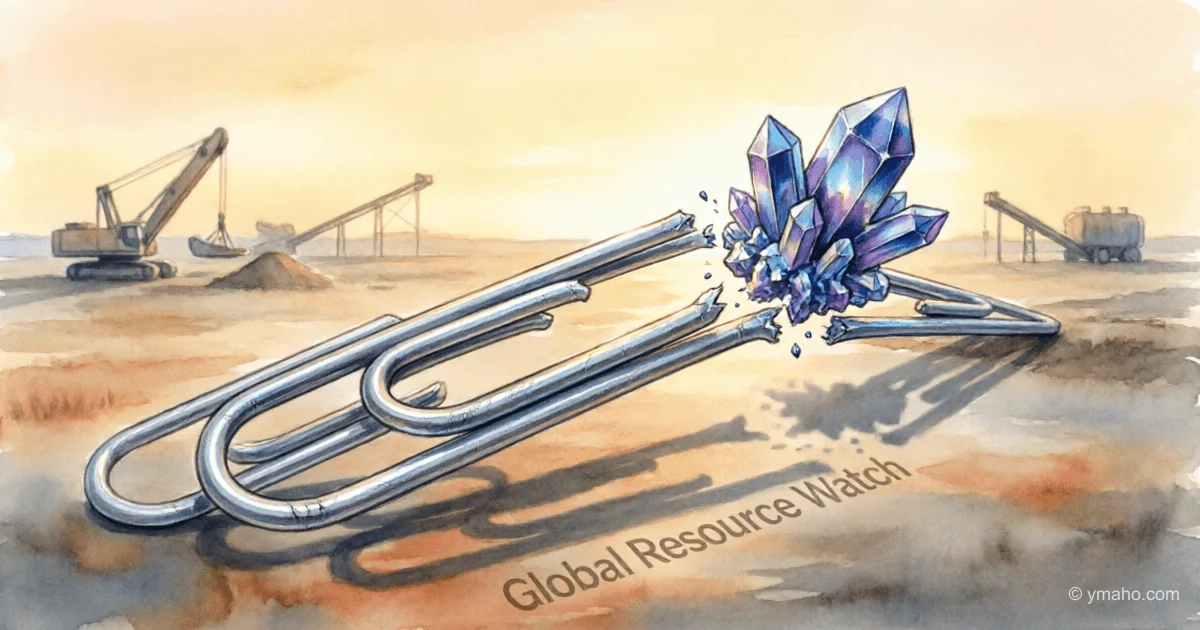
How Russian Manganese Mining in Occupied Ukraine Will Impact Your Grocery Prices
Development has begun on one of the world’s largest manganese deposits in the Russian-occupied part of Ukraine’s Zaporizhzhia region. This matters beyond just the warring nations—manganese strengthens steel, and steel is everywhere: from your cookware to major bridges. If supply chains are disrupted, even supermarket groceries could see price hikes.
Manganese: The Unsung Hero of Your Daily Life
Think of steel like pizza dough, and manganese like salt. Without salt, dough is bland and tears easily; with it, the dough becomes elastic and strong. Similarly, manganese (a chemical element added to steel) makes metal resistant to bending and corrosion. Without it, we wouldn’t have reliable cars, sturdy bridges, or even washing machines. This metal acts like an invisible binding agent for everything around us.
Russian firm Real Engineering Invest secured a mining license in February 2026 and has already started geological surveys at the Velyka Tokmachka deposit. Twenty-five percent of the venture is tied to a Rostec subsidiary—a state-owned holding linked to the defense industry. The licensing process raises eyebrows, as Ukraine has never ceded its natural resources to Russia, though formalities are often overlooked under occupation.
Numbers That Could Upend the Market
The Velyka Tokmachka deposit holds an estimated 1.7 billion tons of manganese. To put that in perspective:
- It’s 13 times larger than Russia’s biggest domestic deposit (Usinskoye in Kemerovo Oblast)
- It dwarfs the Porozhinskoye deposit in Krasnoyarsk Krai by a factor of 58
- It ranks among the top five global reserves by volume
Currently, Russia extracts manganese at only one location—in Bashkortostan—and imports over 90% of its needs. Primary suppliers include Gabon, South Africa, and Australia. This new deposit could theoretically make Russia self-sufficient in this strategic metal, with a major caveat: extraction would take place on territory internationally recognized as Ukrainian.
Why the Whole World Is Watching
The global manganese market operates like an interconnected water grid. When one major node starts drawing from a new source, pressure shifts across the entire system. With access to such massive reserves, Russia could:
- Drive down manganese prices by flooding the market with supply
- Break the grip of traditional exporting nations
- Turn the resource into a liability for Western firms due to sanction risks
Egypt has already refused to accept Russian grain sourced from occupied territories. Manganese could face a similar fate: Western steelmakers may avoid “tainted” ore to stay compliant with sanctions. This would split the market into two parallel tracks—one legitimate, one occupation-linked—each with distinct pricing and risk profiles.
What Does This Mean for Everyday Consumers?
If Russia successfully legitimizes the mining operations, manganese prices could drop, lowering steel costs. You’d feel the ripple effect through cheaper cars, home renovation materials, or even tin cans. But if sanctions choke off exports, shortages could push prices up by 10–15%. Most importantly, this resource tug-of-war serves as a reminder: conflicts rarely stay contained. They directly impact how much you pay for everyday essentials.
Key Takeaways
- Manganese is critical to 90% of global steel production—without it, infrastructure crumbles
- Occupation-era mining forces the world to choose between cheap but “tainted” metal and ethical sourcing
- Russia could become the market leader, but only if it navigates past sanction barriers
- Supermarket prices hinge on the steady flow of this “invisible” metal
- International firms are already diversifying supply chains to avoid conflict zones
— Editorial Team









