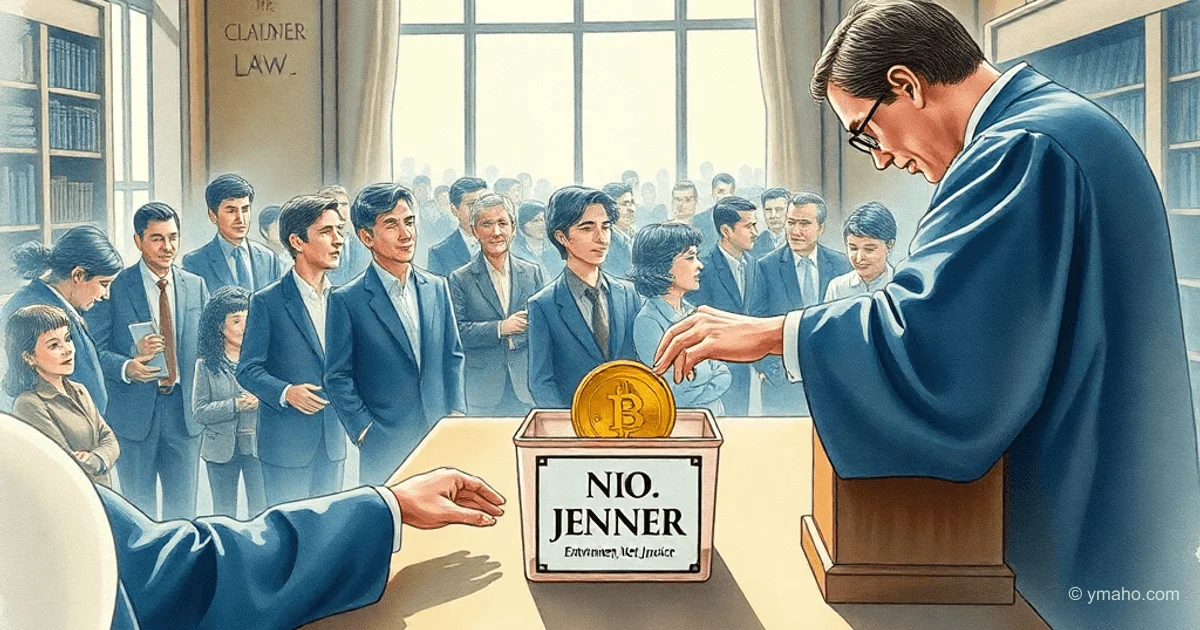
U.S. Court Rejects Investor Lawsuit Against Caitlyn Jenner's Memecoin
An American court ruled that JENNER, the memecoin launched by Olympic champion Caitlyn Jenner, is not a security. This decision shuts the door for thousands of investors who tried to recover their money after the token’s collapse. For ordinary people, this sends a clear message: buying "celebrity" cryptocurrencies is more like buying a lottery ticket than making an investment.
Why Did the Court Decide JENNER Is Not a Security?
In the U.S., an asset is considered a security if it meets the so-called "Howey Test." Simply put, this means someone invests money in a common enterprise with the expectation of profit based on the efforts of others. The judge clarified that to pass this test, three conditions must be met: pooled funds, a common goal, and reliance on the entrepreneurial or managerial efforts of third parties.
In the case of JENNER, none of these conditions were met:
- Investors’ funds were not pooled into a single "common pot" to develop a product or business.
- The creators had no concrete plan to build anything useful—only promotion through Jenner’s fame.
- Any potential profit (if it existed) depended not on team efforts, but on market speculation.
The court emphasized that even Jenner’s promises—such as directing 3% of transaction fees toward token buybacks or supporting Trump—do not create a legal obligation to generate returns. These are merely marketing statements.
What Is a Memecoin, and Why Is It Risky?
A memecoin is a cryptocurrency created not to solve a technical problem, but for humor, trends, or fame. The most famous example is Dogecoin, which began as a parody of Bitcoin. Such tokens often surge on hype waves, especially when backed by celebrities.
But memecoins lack fundamentals:
- No team develops the underlying technology.
- No real use case exists (e.g., paying for goods or services).
- Price is sustained solely by emotion and social media.
Imagine buying a concert ticket for an event that hasn’t even been announced, just because a friend said, "It’s going to be awesome!" If the concert gets canceled, the ticket becomes worthless paper. That’s exactly how memecoins work.
The JENNER Story: From Hype to Zero
JENNER was launched in May 2024 on the Solana blockchain via Pump.fun—a platform designed for rapid memecoin launches. Initially, its market cap reached $7.5 million, but then it plummeted. Jenner later migrated the token to Ethereum, but this did nothing to reverse the decline.
Investors filed a lawsuit in November 2024, claiming they lost thousands of dollars. They argued that the token should have been registered as a security, since Jenner made specific promises (buybacks, donations, bonuses). But the court dismissed the complaint twice—first in May 2025, then again in April 2026.
Key Takeaways
- Memecoins are almost never classified as securities if they lack a legitimate underlying project.
- Celebrities can promote tokens, but that doesn’t make them reliable.
- The U.S. legal system clearly distinguishes entertainment from investment—and as long as a memecoin is positioned as a "joke," it’s hard to classify it as a financial instrument.
- Promises like "3% for buybacks" do not create legal guarantees of returns.
- Investors bear full risk themselves, especially in the world of crypto memes.
What This Means for Ordinary People
If you see a celebrity promoting a cryptocurrency—especially a memecoin—remember: this isn’t advice, it’s advertising. Even if the price rises for a week, there’s no guarantee it won’t crash tomorrow. And if you still decide to participate, treat the money as spent on entertainment, not investment. Most importantly: never invest more than you’re willing to lose without regret.
— Editorial Team









