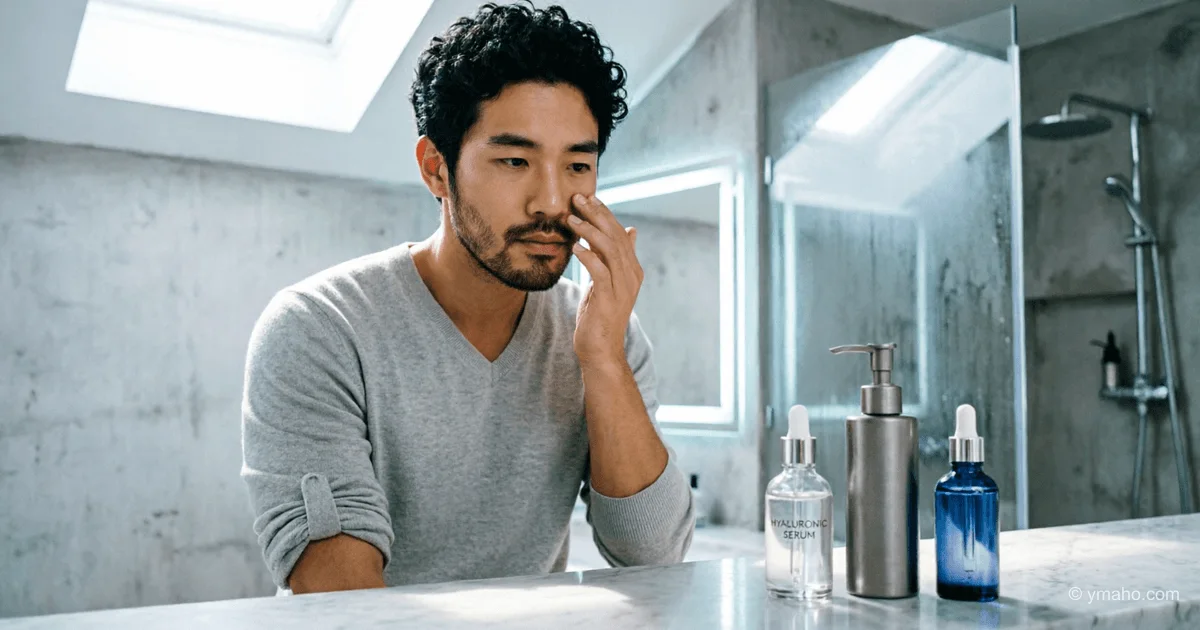
The Rise of the Men's Skincare Market
Self-care is no longer gender-stereotyped: the men's cosmetics market is showing steady growth. Men are increasingly purchasing skincare products from brands like The Ordinary and Kiehl's, becoming a separate driver for beauty retail.
From the "masculine" stereotype to a unisex reality: how the men's skincare market is undergoing a tectonic shift in 2026
Introduction
Not long ago, the phrase "men's cosmetics" conjured images of shaving foam, "3-in-1" shower gel, and deodorant with an "extreme" scent. The market was simple, predictable, and, according to many analysts, stagnating. It was believed that men were not ready for complex skincare routines and that their cosmetic basket was limited to a few basic items.
Today, in 2026, this stereotype has been completely shattered. Self-care is no longer a gender-labeled territory. Men of all ages are actively interested in serums, eye patches, SPF protection, and anti-aging products. Brands once considered "women's" (such as The Ordinary and Kiehl's) are now equally in demand by both genders.
In this article, we will break down how this tectonic shift occurred, its scale (from Russian statistics to global forecasts), how male consumer behavior is changing, why luxury unisex brands are winning, and what lies ahead for the men's cosmetics market in the coming years.
Event Details and Timeline
The transformation of men's grooming happened gradually, but 2025-2026 marked the moment when quantitative changes turned into qualitative ones.
Stage 1: The Era of "3-in-1 Gel" (2000–2020).
For decades, men's cosmetics were synonymous with functional necessity. The market was limited to shaving products, deodorants, and shampoos. Skincare routines were considered either "unmanly" or excessive. Brands actively used hyper-masculine marketing emphasizing strength, aggression, and "ruggedness."
Stage 2: The Birth of Niche Interest (2020–2024).
The pandemic and the rise of video conferencing forced many men to pay attention to their facial skin condition. At the same time, social media (especially TikTok and Instagram) began popularizing "skinfluencer" content for men. The first bloggers appeared, talking about retinol, hyaluronic acid, and the importance of daily cleansing. According to 2026 data, search queries for "skincare for men" grew by 177% year-over-year, and demand for specific brands, such as "Harry's men's facial cleanser," skyrocketed by 681%.
Stage 3: Scaling and Institutionalization (2025).
Major beauty corporations began actively acquiring niche men's brands. For example, VLCC Health Care Limited acquired the Indian brand Ustraa in June 2023, and L'Oréal and other giants expanded their men's lines. In Russia, the "Chestny Znak" labeling system recorded about 130 million units of men's cosmetics introduced into circulation between December and February 2026.
Stage 4: The New Reality (2026).
2026 became the point where the market finally established itself as independent, significant, and highly competitive. A study by Adventum, conducted in April 2026, showed that 55% of Russian men consider regular use of skincare cosmetics a necessity. The global men's personal care market, according to The Business Research Company, grew from $75.38 billion in 2025 to $83.05 billion in 2026, with a CAGR of 10.2%.
Impact and Significance (for the World, Industry, Society)
Impact on Industry and Economy:
The numbers confirming the scale of change are impressive. According to a 360iResearch report, the men's skincare market was valued at $17.25 billion in 2025 and is projected to reach $26.63 billion by 2032, with a CAGR of 6.39%. The broader men's grooming market (including shaving, hair care, deodorants) is expected to reach $108 billion by 2035, according to Global Market Insights.
A key shift is in the structure of demand. While men previously limited themselves to 2-3 products, they are now increasingly adopting multi-step routines. Particularly popular are:
- Eye care products (patches, serums for dark circles);
- Hair growth serums;
- SPF creams and anti-aging products;
- Specialized beard care products (oils, waxes, shampoos).
A telling example: men are twice as likely as women to rely on their partner's opinion when choosing perfume, and six times more likely when choosing skincare products. This indicates that self-care is becoming not only a personal but also a socially significant practice.
Impact on Society and Perceptions of Masculinity:
Psychologists link the growing interest of men in cosmetics to two key factors. First, the midlife crisis and fear of aging—the desire to stay young, attractive, and competitive longer. Second, a shift in cultural paradigm: the concept of "masculinity" is no longer associated with neglecting one's appearance. Today, a well-groomed man is a sign of success, status, and self-respect, not "effeminacy."
Alina Koroleva, PhD in Psychology, notes: "Men rightly believe that it is easier to try to maintain their appearance than to later regret missed opportunities. Hair and skin stay healthy longer with proper care."
Impact on Perception of Cosmetic Brands:
The traditional division into "men's" and "women's" brands is blurring. As experts from Medik8 note, men are increasingly gravitating toward gender-neutral formulas and packaging, viewing modern skincare as "technology for the skin" rather than a gender-labeled ritual.
Reactions of Key Players
Global Corporations:
Major players, including Procter & Gamble (market share ~16%), Unilever, L'Oréal, Beiersdorf, and Reckitt Benckiser, continue to dominate, but their strategies are changing. Instead of aggressively masculine positioning, they are focusing on "clean labels," natural ingredients, and sustainable packaging. For example, P&G is actively expanding lines for different skin types, rather than just "strong" versions of women's products.
Niche and Innovative Brands:
According to BeautyMatter, gender-neutral and unisex brands benefit from audience expansion because they can serve men without isolation and without losing women. Brands like The Ordinary, Kiehl's, as well as specialized men's brands (Harry's, Bulldog, Jack Black), are increasing their presence. In Russia, the brand BOHEM from Piramal Pharma focuses on scientifically proven ingredients and integrating skincare into daily routines.
Retail Chains and Marketplaces:
Retailers are actively expanding men's sections. However, the Adventum study points to a paradox: despite online advertising being a key information channel for men (31% of respondents), less than 1% of beauty brands' digital campaigns target a male audience. This creates a significant growth opportunity. Evgenia Grunis, CEO of Adventum, comments: "This is not just a communication gap, but a real growth point that the market is systematically underutilizing."
Sales Channels:
Men remain conservative in their choice of purchase locations: 47% shop offline, 53% on marketplaces (compared to 70% of women). Meanwhile, the share of hypermarkets is higher among men (34% vs. 21% for women).
Forecast and Conclusions
What awaits us in the coming years in the men's skincare market?
- Continued Growth of Multifunctionality. Formats like "8-in-1," "10-in-1" will gain popularity, as men value time savings and routine simplicity. However, the segment of specialized products (separate serums, eye creams) will also grow in parallel.
- Dominance of Unisex Brands. As Michael Gilman, CEO of Grooming Lounge, notes: "I wouldn't launch a purely male skincare brand today. The market is too small, the cost of entry too high, and the reward too small. Unisex brands are more promising because they can also sell in the large women's market."
- Growing Demand for Personalization and AI Diagnostics. Men tend to be more pragmatic, and AI tools for skin analysis offering personalized protocols will be in demand. They remove subjectivity and provide precise, measurable recommendations.
- Increased Investment in Sustainability. The shift to recyclable packaging, waterless formulas, and eco-friendly ingredients will become mandatory to remain competitive, as modern consumers (including men) increasingly care about the environment.
- Expansion of Communication Channels. Brands will be forced to rethink their digital strategies and start actively targeting male audiences (currently less than 1% of campaigns, although 31% of men get information from online ads).
Conclusion:
The men's skincare market in 2026 is no longer a "niche" or "growing" segment, but a full-fledged, rapidly growing industry. Self-care has ceased to be something shameful or excessive for men; it has become part of the modern lifestyle, a factor of confidence and professional success.
The key takeaway for brands: the future lies not in aggressively masculine positioning, but in an intelligent, gender-neutral approach where effectiveness, science, and comfort come first, not stereotypes. The consumer—whether male or female—wants one thing: for the product to work and solve their specific problems. And those brands that can offer this without unnecessary noise, with respect for the customer, will win in this new reality. In the words of Michael Gilman, "If the product works and does what it promises, men come back for more. If not, you lose them forever."
— Editorial Team









